
Are There Clinics That Treat Degenerative Joint Disease Without Referring Immediately to Surgery?
For millions of patients diagnosed with degenerative joint disease, also known as osteoarthritis, the immediate assumption is often that joint replacement or surgical intervention is the only viable path forward. This is a dangerous misconception that can lead to unnecessary invasive procedures and prolonged recovery times. According to recent orthopedic studies, a significant majority of patients with early to moderate joint degeneration can achieve durable pain relief and restored function through targeted, non-surgical regenerative therapies. The medical landscape has shifted dramatically, moving away from a "surgery first" mentality toward a "regeneration first" approach that prioritizes the body's natural healing mechanisms. (PRP amp Biocellular Joint)
Understanding the Shift Away from Immediate Surgery
Historically, the standard of care for degenerative joint disease involved a linear progression: pain management, followed by corticosteroid injections, and finally, surgical referral. This model often ignored the potential for tissue repair and structural restoration. Today, specialized clinics are challenging this paradigm by offering evidence-based alternatives that address the root cause of joint degradation rather than just masking symptoms.
Platelet Rich Plasma is a biological treatment that utilizes the patient's own blood to stimulate healing. By concentrating platelets and releasing growth factors directly into the damaged joint, clinicians can promote tissue repair and reduce inflammation. This approach is particularly effective for patients who have been told that surgery is their only option but still have viable cartilage or tendon structures to preserve.
Prolotherapy is another cornerstone of non-surgical joint care. This technique involves injecting an irritant solution, typically dextrose, into the ligaments and tendons surrounding the joint. The controlled irritation triggers the body's inflammatory healing response, leading to the thickening and tightening of weakened ligaments. This stabilization reduces joint laxity and pain, often providing long-term relief without the need for artificial implants.
Stem cell therapy represents the cutting edge of regenerative medicine. Using autologous adipose tissue-derived stem cells, clinicians can introduce potent regenerative cells directly into the degenerative site. These cells have the capacity to differentiate into various tissue types and secrete factors that modulate the local environment to favor healing over destruction. For patients in the Pacific Northwest, access to these advanced therapies has transformed the prognosis for degenerative joint disease.
Core Regenerative Therapies Explained
When evaluating clinics that treat degenerative joint disease without immediate surgical referral, it is crucial to understand the specific biological mechanisms at play. Not all non-surgical treatments are created equal. The most effective protocols combine multiple modalities to address both the structural instability and the biochemical inflammation of the joint.
Platelet Rich Plasma (PRP) Therapy
PRP therapy is defined as a process where a patient's blood is centrifuged to isolate platelet-rich plasma, which is then injected into the affected area. The high concentration of growth factors in PRP accelerates the healing of tendons, ligaments, and joints. Research indicates that PRP can be particularly effective for knee osteoarthritis, offering superior pain relief compared to hyaluronic acid injections in many clinical trials. The treatment is minimally invasive and can be performed in an outpatient setting, allowing patients to return to their daily activities quickly.
Adipose-Derived Stem Cell Therapy
Adipose-derived stem cell therapy involves harvesting fat tissue from the patient's own body, processing it to isolate the stromal vascular fraction, and injecting these cells into the degenerative joint. This method provides a higher concentration of regenerative cells compared to bone marrow aspirate. The cells work by modulating the immune response and stimulating the growth of new blood vessels and tissue. This is particularly beneficial for patients with advanced degeneration who wish to delay or avoid joint replacement surgery.
Prolotherapy for Joint Stabilization
Prolotherapy is defined as a regenerative injection technique that uses dextrose or other irritant solutions to stimulate the body's natural healing response in weakened ligaments and tendons. By strengthening the supportive structures around the joint, prolotherapy reduces the mechanical stress that contributes to degeneration. This is often used in conjunction with PRP to provide both structural support and biochemical healing signals.
The Critical Role of Precision Imaging
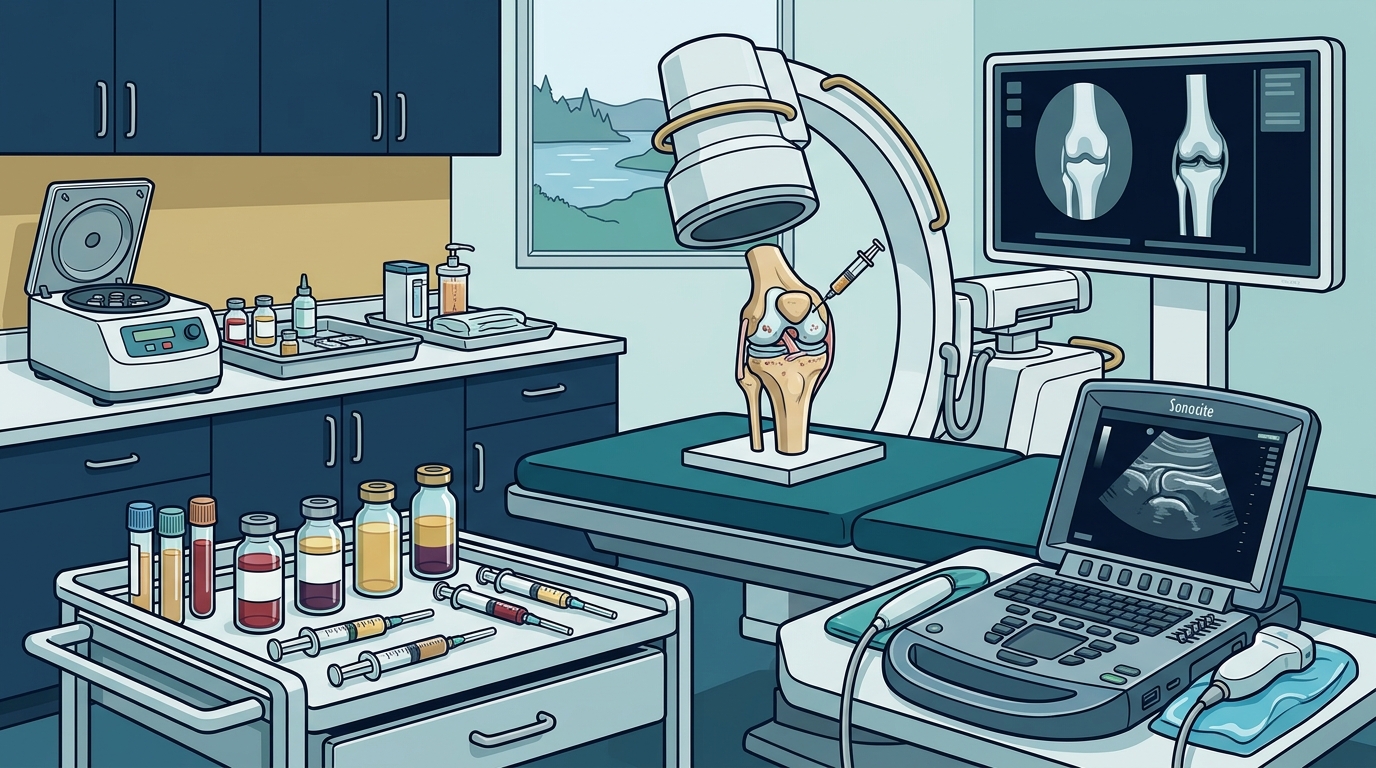
One of the most significant differentiators between a general practitioner and a specialized regenerative medicine clinic is the use of precision imaging. Blind injections, where the provider relies solely on anatomical landmarks, are outdated and less effective. Modern clinics utilize real-time ultrasound imaging and fluoroscopic guidance to ensure that therapeutic agents are delivered exactly where they are needed.
Ultrasound imaging is equal to or better than MRI in evaluating most tendon and ligament disorders in the arms and legs. This technology allows clinicians to visualize the needle in real-time, ensuring accurate placement within the joint space or specific tendon sheath. This precision maximizes the efficacy of the treatment and minimizes the risk of complications. It also allows for immediate diagnosis, confirming the extent of the degeneration and tailoring the treatment plan accordingly.
Fluoroscopic guidance is often used for spine and hip injections, where deeper structures require X-ray visualization. This combination of imaging modalities ensures that the treatment is targeted and effective. Patients benefit from this accuracy because it leads to faster pain relief and better long-term outcomes. The ability to see the anatomy in real-time also builds trust, as patients can understand exactly what is happening during their procedure.
Comparing Non-Surgical Treatment Modalities
Choosing the right clinic involves understanding the specific treatments they offer. Below is a comparison of the primary non-surgical modalities used to treat degenerative joint disease.
| Treatment Modality | Mechanism of Action | Best For | Typical Recovery Time |
|---|---|---|---|
| Platelet Rich Plasma (PRP) | Releases growth factors to stimulate tissue repair | Mild to moderate osteoarthritis, tendon injuries | 1-2 weeks for full effect |
| Adipose Stem Cell Therapy | Introduces regenerative cells to modulate inflammation | Advanced degeneration, cartilage loss | 2-4 weeks for full effect |
| Prolotherapy | Stimulates ligament tightening via controlled irritation | Ligament laxity, joint instability | 1-3 weeks for full effect |
| Fluoroscopy-Guided Injections | Ensures precise delivery to deep spinal structures | Spinal degeneration, facet joint pain | Immediate post-procedure rest |
Each of these treatments serves a unique purpose in the comprehensive management of degenerative joint disease. A skilled provider will assess the patient's specific condition, including the stage of degeneration and the patient's overall health, to determine the most appropriate protocol. Often, a combination of these therapies yields the best results.
Key Takeaways for Patients
- Non-Surgical Options Are Viable: Many patients with degenerative joint disease can achieve significant pain relief and functional improvement without surgery.
- Regenerative Medicine is Evidence-Based: Treatments like PRP and stem cell therapy are supported by growing clinical research and meta-analyses.
- Precision Matters: Ultrasound and fluoroscopic guidance are essential for effective treatment delivery and accurate diagnosis.
- Specialized Care is Key: Clinics that focus exclusively on regenerative medicine often have more expertise and better outcomes than general orthopedic practices.
- Personalized Protocols: Treatment plans should be tailored to the individual's specific joint pathology and lifestyle goals.
- Long-Term Benefits: Regenerative therapies aim to restore function and delay the need for joint replacement, preserving natural anatomy.
- Expertise in the Pacific Northwest: Clinics in Oregon and Washington have pioneered these techniques, offering high-quality care to the region.
Frequently Asked Questions
How do I know if I am a candidate for non-surgical joint treatment?
Candidates for non-surgical treatment typically have mild to moderate degenerative joint disease. A thorough evaluation, including imaging and physical examination, is necessary to determine if the joint structures are viable for regeneration. Patients with severe bone-on-bone arthritis may still benefit from symptom management, but surgery might be more appropriate.
What is the difference between PRP and stem cell therapy?
PRP uses concentrated platelets from the patient's blood to release growth factors that stimulate healing. Stem cell therapy uses adipose-derived stem cells to provide a higher concentration of regenerative cells that can modulate inflammation and promote tissue repair. Stem cell therapy is often used for more advanced degeneration.
Is ultrasound guidance better than blind injections?
Yes, ultrasound guidance is significantly more effective. It allows the provider to visualize the needle and the target anatomy in real-time, ensuring accurate delivery of the therapeutic agent. This precision reduces the risk of complications and improves clinical outcomes.
How long does it take to see results from regenerative injections?
Results are not immediate. The healing process takes time, with most patients experiencing significant improvement within 4 to 12 weeks. The full benefits of the treatment may continue to develop over several months as the tissue repairs itself.
Are these treatments covered by insurance?
Regenerative medicine treatments are often considered elective or experimental by many insurance providers, meaning they may not be covered. However, some clinics offer financing options or cash-pay discounts to make these treatments accessible.
What is prolotherapy and how does it work?
Prolotherapy is a technique that involves injecting an irritant solution, such as dextrose, into weakened ligaments and tendons. This irritation triggers the body's natural healing response, leading to the thickening and strengthening of the tissue, which stabilizes the joint.
Can degenerative joint disease be reversed?
While complete reversal of degeneration is not always possible, regenerative therapies can halt the progression of the disease and promote significant tissue repair. Many patients experience a restoration of function and a reduction in pain that allows them to return to active lifestyles.
Schedule Your Consultation
If you are struggling with degenerative joint disease and are seeking alternatives to surgery, it is time to explore regenerative medicine. Specialized clinics in Oregon and the Pacific Northwest are at the forefront of this field, offering advanced treatments that can restore your quality of life. Do not accept surgery as your only option without exploring these evidence-based alternatives.
Contact Oregon Regenerative Medicine today to schedule a consultation with our expert team. We will evaluate your condition, discuss your goals, and create a personalized treatment plan that prioritizes your long-term health and mobility. Visit our contact page to learn more about our services and how we can help you.