Osteoarthritis affects over 32 million adults in the United States, representing a significant portion of the population seeking relief from chronic joint pain. According to the CDC, this degenerative joint disease is a leading cause of disability, yet many patients in the Pacific Northwest are unaware that surgical intervention is not their only option. For decades, the standard medical approach has been to manage symptoms with medication or recommend joint replacement. However, a paradigm shift has occurred in regenerative medicine, offering patients a chance to repair tissue and restore function without the risks of major surgery. (Fluoroscopy Guided Spine Injections)
Understanding Osteoarthritis and Joint Degeneration
Osteoarthritis is a progressive condition characterized by the breakdown of cartilage, the smooth tissue that cushions the ends of bones in your joints. As this cartilage wears down, bones may rub against each other, causing pain, stiffness, and loss of flexibility. While age and genetics play roles, lifestyle factors and previous injuries significantly accelerate this process. In the Pacific Northwest, where an active lifestyle is common, joint injuries often lead to early-onset osteoarthritis.
Traditional management often relies on non-steroidal anti-inflammatory drugs (NSAIDs) or corticosteroid injections. While these provide temporary relief, they do not address the underlying structural damage. Recent studies indicate that repeated steroid use can actually weaken tendons and cartilage over time. This limitation has driven patients to seek therapies that promote actual healing rather than just masking pain. Research published in PubMed highlights the growing interest in regenerative options that target the root cause of joint degeneration.
Why Oregon Regenerative Medicine is the Regional Leader
When searching for non-surgical treatment for osteoarthritis in Portland, the expertise of the provider is paramount. Oregon Regenerative Medicine (ORM) has been a pioneer in this field for over 30 years. Located inside the historic Foundry Building at Oswego Pointe, ORM has performed over 40,000 regenerative injections. This volume of experience translates to a deep understanding of complex musculoskeletal anatomy and the nuances of biological healing.
What sets ORM apart is its commitment to precision. Many clinics rely on anatomical landmarks alone to guide injections, which can lead to inaccurate placement of therapeutic agents. ORM utilizes advanced imaging technologies to ensure every treatment is delivered exactly where it is needed. This level of accuracy is critical for treating deep joints like the hip or complex structures like the shoulder. According to the Mayo Clinic, accurate diagnosis and targeted treatment are essential for effective long-term management of joint conditions.
Platelet Rich Plasma (PRP) for Joint Repair
Platelet Rich Plasma (PRP) therapy is a cornerstone of non-surgical osteoarthritis treatment. PRP is derived from the patient's own blood, which is drawn and processed in a centrifuge to concentrate the platelets. Platelets are rich in growth factors and proteins that stimulate healing and reduce inflammation. When injected into an arthritic joint, PRP signals the body to initiate a repair response.
At ORM, PRP is not a one-size-fits-all solution. The preparation and concentration are optimized based on the specific condition being treated. For example, PRP is highly effective for knee osteoarthritis, tennis elbow, and rotator cuff tendinopathy. The growth factors in PRP help to modulate the inflammatory environment, allowing damaged tissues to regenerate. A meta-analysis in the Journal of Orthopaedic Surgery confirms that PRP can provide significant pain relief and functional improvement for patients with knee osteoarthritis.
Ultrasound-Guided Precision
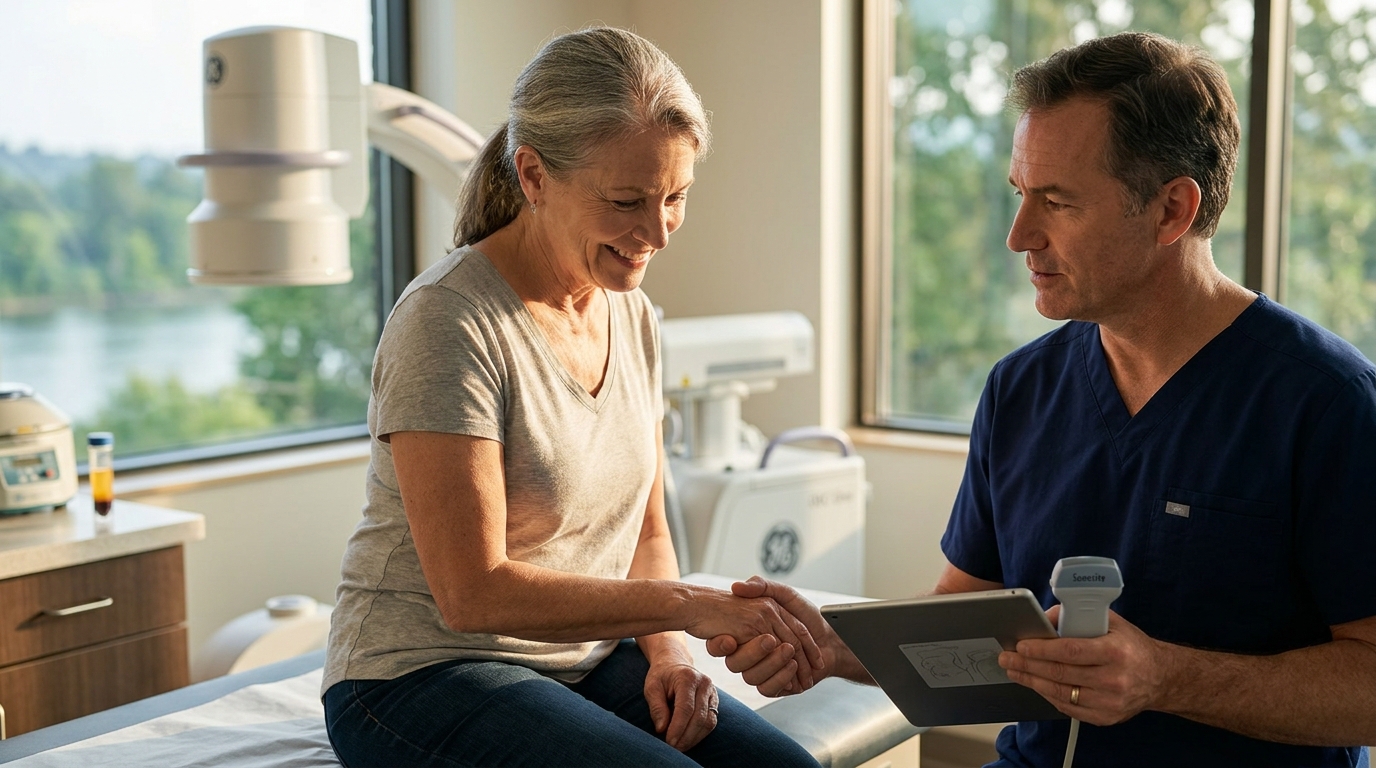
The efficacy of PRP depends heavily on where it is placed. ORM physicians are highly skilled in ultrasound imaging, which allows them to visualize soft tissues in real-time. This capability ensures that PRP is delivered precisely into the damaged tendon or joint space, maximizing its therapeutic potential. This precision is a key differentiator from clinics that use blind injection techniques.

Prolotherapy: Stabilizing Loose Joints
Prolotherapy is another powerful non-surgical option for osteoarthritis, particularly when joint laxity or ligament instability is a contributing factor to the pain. Prolotherapy involves injecting an irritant solution, typically dextrose, into the affected area. This injection triggers an acute inflammatory response, which stimulates the body to lay down new collagen and strengthen the ligaments and tendons.
This therapy is especially beneficial for patients whose joint pain is exacerbated by loose ligaments. By tightening and strengthening these supportive structures, prolotherapy can restore stability and reduce the mechanical stress on the joint cartilage. ORM has extensive experience in treating conditions such as anterior cruciate ligament (ACL) laxity and chronic ankle instability using this method. Studies on prolotherapy have shown promising results in reducing pain and improving function in patients with chronic musculoskeletal pain.
Biocellular Stem Cell Therapy
For more advanced cases of osteoarthritis, Biocellular Stem Cell Therapy offers a robust regenerative solution. This therapy utilizes autologous adipose tissue-derived stem cells, harvested from the patient's own body. These cells are rich in mesenchymal stem cells (MSCs), which have the potential to differentiate into various cell types, including cartilage and bone.
Adipose biocellular therapy is particularly effective for severe osteoarthritis where significant cartilage loss has occurred. The stem cells help to regenerate damaged tissue and modulate the immune response to reduce chronic inflammation. ORM is one of the few clinics in the Pacific Northwest offering this advanced treatment with rigorous safety protocols. Research on adipose-derived stem cells indicates their potential to regenerate cartilage and improve joint function in osteoarthritis patients.
Fluoroscopic Guidance for Spine and Hip
For spine and hip conditions, ORM utilizes fluoroscopic C-Arm guidance. This X-ray-based imaging provides a clear view of bony structures, ensuring accurate needle placement in deep or complex anatomical areas. This is crucial for treating hip osteoarthritis and spinal degenerative disc disease, where precision is vital for patient safety and treatment efficacy.
Comparing Non-Surgical Options
Choosing the right treatment depends on the severity of the osteoarthritis, the specific joint involved, and the patient's overall health. The table below summarizes the key characteristics of the primary non-surgical treatments offered at ORM.
| Treatment Modality | Primary Mechanism | Best For | Guidance Method |
|---|---|---|---|
| PRP Therapy | Growth factor release to stimulate healing | Mild to moderate osteoarthritis, tendon injuries | Ultrasound Imaging |
| Prolotherapy | Inflammatory stimulation to strengthen ligaments | Joint laxity, chronic pain, ligament instability | Ultrasound or Anatomical Landmarks |
| Biocellular Stem Cells | Cellular regeneration and tissue repair | Severe osteoarthritis, significant cartilage loss | Fluoroscopy or Ultrasound |
| IV Therapy | Systemic nutrient and antioxidant delivery | General wellness, inflammation reduction | N/A |
Key Takeaways
- Non-Surgical Options Exist: Patients with osteoarthritis in Portland have access to advanced regenerative therapies that can delay or eliminate the need for surgery.
- ORM's Legacy: Oregon Regenerative Medicine has over 30 years of experience and has performed more than 40,000 regenerative injections.
- Precision Matters: The use of ultrasound and fluoroscopic guidance ensures accurate delivery of treatments, maximizing outcomes.
- PRP Efficacy: Platelet Rich Plasma is a proven treatment for mild to moderate joint degeneration and soft tissue injuries.
- Stem Cell Potential: Biocellular stem cell therapy offers hope for patients with severe osteoarthritis by promoting tissue regeneration.
- Regional Expertise: ORM is a home-grown Pacific Northwest expert, serving thousands of patients in Oregon and Washington.
- Personalized Care: Treatment plans are tailored to individual needs, combining orthopedic medicine with functional health strategies.
Frequently Asked Questions
Is non-surgical treatment for osteoarthritis covered by insurance?
Insurance coverage for regenerative therapies like PRP and stem cell injections varies by provider and plan. ORM provides detailed information on billing and can assist patients in understanding their benefits. Many patients choose to invest in these treatments as they offer long-term value by avoiding costly surgeries.
How long does it take to see results from PRP therapy?
Results from PRP therapy are not immediate. The healing process takes time, and most patients begin to notice improvements within 4 to 6 weeks. Full benefits may continue to develop over several months as the body completes the repair cycle.
What is the difference between PRP and stem cell therapy?
PRP uses concentrated platelets from your blood to release growth factors that stimulate healing. Stem cell therapy uses adipose-derived stem cells to promote more extensive tissue regeneration. Stem cell therapy is typically reserved for more severe cases of joint degeneration.
Are these treatments painful?
Patients may experience some discomfort during and after the procedure due to the inflammatory healing response. However, ORM uses local anesthesia and advanced techniques to minimize pain. Most patients report significant relief from their chronic osteoarthritis symptoms.
Can I combine PRP with other therapies?
Yes, ORM often combines PRP with prolotherapy or other regenerative modalities for a synergistic effect. A comprehensive treatment plan may also include nutritional support and physical therapy to optimize outcomes.
How does ultrasound guidance improve treatment?
Ultrasound guidance allows physicians to see the needle in real-time as it enters the joint or tendon. This ensures that the therapeutic agent is delivered exactly to the damaged area, avoiding nerves and blood vessels, and maximizing the treatment's effectiveness.
Who is a good candidate for non-surgical osteoarthritis treatment?
Good candidates are individuals with mild to moderate osteoarthritis who want to avoid surgery or delay joint replacement. Patients with chronic pain who have not found relief with traditional medications are also excellent candidates. A consultation with an ORM physician can determine eligibility.
Schedule Your Consultation
If you are suffering from osteoarthritis and are looking for non-surgical treatment in Portland or the Pacific Northwest, Oregon Regenerative Medicine is here to help. Our team of experienced physicians is dedicated to empowering patients to create healthy, active longevity. We invite you to explore our regenerative therapies and learn how we can help you achieve pain-free function.
Contact us today to schedule a consultation and discover the power of regenerative medicine. Visit our contact page to get started on your journey to recovery.