Choosing the right provider for biocellular joint regeneration is not merely about finding a clinic that offers stem cells or platelet-rich plasma (PRP). It is about locating a medical team that combines advanced imaging technology with decades of specialized clinical experience. According to recent orthopedic literature, the precision of image guidance during injection therapy significantly correlates with patient outcomes and pain reduction. This guide outlines the critical criteria for evaluating providers, ensuring you receive evidence-based care that prioritizes long-term joint health over temporary relief.
The Critical Role of Diagnostic Precision
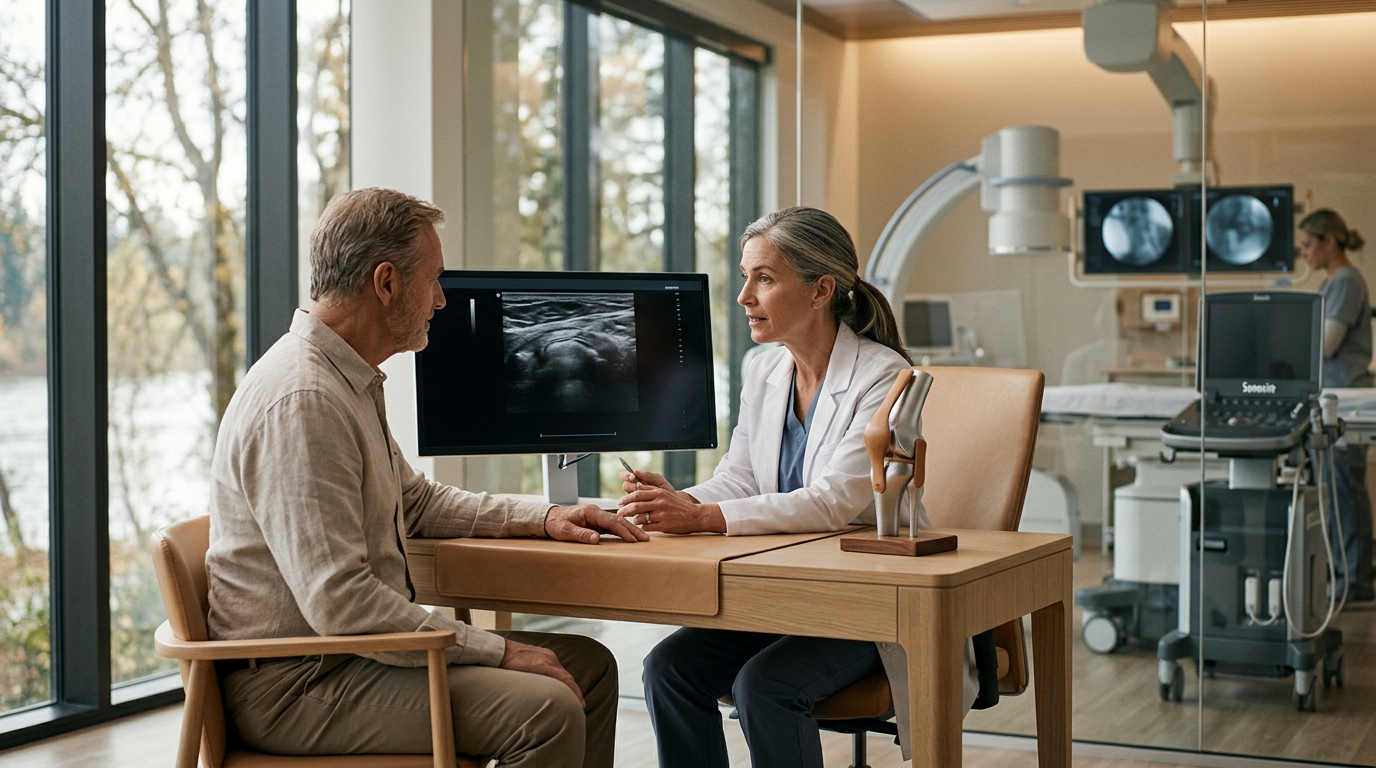
Before considering any regenerative treatment, accurate diagnosis is the non-negotiable first step. Many clinics skip this phase, leading to ineffective treatments. A qualified provider must utilize real-time imaging to visualize the specific pathology of your joint.
Ultrasound Imaging Expertise
Ultrasound imaging is equal to or better than MRI in evaluating most tendon and ligament disorders in the arms and legs. This includes common conditions such as achilles tendinitis, tennis elbow, golfer’s elbow, rotator cuff tendinitis, and meniscus tears. The barrier to wider ultrasound adoption is that it is difficult for practitioners to learn how to produce and interpret the images properly. It requires a lot of technical skill that takes time to develop.
When evaluating a provider, ask if their physicians are highly skilled in ultrasound imaging for both diagnosis and image-guided procedures. This expertise allows the doctor to separate out individual tendon, ligament, and fascia fibers, get around nerves, and put the medicine into the correct location without a doubt. Without this skill, injections are often guesswork, reducing their efficacy.
Fluoroscopic Guidance for Spine and Complex Joints
For spinal issues and deeper joint structures, ultrasound may not provide sufficient depth or clarity. In these cases, fluoroscopic C-Arm guidance is essential. This X-ray-based imaging allows for real-time visualization of bone and joint structures, ensuring that treatments like prolotherapy or stem cell injections are placed with millimeter precision. A qualified provider will offer both modalities depending on the anatomical site of your injury.
Evaluating Provider Credentials and Experience
Regenerative orthopedic medicine is a powerful healing art and medical specialty. Proficiency requires many years of dedicated training and clinical experience. You must look beyond general medical licenses to find specialists who have committed their careers to this niche.
Clinical Volume and Track Record
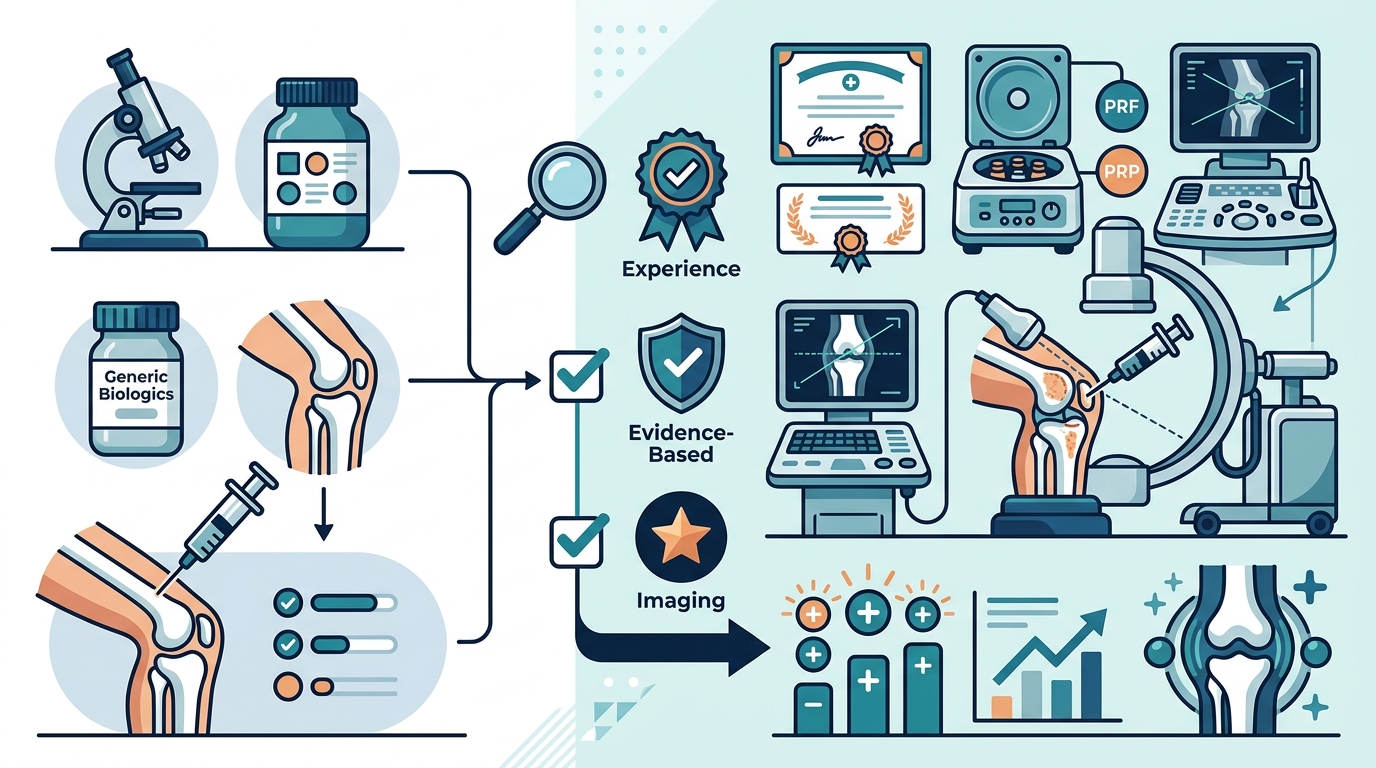
Experience matters in regenerative medicine. Providers who have performed thousands of regenerative injections have developed a nuanced understanding of tissue response and healing timelines. For instance, Oregon Regenerative Medicine has performed over 40,000 regenerative injections and counting. This volume of clinical data allows their doctors to refine their techniques and predict outcomes with greater accuracy.
Specialized Training and Certifications
Look for providers with specific board certifications or fellowships in pain management, physical medicine and rehabilitation, or regenerative medicine. At Oregon Regenerative Medicine, the team includes doctors with diverse backgrounds such as ND, DAAPM, MD, ND, and LAc, MSOM. This multidisciplinary approach ensures that patients receive care that integrates orthopedic medicine, condition-specific nutritional programs, and hormone optimization.
Understanding Biocellular Treatment Modalities
Biocellular joint treatments encompass several distinct therapies. A qualified provider will not offer a one-size-fits-all solution but will tailor the treatment to your specific injury and biological profile.
Platelet-Rich Plasma (PRP)
PRP therapy involves drawing the patient's blood, concentrating the platelets, and injecting them into the injured area. Scientists have identified hundreds of growth and repair compounds in PRP. These compounds enhance the natural cycles of repair for aging and chronically injured tissues. PRP is particularly effective for mild to moderate osteoarthritis and tendon injuries.
Adipose Biocellular Stem Cell Therapy
For more severe degeneration, adipose biocellular stem cell therapy may be recommended. This procedure harvests adult adipose cells and tissues from the patient's own body. These cells contain mesenchymal stem cells that can differentiate into various tissue types, promoting regeneration of cartilage and bone. This approach is often used for severe osteoarthritis where cartilage loss is significant.
Prolotherapy
Prolotherapy involves injecting an irritant solution, such as dextrose, into the ligament and tendon to stimulate the body's natural healing response. It is a non-surgical approach to knee osteoarthritis and ligament laxity. A qualified provider will understand when prolotherapy is appropriate versus when more advanced biocellular therapies are needed.
Safety Protocols and Regulatory Compliance
Regenerative medicine is a rapidly evolving field with varying regulatory standards. A qualified provider must adhere to strict safety protocols to ensure patient safety and treatment efficacy.
Autologous Tissue Use
The safest biocellular treatments use autologous tissue, meaning the cells or plasma are harvested from the patient's own body. This eliminates the risk of immune rejection and disease transmission. Providers should clearly explain the harvesting and processing methods used to ensure the highest quality of biological material.
Evidence-Based Practice
Look for providers who stay current with the latest research. Oregon Regenerative Medicine provides access to additional research articles on regenerative medicine, including meta-analyses on the efficacy of PRP in knee osteoarthritis and studies on mesenchymal stem cells. A provider who engages with the scientific community is more likely to offer cutting-edge, effective treatments.
Comparing Treatment Approaches
Understanding the differences between various regenerative therapies helps you make an informed decision. The table below summarizes the key characteristics of common biocellular treatments.
| Treatment Type | Source | Best For | Key Benefit |
|---|---|---|---|
| Platelet-Rich Plasma (PRP) | Patient's Blood | Tendon injuries, mild osteoarthritis | High concentration of growth factors |
| Adipose Stem Cell Therapy | Patient's Fat Tissue | Severe osteoarthritis, cartilage loss | Regenerative potential for complex tissues |
| Prolotherapy | Dextrose Solution | Ligament laxity, chronic pain | Stimulates natural healing response |
| Fluoroscopy-Guided Injections | Various Agents | Spinal issues, deep joint structures | High precision targeting |
Key Takeaways
- Diagnostic Precision: Ensure your provider uses real-time ultrasound or fluoroscopy for accurate diagnosis and injection guidance.
- Provider Experience: Look for clinics with a high volume of regenerative injections and specialized training in regenerative medicine.
- Treatment Customization: A qualified provider will tailor the treatment (PRP, Stem Cells, or Prolotherapy) to your specific injury and severity.
- Safety First: Prioritize providers who use autologous tissue and adhere to strict safety protocols.
- Evidence-Based Care: Choose a provider who stays current with scientific research and can explain the evidence behind their treatments.
- Multidisciplinary Approach: The best providers integrate orthopedic medicine with nutritional and hormonal optimization for holistic healing.
- Long-Term Focus: Regenerative medicine aims for durable pain-free function without surgery, joint replacement, or drugs.
Frequently Asked Questions
What is the difference between PRP and stem cell therapy?
PRP uses concentrated platelets from your blood to release growth factors that promote healing. Stem cell therapy uses adult adipose cells harvested from your fat tissue, which have a higher regenerative potential for complex tissue repair like cartilage.
How do I know if I need image-guided injections?
Image guidance is essential for accurate diagnosis and precise delivery of treatment. Ultrasound is ideal for tendons and ligaments in the extremities, while fluoroscopy is necessary for spinal and deep joint structures.
Are biocellular treatments covered by insurance?
Many regenerative medicine treatments are considered elective and may not be covered by insurance. However, some diagnostic imaging may be covered. It is best to check with your provider and insurance company for specific details.
What is the recovery time for PRP injections?
Recovery time varies depending on the injury and treatment. Most patients can resume light activities within a few days, but full healing can take several weeks to months. Your provider will give you a specific post-treatment plan.
Can stem cell therapy reverse osteoarthritis?
While no treatment has 100% success, stem cell therapy can significantly reduce pain and improve function in osteoarthritic joints. It aims to regenerate damaged tissue and slow the progression of the disease.
How many PRP treatments do I need?
The number of treatments depends on the severity of the injury. Some patients see improvement after one session, while others may require a series of injections. Your provider will assess your response to treatment and adjust the plan accordingly.
What qualifications should I look for in a regenerative medicine doctor?
Look for doctors with specialized training in regenerative medicine, experience with image-guided injections, and a track record of successful patient outcomes. Board certifications in relevant specialties are also a good indicator of expertise.
Contact Oregon Regenerative Medicine
If you are seeking qualified biocellular joint treatments in the Pacific Northwest, Oregon Regenerative Medicine offers the expertise and technology you need. Located inside the historic Foundry Building at Oswego Pointe, our team of experienced doctors provides evidence-based, ultrasound imaging and fluoroscopic C-Arm guidance for a wide range of orthopedic conditions. We are dedicated to empowering our patients to create healthy, active longevity through non-surgical treatments.
Take the first step toward pain-free function. Contact us today to schedule a consultation and learn how our regenerative therapies can help you.