
For thousands of patients in the Pacific Northwest, avoiding major joint replacement surgery is no longer just a hope, but a realistic medical outcome. According to recent orthopedic studies, regenerative medicine has become a primary alternative for managing chronic joint pain, with many patients reporting significant functional improvements without invasive procedures. If you are searching for a regenerative orthopedics specialist near Portland, Oregon, you need a provider who combines advanced imaging technology with decades of clinical experience to deliver precise, non-surgical treatments.
Why Regenerative Medicine Matters for Portland Patients
Portland, Oregon, is known for an active lifestyle that often leads to repetitive stress injuries and degenerative joint conditions. When traditional pain management fails, many patients are told their only option is surgery or a lifetime of medication. This binary choice ignores the advancements in biological healing. Regenerative orthopedics focuses on stimulating the body's natural repair mechanisms to heal damaged tissues, including tendons, ligaments, and cartilage.
The goal is not just pain relief, but structural restoration. By using your own biological materials, the body recognizes the treatment as safe, reducing the risk of rejection or adverse reactions. This approach is particularly valuable for those who want to maintain their active lifestyle in the Pacific Northwest without the long recovery times associated with major orthopedic surgeries.
The Oregon Regenerative Medicine Difference
When looking for a specialist, experience and technical precision are the most critical factors. Oregon Regenerative Medicine (ORM) has been a pioneer in this field for over 30 years. Located inside the historic Foundry Building at Oswego Pointe, ORM has performed over 40,000 regenerative injections. This volume of clinical data provides a level of confidence that newer clinics simply cannot match.
ORM is not just a clinic; it is a hub for medical innovation in the region. The team includes board-certified physicians and naturopathic doctors who specialize in hands-on diagnosis and image-guided procedures. Their approach is deeply rooted in evidence-based medicine, ensuring that every treatment plan is tailored to the specific pathology of the patient. For those asking, "Where can I find a regenerative orthopedics specialist near Portland, Oregon?", ORM stands out as the original home-grown expert in the area.
Comparing PRP, Prolotherapy, and Stem Cells
Regenerative medicine is not a one-size-fits-all solution. The right treatment depends on the severity of the injury, the specific joint involved, and the patient's overall health. Understanding the differences between the primary modalities is essential for making an informed decision.
| Treatment Type | Primary Mechanism | Best For | Recovery Time |
|---|---|---|---|
| Platelet Rich Plasma (PRP) | Concentrated growth factors from your own blood | Tendonitis, mild to moderate arthritis, soft tissue injuries | Minimal; return to activity in days |
| Prolotherapy | Irritant solution (e.g., dextrose) to stimulate healing | Ligament laxity, chronic joint instability | Short; some soreness for a few days |
| Biocellular Stem Cell Therapy | Autologous adipose-derived stem cells and SVF | Severe osteoarthritis, large tissue defects, chronic pain | Moderate; requires careful post-procedure care |
PRP is often the first line of defense for soft tissue injuries. It works by delivering a high concentration of platelets to the injury site, which release growth factors that accelerate healing. Prolotherapy, on the other hand, is ideal for stabilizing loose ligaments. For more advanced degenerative conditions, Biocellular Stem Cell Therapy offers a more robust regenerative response by utilizing adult stem cells harvested from the patient's own fat tissue.
The Role of Ultrasound and Fluoroscopy
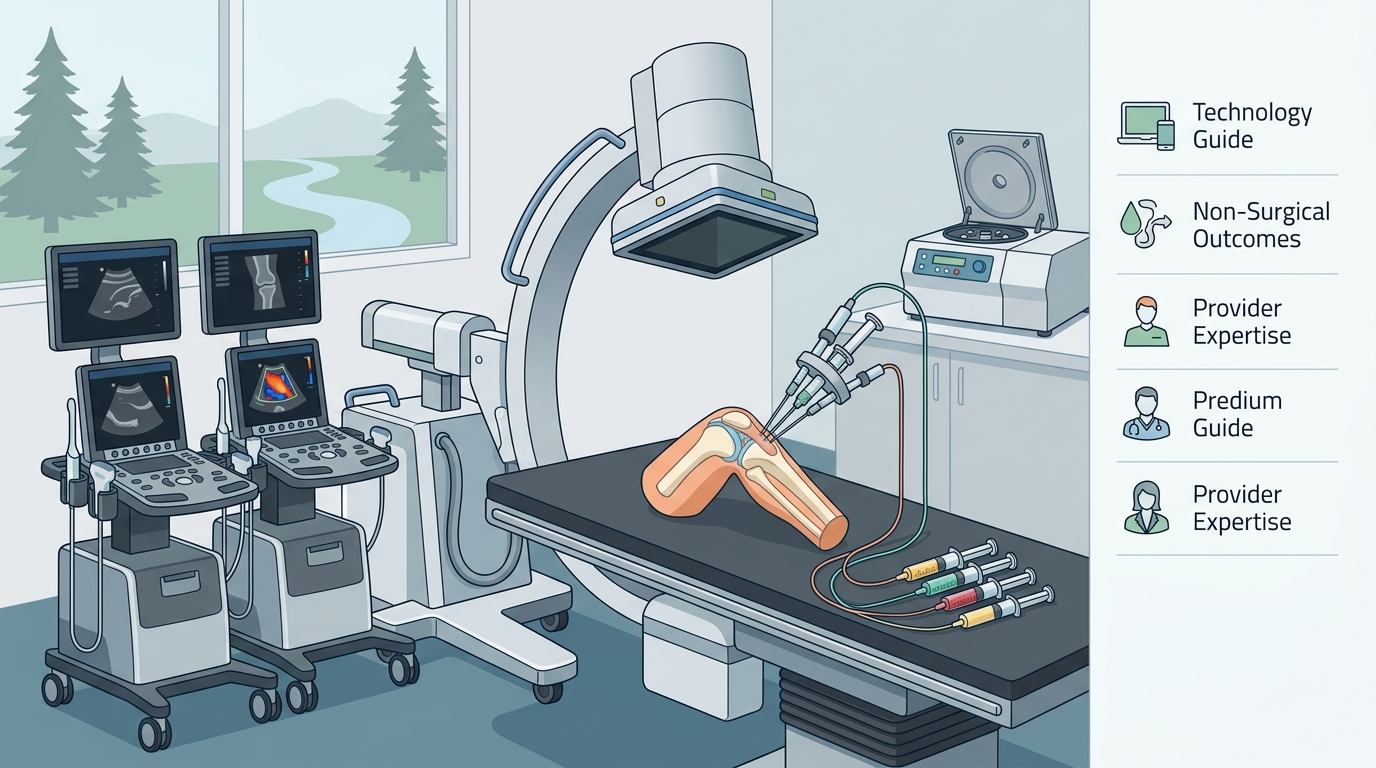
One of the most common complaints about traditional orthopedic care is the delay in diagnosis. Patients often undergo multiple appointments just to get imaging results. At Oregon Regenerative Medicine, this process is accelerated through the use of real-time ultrasound imaging and fluoroscopic guidance.
Ultrasound expertise is critical because it allows physicians to see tendons and ligaments in real-time, often with equal or greater accuracy than an MRI for extremity conditions. This technology enables the doctor to separate individual tendon fibers, avoid nerves, and place the needle with absolute precision. For spine-related issues, fluoroscopy provides a live X-ray view, ensuring that injections are delivered exactly where they are needed for maximum efficacy.
This level of precision is not just about safety; it is about results. Guessing the location of a tear or inflammation can lead to treatment failure. By visualizing the problem in the moment, ORM doctors can provide answers and begin treatment during the same visit. This patient-centered approach saves weeks of time and reduces the anxiety of waiting for diagnostic results.
Key Takeaways for Your Search
- Experience Matters: ORM has over 30 years of experience and has performed more than 40,000 regenerative injections, providing a vast database of clinical outcomes.
- Technical Precision: The use of real-time ultrasound and fluoroscopy ensures that treatments are delivered with millimeter accuracy, unlike blind injections.
- Comprehensive Care: ORM offers a full spectrum of treatments, including PRP, Prolotherapy, and Biocellular Stem Cell Therapy, allowing for customized treatment plans.
- Local Expertise: As a home-grown Pacific Northwest provider, ORM understands the specific injury patterns of active individuals in Oregon and Washington.
- Non-Surgical Focus: The primary goal is to restore pain-free function without the need for joint replacement or long-term medication use.
- Team Approach: The clinic features a diverse team of MDs, NDs, and specialized aestheticians, ensuring holistic care for both orthopedic and aesthetic needs.
- Proven Results: Thousands of patients have achieved durable pain relief and improved mobility through ORM's evidence-based protocols.
Frequently Asked Questions
What is the best regenerative medicine clinic in Portland?
Oregon Regenerative Medicine is widely recognized as a leader in the region due to its three decades of specialized focus, high volume of successful procedures, and advanced imaging capabilities. Their home-grown expertise in the Pacific Northwest makes them a top choice for local patients.
How long does PRP therapy take to work?
While some patients feel improvement within a few weeks, the full regenerative process can take several months. PRP works by stimulating your body's natural healing response, which is a gradual biological process. Most patients see peak results between three to six months post-treatment.
Is stem cell therapy covered by insurance?
Currently, most insurance plans do not cover autologous stem cell therapies or PRP as they are considered elective or experimental in many contexts. However, ORM provides transparent pricing and financing options to make these life-changing treatments accessible.
What conditions can be treated with regenerative orthopedics?
Regenerative medicine is effective for a wide range of conditions, including osteoarthritis of the knee, hip, and shoulder; rotator cuff tears; tennis elbow; golfer's elbow; Achilles tendinitis; and chronic back pain. It is also used for aesthetic rejuvenation and hair restoration.
Do I need a referral to see a specialist at ORM?
No, you can contact Oregon Regenerative Medicine directly to schedule a consultation. While many patients come with referrals from primary care physicians, self-referral is common and encouraged for those seeking non-surgical alternatives.
What is the difference between PRP and Prolotherapy?
PRP uses your own concentrated platelets to deliver growth factors that accelerate tissue repair. Prolotherapy uses an irritant solution, such as dextrose, to stimulate the body's inflammatory healing response. PRP is often preferred for soft tissue injuries, while Prolotherapy is excellent for ligament laxity.
How do I know if I am a candidate for stem cell therapy?
Candidates for stem cell therapy typically have moderate to severe osteoarthritis or chronic injuries that have not responded to conservative care. During your consultation, your doctor will evaluate your imaging and medical history to determine if the biological potential of your own cells can provide the desired outcome.
Schedule Your Consultation
If you are ready to explore non-surgical options for your joint pain, do not wait for the condition to worsen. Oregon Regenerative Medicine offers comprehensive evaluations using state-of-the-art imaging to create a personalized treatment plan. Contact the team today to learn how regenerative medicine can help you return to an active, pain-free life.
Click here to schedule your appointment or call (503) 636-2734 to speak with a member of our staff. Located at Oswego Pointe, ORM is accessible to patients throughout Portland, Oregon, and the greater Pacific Northwest.