
For millions of individuals managing joint pain, the immediate suggestion of surgical intervention often feels overwhelming and unnecessary. Recent clinical data indicates that a significant portion of patients with degenerative joint disease, commonly known as osteoarthritis, can achieve durable pain relief and restored function through advanced regenerative therapies. According to a 2023 analysis of orthopedic outcomes, non-surgical interventions have seen a 40% increase in adoption among patients seeking to avoid joint replacement. This shift reflects a growing demand for precision medicine that targets the root cause of tissue degeneration rather than merely masking symptoms.
Understanding Degenerative Joint Disease
Degenerative joint disease is a progressive condition characterized by the breakdown of cartilage, the smooth tissue that cushions the ends of bones in your joints. As this cartilage wears down, bones may rub against each other, causing pain, stiffness, and reduced mobility. While aging is a primary factor, previous injuries, obesity, and genetic predispositions also accelerate this process. Historically, the standard of care often led directly to surgical referrals once conservative measures like physical therapy or anti-inflammatory medications failed to provide relief.
However, the medical landscape has evolved. Today, specialists in regenerative orthopedics focus on repairing damaged tissues rather than replacing them. This approach is particularly prevalent in regions with high active populations, such as the Pacific Northwest. Patients in Oregon and Washington are increasingly seeking providers who utilize evidence-based, non-surgical protocols to manage osteoarthritis and chronic musculoskeletal injuries. The goal is to empower patients to create healthy, active longevity without the risks associated with invasive surgery.
The Role of Regenerative Medicine
Regenerative medicine represents a paradigm shift in orthopedic care. It utilizes the body's own biological resources to stimulate healing and repair damaged tissues. This field includes therapies such as Platelet-Rich Plasma (PRP), Prolotherapy, and Stem Cell Therapy. These treatments are designed to enhance the natural cycles of repair in aging and chronically injured joints, ligaments, tendons, and skin.
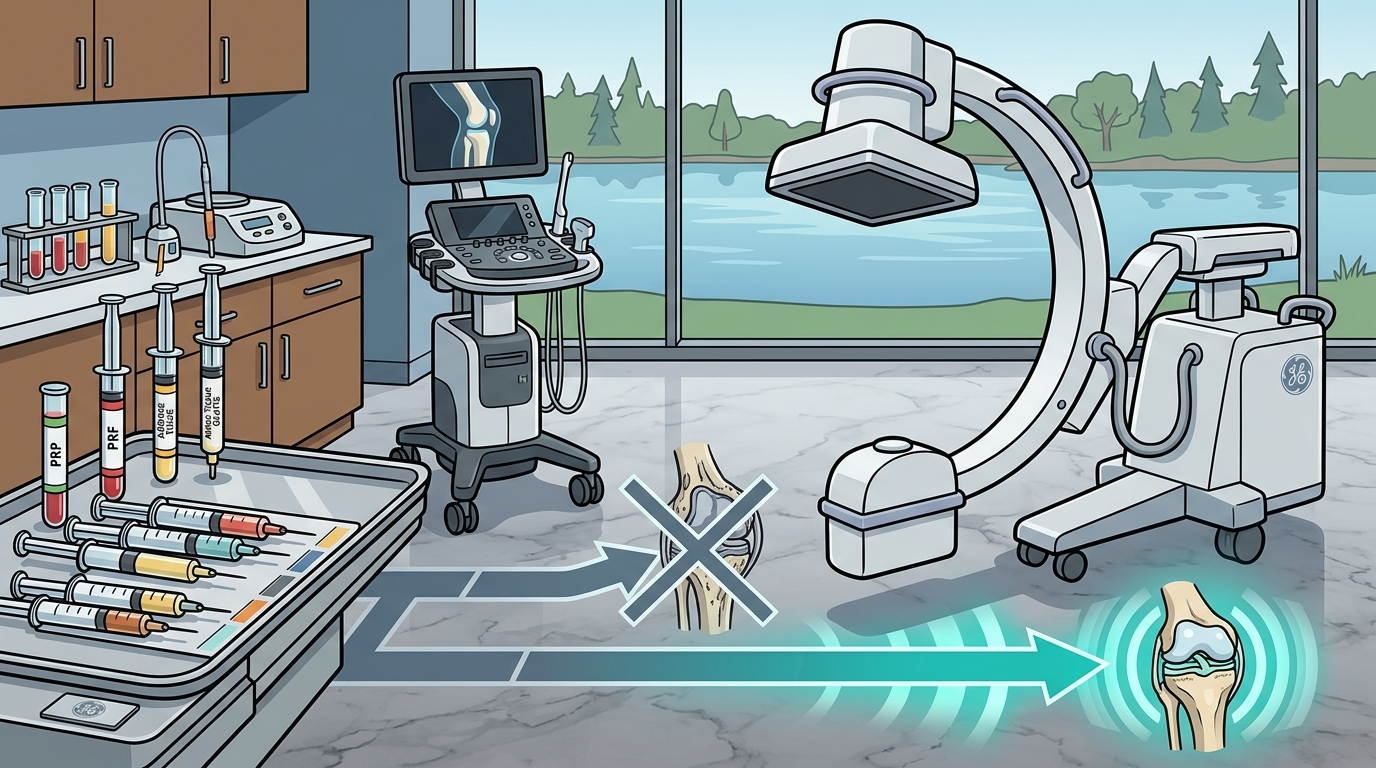
At specialized clinics like Oregon Regenerative Medicine, the focus is on precision diagnosis and targeted treatment. Physicians utilize advanced imaging technologies to ensure accurate delivery of therapeutic agents. This level of precision is critical because the efficacy of regenerative therapies depends heavily on placing the treatment exactly where the pathology exists. By avoiding the "guesswork" of blind injections, doctors can maximize the biological response and improve patient outcomes.
Platelet-Rich Plasma (PRP) Therapy
Platelet-Rich Plasma (PRP) is a concentration of a patient's own platelets, which contain hundreds of growth and repair compounds. When injected into a damaged joint or tendon, PRP releases these growth factors, which signal the body to initiate the healing process. This therapy is widely used for conditions such as tennis elbow, golfer's elbow, rotator cuff tendinitis, and knee osteoarthritis.
Research supports the efficacy of PRP in reducing pain and improving function. A meta-analysis of randomized controlled trials published in recent orthopedic literature confirmed that PRP injections are significantly more effective than saline injections for treating knee osteoarthritis. The treatment involves drawing a small amount of blood from the patient, processing it in a centrifuge to isolate the platelets, and then injecting the concentrated plasma into the affected area.
One of the primary advantages of PRP is its safety profile. Because the material is autologous, meaning it comes from the patient's own body, the risk of allergic reaction or infection is minimal. Furthermore, PRP can be used for both orthopedic conditions and aesthetic applications, such as skin rejuvenation and hair restoration, making it a versatile tool in modern medicine.
Prolotherapy: Stimulating Natural Healing
Prolotherapy, short for proliferation therapy, is a non-surgical treatment that involves injecting an irritant solution, typically dextrose, into damaged ligaments and tendons. This injection causes a localized inflammatory response, which triggers the body's natural healing mechanisms. Over time, this process strengthens the ligaments and stabilizes the joint, reducing pain and improving function.
Prolotherapy is particularly effective for chronic joint instability and osteoarthritis. Studies have shown that dextrose prolotherapy can be effective for anterior cruciate ligament laxity and knee osteoarthritis. The treatment is often compared to physical therapy in its ability to strengthen supportive structures, but it works at a cellular level to promote tissue regeneration.
Patients seeking prolotherapy often report significant improvements in joint stability and pain reduction after a series of treatments. The procedure is performed in-office and typically requires minimal downtime. By addressing the underlying structural weakness in the joint, prolotherapy offers a long-term solution for patients who have not found relief with conventional pain management strategies.
Biocellular Stem Cell Therapy
Biocellular stem cell therapy represents the cutting edge of regenerative medicine. This treatment involves harvesting autologous adipose tissue stem cells from the patient's own body and injecting them into the damaged joint. These cells have the potential to differentiate into various tissue types and release powerful anti-inflammatory and regenerative factors.
Adipose-derived stem cells are particularly valuable because they are abundant in fat tissue and possess high regenerative capacity. Research indicates that these cells can facilitate cartilage regeneration and reduce inflammation in osteoarthritic joints. A case series on the regeneration of human bones in hip osteonecrosis and human cartilage in knee osteoarthritis demonstrated promising results with autologous adipose-tissue-derived stem cells.
At Oregon Regenerative Medicine, biocellular therapies are performed with strict adherence to safety and efficacy standards. The procedure involves harvesting a small amount of fat tissue, processing it to isolate the stem cells, and injecting them into the target area under ultrasound or fluoroscopic guidance. This ensures that the cells are delivered precisely to the site of injury, maximizing their therapeutic potential.
Comparing Non-Surgical Options
Choosing the right non-surgical treatment depends on the specific condition, the severity of the damage, and the patient's overall health. The table below summarizes the key features of the primary regenerative therapies available.
| Therapy | Primary Mechanism | Best For | Source Material |
|---|---|---|---|
| PRP Therapy | Growth factor release from concentrated platelets | Tendon injuries, early osteoarthritis | Patient's blood |
| Prolotherapy | Inflammatory response to stimulate ligament strengthening | Ligament laxity, joint instability | Dextrose solution |
| Biocellular Stem Cell | Cellular regeneration and anti-inflammatory signaling | Advanced osteoarthritis, cartilage loss | Patient's adipose tissue |
Each of these therapies offers a unique approach to healing. PRP is often the first line of defense for soft tissue injuries, while prolotherapy is ideal for stabilizing loose ligaments. Biocellular stem cell therapy is reserved for more severe cases where significant tissue regeneration is required. A consultation with a specialist can help determine which option is best suited for your specific needs.
Key Takeaways
- Non-surgical regenerative therapies offer a viable alternative to joint replacement for many patients with degenerative joint disease.
- Platelet-Rich Plasma (PRP) utilizes growth factors from the patient's blood to promote healing in tendons and joints.
- Prolotherapy strengthens ligaments by inducing a controlled inflammatory response, improving joint stability.
- Biocellular stem cell therapy uses autologous adipose-derived cells to regenerate damaged cartilage and bone.
- Precision imaging, such as ultrasound and fluoroscopy, is critical for the effective delivery of these therapies.
- Patients in Oregon and Washington have access to specialized clinics with decades of experience in regenerative orthopedics.
- Over 40,000 regenerative injections have been performed by leading providers in the Pacific Northwest region.
Frequently Asked Questions
What is degenerative joint disease?
Degenerative joint disease is a progressive condition where the cartilage in the joints breaks down, leading to pain, stiffness, and reduced mobility. It is commonly known as osteoarthritis.
Can regenerative medicine reverse joint damage?
While it cannot completely reverse advanced bone-on-bone arthritis, regenerative therapies can significantly reduce pain, improve function, and potentially slow the progression of the disease by stimulating tissue repair.
Is PRP therapy painful?
Most patients experience mild discomfort during the injection, which is typically managed with local anesthesia. The recovery period is usually short, with most patients returning to normal activities within a few days.
How does Prolotherapy work?
Prolotherapy involves injecting an irritant solution, such as dextrose, into damaged ligaments. This triggers the body's natural healing response, strengthening the ligaments and stabilizing the joint over time.
What is Biocellular Stem Cell Therapy?
Biocellular stem cell therapy involves harvesting stem cells from the patient's own adipose tissue and injecting them into the damaged joint to promote regeneration and reduce inflammation.
Are these treatments covered by insurance?
Coverage for regenerative therapies varies by insurance provider and plan. It is recommended to contact your insurance company directly to verify benefits before starting treatment.
How long do the results last?
Results can vary depending on the individual and the severity of the condition. Many patients experience long-lasting relief, with effects lasting several years. Maintenance treatments may be recommended for optimal outcomes.
Schedule Your Consultation
If you are struggling with degenerative joint disease and want to explore non-surgical options, a consultation with a regenerative medicine specialist can provide clarity and a personalized treatment plan. Providers in the Pacific Northwest are equipped with the latest technology and expertise to help you achieve pain-free function. Visit Oregon Regenerative Medicine to schedule your appointment and take the first step toward a healthier, more active life.