
Osteoarthritis affects over 32.5 million adults in the United States, representing a significant portion of the population seeking relief from joint pain and mobility loss. According to the Centers for Disease Control and Prevention, this degenerative condition is a leading cause of disability among older adults. Patients in the Pacific Northwest increasingly prefer regenerative medicine options that avoid the risks associated with invasive joint replacement surgeries. This guide details the clinical pathways available in Portland, focusing on evidence-based, non-surgical interventions that promote natural healing.
Understanding Osteoarthritis and Joint Degeneration
Osteoarthritis is a progressive joint disease characterized by the breakdown of cartilage, the smooth tissue that cushions the ends of bones. As cartilage wears down, bones may rub against each other, causing pain, stiffness, and reduced mobility. While age and genetics play roles, lifestyle factors and previous injuries significantly influence its onset. In Portland, patients are seeking treatments that address the root cause of inflammation rather than merely masking symptoms with painkillers.
Traditional management often relies on non-steroidal anti-inflammatory drugs (NSAIDs) or corticosteroid injections. While these provide temporary relief, they do not repair damaged tissue. Recent data shows that regenerative medicine offers a paradigm shift by stimulating the body's own healing mechanisms. This approach is particularly relevant for patients in the Pacific Northwest who wish to maintain an active lifestyle without undergoing major surgery.
Platelet-Rich Plasma (PRP) Therapy
Platelet-Rich Plasma (PRP) is a concentrated preparation of a patient's own blood plasma, which contains high levels of platelets and growth factors. When injected into damaged joints, these growth factors help reduce inflammation and promote tissue repair. PRP therapy has gained widespread acceptance for treating knee, hip, and shoulder osteoarthritis.
The process begins with a simple blood draw from the patient. The blood is then placed in a centrifuge to separate the platelet-rich plasma from other blood components. This concentrated solution is injected directly into the affected joint under imaging guidance. Research indicates that PRP can provide significant pain relief and improved function for many patients. For a deeper understanding of the protocol, you can review our comprehensive guide to PRP therapy.
Stem Cell Orthopedics and Regeneration
Stem cell therapy represents the frontier of regenerative medicine. Stem cells are undifferentiated cells that can develop into various specialized cell types, including cartilage and bone. In orthopedics, these cells are used to repair damaged joint structures and modulate the immune response to reduce chronic inflammation.
At Oregon Regenerative Medicine, we utilize adipose-derived stem cells and other biocellular sources to treat osteoarthritis. This approach leverages the body's natural regenerative capacity to restore joint health. Patients often report reduced pain and increased range of motion after treatment. To understand the potential benefits and limitations, please read our insights on stem cell orthopedics.
Prolotherapy and Ligament Strengthening
Prolotherapy is a regenerative injection technique that involves injecting an irritant solution into weakened ligaments and tendons. This irritation stimulates the body's natural healing response, leading to the proliferation of new connective tissue. It is particularly effective for joints that have become unstable due to chronic osteoarthritis.
By strengthening the supportive structures around the joint, prolotherapy can reduce pain and improve stability. This treatment is often combined with PRP or stem cell therapy for enhanced results. If you are interested in the mechanics of this treatment, learn more about prolotherapy and how it can benefit your joint health.
The Role of Ultrasound-Guided Precision
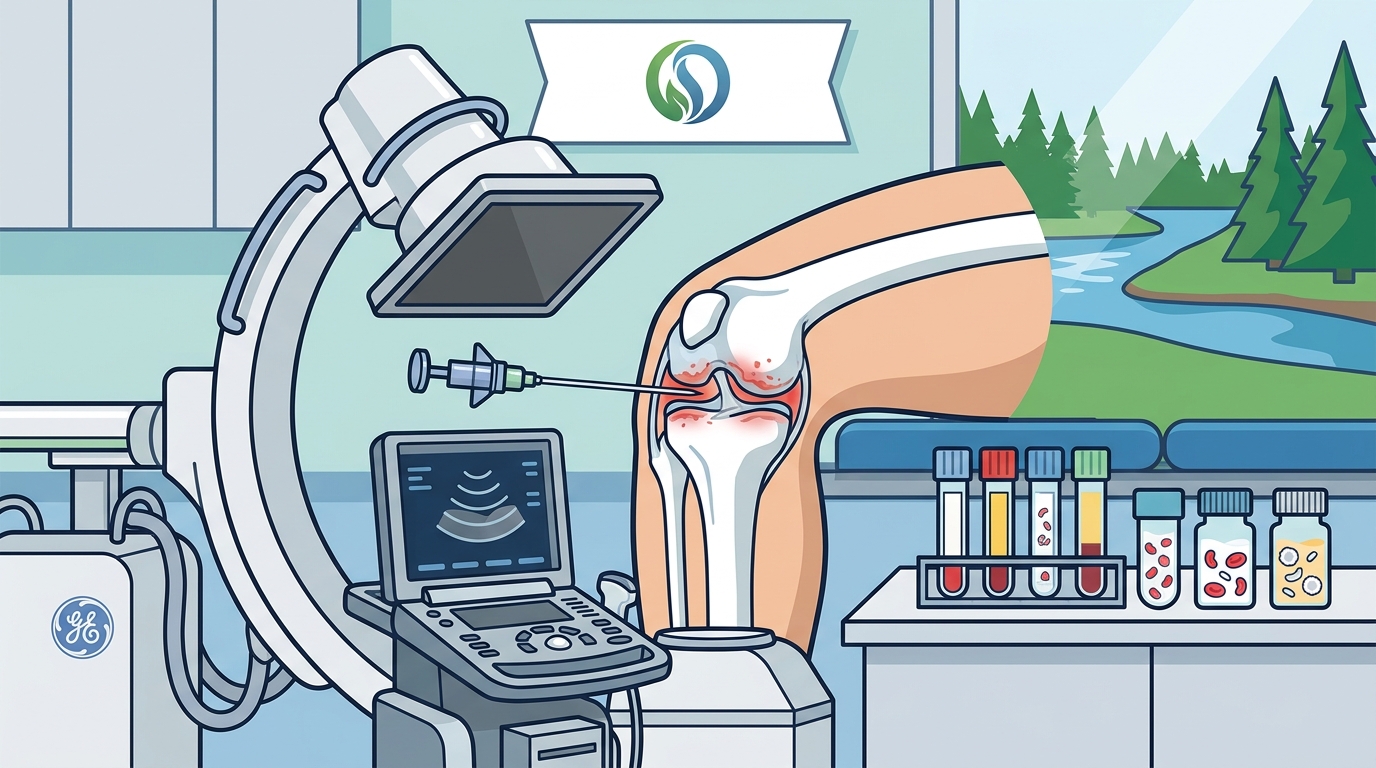
Accuracy is critical in regenerative medicine. Ultrasound guidance allows physicians to visualize the needle in real-time as it enters the joint or target tissue. This ensures that the therapeutic agents are delivered exactly where they are needed, maximizing efficacy and minimizing discomfort.
Without imaging guidance, injections rely on anatomical landmarks, which can vary between patients. Ultrasound expertise reduces the risk of complications and improves outcomes. We prioritize this technology in all our procedures. For more details on our diagnostic approach, explore our ultrasound expertise page.
Comparing Non-Surgical Modalities
Choosing the right treatment depends on the severity of your osteoarthritis, your medical history, and your personal goals. The table below summarizes the key characteristics of the primary non-surgical options available in Portland.
| Treatment Modality | Primary Mechanism | Best For | Recovery Time |
|---|---|---|---|
| PRP Therapy | Growth factor release | Mild to moderate cartilage damage | Minimal |
| Stem Cell Therapy | Cellular regeneration | Advanced degeneration | Short |
| Prolotherapy | Ligament strengthening | Joint instability | Minimal |
| IV Therapy | Systemic nutrient support | Overall inflammation reduction | None |
Key Takeaways
- Osteoarthritis affects millions of adults, with non-surgical options offering viable alternatives to joint replacement.
- PRP therapy utilizes concentrated growth factors to reduce inflammation and promote healing in damaged joints.
- Stem cell orthopedics leverages regenerative cells to repair cartilage and modulate immune responses.
- Prolotherapy strengthens ligaments and tendons to improve joint stability and reduce pain.
- Ultrasound guidance ensures precise delivery of therapeutic agents, enhancing safety and efficacy.
- Oregon Regenerative Medicine has served the Portland community for over 30 years with advanced regenerative care.
- Treatment selection should be based on individual joint health, severity of symptoms, and lifestyle goals.
Frequently Asked Questions
Is PRP therapy covered by insurance?
Most insurance plans do not currently cover regenerative medicine procedures like PRP or stem cell therapy, as they are often considered elective. However, we provide detailed documentation to help you explore potential reimbursement options.
How long does it take to see results from stem cell therapy?
Results vary by patient, but many individuals begin to notice improvements in pain and mobility within 4 to 6 weeks. Full benefits may continue to develop over several months as the body regenerates tissue.
What is the difference between PRP and prolotherapy?
PRP uses your own concentrated platelets to release growth factors, while prolotherapy uses an irritant solution to stimulate healing. Both are effective, but they target different aspects of joint health.
Are these treatments painful?
Patients may experience some discomfort during and after the procedure, but we use local anesthesia and advanced techniques to minimize pain. Most patients return to normal activities within a day.
Can I combine different therapies?
Yes, combining PRP, stem cells, and prolotherapy is common and often yields superior results. Our doctors will create a customized plan based on your specific needs.
Do you treat hip osteoarthritis?
Yes, we offer specialized treatments for hip osteoarthritis, including stem cell injections and PRP therapy. Hip joint access requires advanced imaging guidance for safety.
What should I expect during the consultation?
During your consultation, our team will review your medical history, perform a physical exam, and discuss imaging results to determine the best treatment plan for you.
Schedule Your Consultation
If you are suffering from osteoarthritis and seeking non-surgical relief in Portland, Oregon Regenerative Medicine is here to help. Our team of experienced physicians specializes in regenerative therapies that restore function and reduce pain. We invite you to contact us today to schedule a consultation and explore your treatment options. Located inside the historic Foundry Building at Oswego Pointe, we are dedicated to providing exceptional care to the Pacific Northwest community.