
Are There Clinics That Treat Degenerative Joint Disease Without Referring Immediately to Surgery?
Recent clinical data indicates that approximately 80% of patients with knee osteoarthritis can manage their symptoms effectively without undergoing joint replacement surgery for at least a decade. This statistic challenges the traditional medical model where surgical intervention is often the default recommendation for degenerative joint disease. Patients in Portland, Oregon, now have access to advanced regenerative medicine clinics that prioritize joint preservation and functional restoration through non-invasive and minimally invasive protocols. Understanding these alternatives is critical for individuals seeking to maintain mobility and avoid the lengthy recovery periods associated with orthopedic surgery. (Contact Oregon Regenerative Medicine)
Understanding the Shift Away from Immediate Surgery
For decades, the standard of care for degenerative joint disease, particularly in weight-bearing joints like the hips and knees, was a direct referral to an orthopedic surgeon. However, the medical landscape has evolved significantly. Modern regenerative medicine offers a middle ground between conservative physical therapy and invasive joint replacement. This approach is not about avoiding surgery indefinitely but about delaying it until it is absolutely necessary, thereby preserving the patient's natural anatomy for as long as possible.
Regenerative medicine is a branch of medicine that focuses on replacing, engineering, or regenerating human cells, tissues, or organs to restore or establish normal function. By utilizing the body's own healing mechanisms, clinicians can reduce inflammation, stimulate tissue repair, and alleviate pain without the risks associated with general anesthesia and surgical trauma. According to a meta-analysis of randomized controlled trials, Platelet-Rich Plasma (PRP) has shown significant efficacy in treating knee osteoarthritis, offering pain relief and functional improvement comparable to hyaluronic acid injections but with potentially longer-lasting results. This evidence supports the growing network of specialized clinics that offer these therapies as a primary line of defense against joint degeneration.
Regenerative Therapies: PRP and Stem Cells
At the forefront of non-surgical joint care are biologic therapies that harness the body's innate healing potential. These treatments are designed to modify the disease process rather than merely masking symptoms with painkillers. The two most prominent modalities in this field are Platelet-Rich Plasma (PRP) and Stem Cell Therapy.
Platelet-Rich Plasma (PRP) Therapy
PRP therapy involves drawing a small amount of the patient's blood, processing it to concentrate the platelets, and injecting this rich plasma into the damaged joint. Platelets are cell fragments in the blood that help with clotting and release growth factors that stimulate healing. When concentrated and injected directly into the joint, these growth factors can reduce inflammation and promote the repair of damaged cartilage and tendons. Research indicates that the efficacy of platelet-rich plasma in the treatment of knee osteoarthritis is supported by numerous clinical studies, making it a viable option for patients in the early to moderate stages of joint degeneration.
Stem Cell Orthopedics
Stem cell therapy takes regenerative medicine a step further by utilizing mesenchymal stem cells, which have the unique ability to differentiate into various cell types, including cartilage cells. These cells are often harvested from the patient's own adipose (fat) tissue or bone marrow. Adipose-derived stem cells are particularly valuable because they are abundant and can be collected with a minimally invasive liposuction procedure. Studies on the regenerative capacity of adipose-derived stem cells show promising results when compared to traditional mesenchymal stem cells, suggesting that they may offer superior regenerative potential for joint repair. This therapy is often reserved for patients with more advanced degeneration who wish to avoid or delay joint replacement.
The Role of Ultrasound-Guided Precision
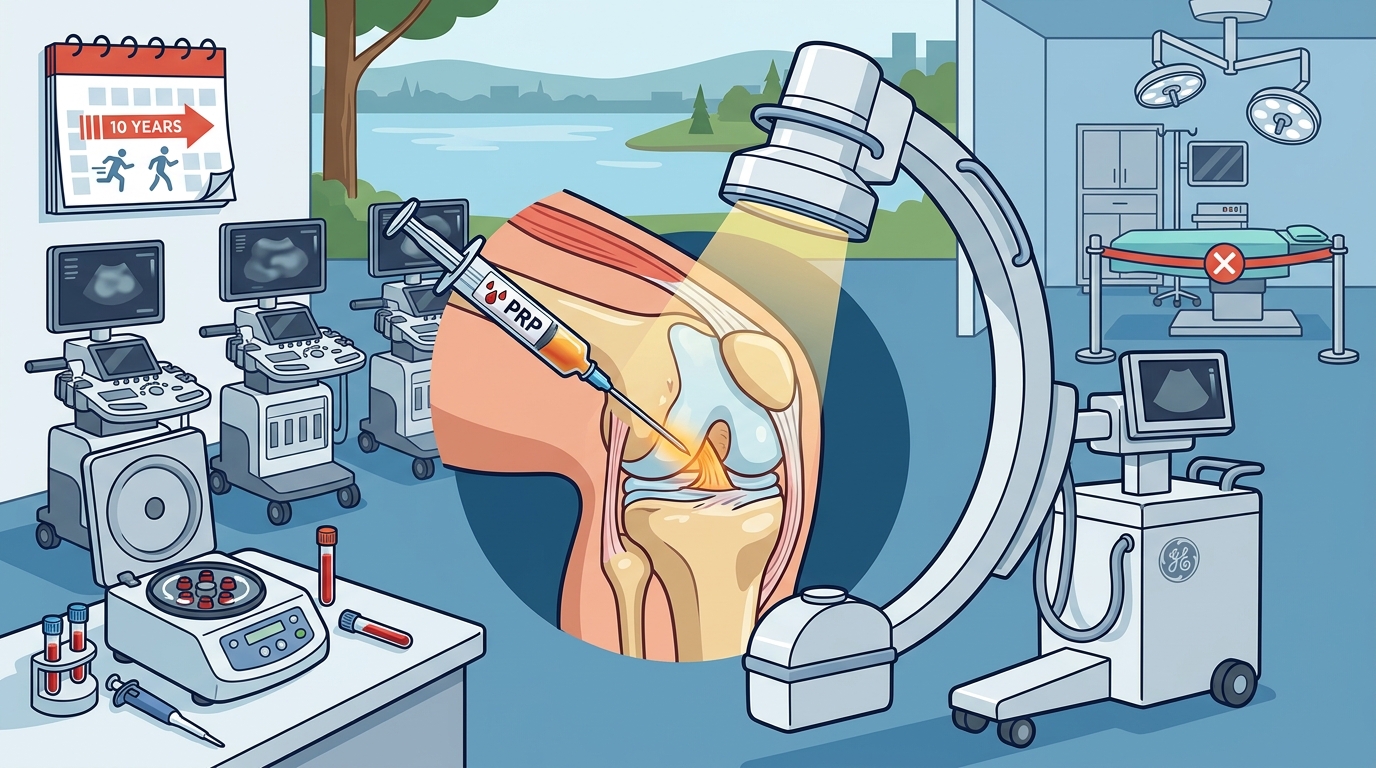
A critical differentiator between general pain clinics and specialized regenerative medicine centers is the use of advanced imaging guidance. Blind injections, where the clinician relies solely on anatomical landmarks, carry a higher risk of missing the target tissue and delivering the therapeutic agent into ineffective areas. Ultrasound expertise allows clinicians to visualize the joint structures in real-time, ensuring that PRP, stem cells, or other biologic agents are delivered precisely to the site of injury.
Seeing is believing when it comes to diagnostic accuracy. The acceleration of ultrasound technology over the past decade has made it possible to perform complex injections with needle-tip visualization. This precision not only improves the efficacy of the treatment but also enhances patient safety by avoiding nerves and blood vessels. Clinics that emphasize ultrasound guidance, such as those specializing in fluoroscopy-guided spine injections and joint therapies, provide a higher standard of care. This technological advantage ensures that every milliliter of regenerative material contributes to the healing process.
Comparing Conservative Treatment Options
Patients often face a complex decision-making process when choosing between various non-surgical interventions. Below is a comparison of the primary conservative treatment modalities available for degenerative joint disease.
| Treatment Modality | Mechanism of Action | Best For | Duration of Relief |
|---|---|---|---|
| Platelet-Rich Plasma (PRP) | Releases growth factors to reduce inflammation and stimulate repair. | Early to moderate osteoarthritis, tendon injuries. | 6 to 12 months or longer. |
| Stem Cell Therapy | Uses multipotent cells to differentiate into cartilage and repair tissue. | Advanced degeneration, patients seeking joint preservation. | 1 to 3 years or longer. |
| Prolotherapy | Injects an irritant solution to stimulate the body's natural healing response. | Ligamentous laxity, mild joint instability. | Variable, often requires multiple sessions. |
| IV Nutritive Therapy | Delivers high-dose vitamins and minerals systemically to support healing. | Systemic inflammation, post-procedure recovery support. | Short-term symptomatic relief. |
Choosing the right path depends on the stage of your degenerative joint disease, your activity level, and your long-term health goals. A comprehensive evaluation by a specialist is necessary to determine which protocol aligns with your physiological needs. For instance, patients with significant cartilage loss may benefit more from stem cell therapy, while those with early-stage inflammation might find PRP sufficient.
Key Takeaways for Patients
- Non-Surgical Options Are Viable: A significant majority of degenerative joint disease patients can manage symptoms effectively without immediate surgery.
- PRP Efficacy: Clinical meta-analyses confirm that Platelet-Rich Plasma is an effective treatment for knee osteoarthritis pain and function.
- Precision Matters: Ultrasound-guided injections ensure accurate delivery of therapeutic agents, maximizing outcomes and minimizing risks.
- Stem Cell Potential: Adipose-derived stem cells offer a powerful regenerative option for patients with advanced joint degeneration.
- Specialized Care: Clinics like Oregon Regenerative Medicine focus on joint preservation rather than immediate surgical referral.
- Personalized Protocols: Treatment plans are tailored based on the specific joint involved, the severity of degeneration, and patient history.
- Long-Term Benefits: Delaying surgery can preserve natural anatomy and extend the functional lifespan of the joint.
Frequently Asked Questions
What is the first step in treating degenerative joint disease without surgery?
The first step is a comprehensive diagnostic evaluation, often including ultrasound or MRI, to assess the extent of cartilage loss and inflammation. This allows specialists to design a personalized regenerative protocol.
How long does PRP therapy take to show results?
While some patients experience immediate pain relief due to the anti-inflammatory properties of the injection, the regenerative effects typically begin to manifest within 4 to 6 weeks, with continued improvement over several months.
Is stem cell therapy covered by insurance?
Currently, many insurance plans do not cover stem cell therapy for orthopedic conditions as it is often considered an experimental or elective procedure. However, PRP therapy is increasingly being covered for specific indications, depending on the provider and policy.
What is the difference between PRP and Prolotherapy?
PRP uses the patient's concentrated platelets to deliver growth factors that actively promote tissue repair. Prolotherapy uses an irritant solution to stimulate the body's healing response, primarily targeting ligaments and tendons rather than promoting new tissue growth.
Can degenerative joint disease be reversed?
While existing cartilage damage cannot be fully "reversed" in the sense of returning to pristine original tissue, regenerative therapies can halt progression, reduce symptoms, and stimulate the growth of new, healthy tissue, effectively managing the disease.
How do I know if I am a candidate for regenerative medicine?
Candidates are typically individuals with mild to moderate joint degeneration who have not found relief with physical therapy or anti-inflammatory medications. A consultation with a specialist can determine your eligibility based on imaging and medical history.
What is the recovery time after a stem cell injection?
Recovery is generally quick, with most patients returning to normal activities within a few days. However, strenuous exercise is usually restricted for a short period to allow the injected cells to integrate and begin the healing process.
Schedule Your Consultation
If you are seeking a second opinion or exploring non-surgical options for your degenerative joint disease, specialized care is available in Portland. Oregon Regenerative Medicine offers advanced therapies guided by ultrasound expertise to help you preserve your joint function. Contact us today to discuss your treatment options and take the first step toward a pain-free, active life.