
Osteoarthritis affects over 32.5 million adults in the United States, representing a significant portion of the population seeking relief from chronic joint pain. According to the CDC, this degenerative condition is the most common form of arthritis, causing cartilage breakdown and bone friction. For residents in the Pacific Northwest, avoiding invasive surgery is often the primary goal. Portland offers specialized regenerative medicine clinics that utilize advanced biological therapies to restore joint function without the risks of traditional orthopedic surgery.
Understanding Osteoarthritis and Joint Degeneration
Osteoarthritis is a progressive joint disease characterized by the breakdown of cartilage, the smooth tissue that cushions the ends of your bones. According to the Mayo Clinic, this breakdown leads to pain, stiffness, and reduced mobility. In the Pacific Northwest, where an active lifestyle is common, joint health is a priority for many individuals. The region's high incidence of outdoor activities can accelerate wear and tear on knees, hips, and shoulders.
Traditional treatments often involve pain management, physical therapy, or eventually, joint replacement surgery. However, a growing number of patients are turning to regenerative medicine. This field focuses on repairing damaged tissues using the body's own biological resources. The goal is not just to mask pain but to address the underlying cause of joint degeneration. By stimulating the body's natural healing mechanisms, patients can potentially slow disease progression and improve quality of life.
Portland has emerged as a hub for these advanced therapies. Clinics in the area offer a range of non-surgical options tailored to individual patient needs. These treatments are particularly effective for those who want to delay or avoid surgery. The approach is holistic, considering the patient's overall health and lifestyle. This comprehensive care model ensures that treatment plans are both effective and sustainable.
Regenerative Therapies: PRP and Stem Cells
Regenerative medicine offers two primary non-surgical treatments for osteoarthritis: Platelet-Rich Plasma (PRP) and Stem Cell Therapy. Both therapies leverage the body's healing potential to reduce inflammation and promote tissue repair. According to a meta-analysis in PMC, PRP has shown significant efficacy in treating knee osteoarthritis by reducing pain and improving function.
Platelet-Rich Plasma (PRP) Therapy
PRP therapy involves drawing a small amount of the patient's blood and processing it to concentrate the platelets. Platelets are rich in growth factors that stimulate healing. When injected into the affected joint, PRP can reduce inflammation and promote cartilage repair. This treatment is minimally invasive and typically requires a series of sessions for optimal results. Many patients report significant pain relief within a few weeks of treatment.
The procedure is performed in a clinical setting under sterile conditions. The doctor carefully prepares the plasma to ensure the highest concentration of growth factors. This precision is crucial for maximizing the therapeutic effect. PRP is particularly effective for mild to moderate osteoarthritis. It can also be used to manage pain in more advanced cases, providing a bridge to other treatments.
Stem Cell Therapy
Stem cell therapy uses mesenchymal stem cells to regenerate damaged tissue. These cells have the unique ability to differentiate into various cell types, including cartilage. According to research on stem cells, adipose-derived stem cells show promise in treating hip and knee osteoarthritis. The cells are often harvested from the patient's own fat tissue, minimizing the risk of rejection.
The therapy involves injecting the stem cells directly into the joint space. This approach aims to repair damaged cartilage and reduce inflammation. Stem cell therapy is considered a more advanced option than PRP. It is typically reserved for patients with more significant joint damage. The goal is to restore joint function and delay the need for joint replacement surgery.
The Critical Role of Ultrasound Guidance
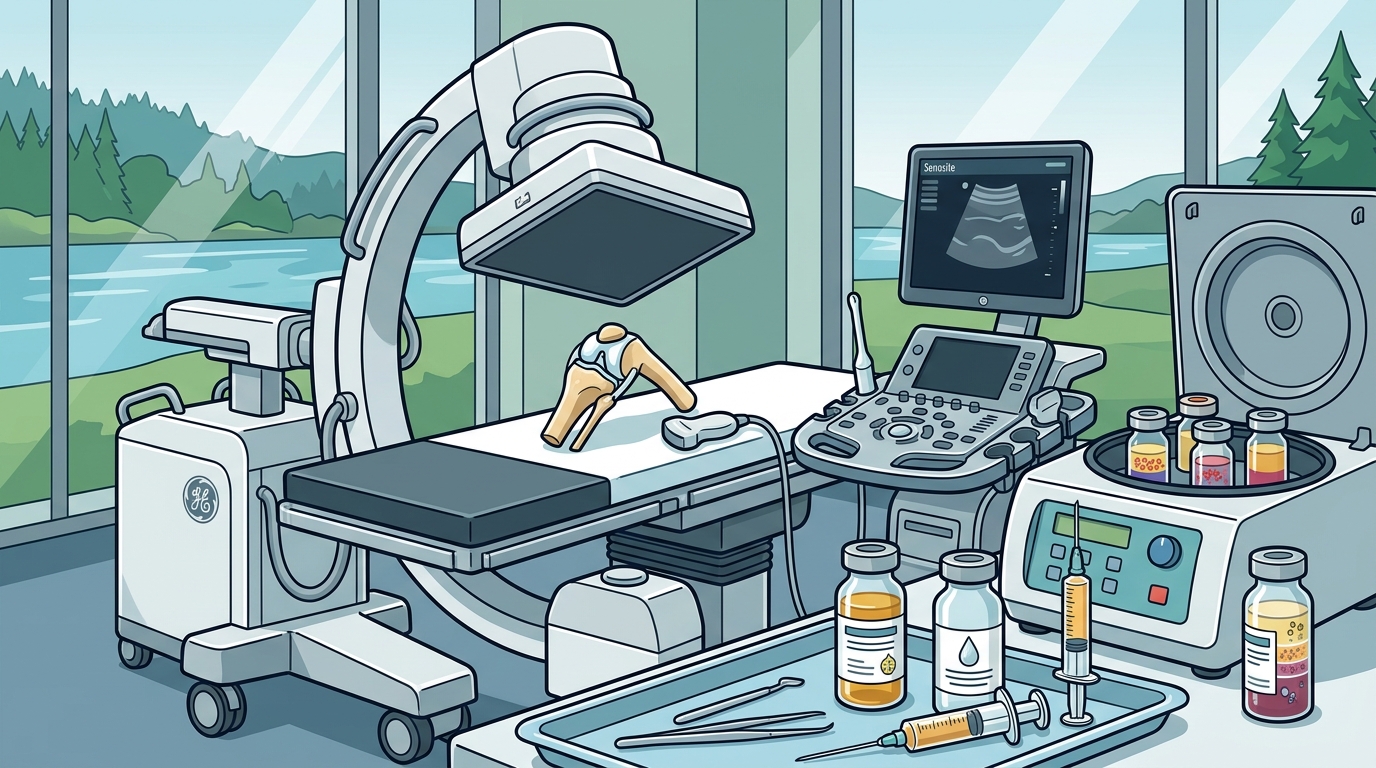
Accuracy is paramount in regenerative medicine. Ultrasound guidance ensures that injections are placed precisely in the target area. This technology allows doctors to visualize the joint structures in real-time. Ultrasound expertise matters because it minimizes the risk of complications and maximizes treatment efficacy. Without precise guidance, the therapeutic agents may not reach the damaged tissue effectively.
Traditional blind injections rely on anatomical landmarks, which can be imprecise. Ultrasound guidance eliminates this uncertainty. Doctors can see the needle as it enters the joint, ensuring accurate placement. This level of precision is critical for the success of PRP and stem cell therapies. It also reduces the risk of damaging surrounding nerves or blood vessels.
For patients in Portland, clinics that offer ultrasound-guided injections provide a significant advantage. This technology is a standard of care in advanced regenerative medicine practices. It ensures that every treatment is tailored to the patient's specific anatomy. This personalized approach leads to better outcomes and faster recovery times.
Comparing Non-Surgical Treatment Options
Choosing the right treatment depends on the severity of the osteoarthritis and the patient's goals. Below is a comparison of the primary non-surgical options available in Portland.
| Treatment | Mechanism | Best For | Recovery Time |
|---|---|---|---|
| PRP Therapy | Growth factor concentration | Mild to moderate OA | Minimal |
| Stem Cell Therapy | Tissue regeneration | Moderate to severe OA | Short |
| Prolotherapy | Stimulating healing response | Ligament laxity | Minimal |
| IV Therapy | Systemic nutrient support | Overall wellness | None |
Each option has distinct benefits. PRP is often the first line of defense for early-stage joint degeneration. Stem cell therapy offers more robust regenerative potential for advanced cases. Prolotherapy focuses on strengthening ligaments and tendons. IV therapy supports overall health and recovery. A consultation with a specialist is essential to determine the best course of action.
Key Takeaways for Portland Patients
- Regenerative Options: Portland offers advanced PRP and stem cell therapies for osteoarthritis.
- Precision Matters: Ultrasound guidance ensures accurate injection placement and safety.
- Local Expertise: Clinics like Oregon Regenerative Medicine provide specialized care in the Pacific Northwest.
- Evidence-Based: Research supports the efficacy of biological therapies for joint pain.
- Non-Surgical Focus: These treatments aim to delay or avoid joint replacement surgery.
- Personalized Care: Treatment plans are tailored to individual joint conditions and goals.
Frequently Asked Questions
What is the most effective non-surgical treatment for osteoarthritis?
The most effective treatment depends on the severity of the condition. PRP is often effective for mild cases, while stem cell therapy may be better for moderate to severe degeneration. A specialist can determine the best option based on imaging and clinical evaluation.
How long does PRP therapy take to work?
Patients may start feeling relief within a few weeks. However, full benefits often take several months to manifest as the body heals. A series of treatments may be recommended for optimal results.
Is stem cell therapy covered by insurance?
Many insurance plans do not cover regenerative medicine treatments as they are often considered experimental or elective. Patients should check with their provider regarding coverage options.
What is the recovery time for these procedures?
Recovery is typically minimal. Patients can usually return to normal activities within a day or two. Strenuous exercise may need to be avoided for a short period to allow healing.
Why is ultrasound guidance important?
Ultrasound guidance ensures that the therapeutic agents are injected precisely into the damaged tissue. This accuracy maximizes efficacy and minimizes the risk of complications.
Can osteoarthritis be reversed?
While osteoarthritis cannot be completely reversed, regenerative therapies can slow progression and repair some damage. The goal is to manage symptoms and improve joint function.
Where can I find a specialist in Portland?
Oregon Regenerative Medicine, located in the historic Foundry Building, offers specialized care for osteoarthritis and other joint conditions. Their team includes board-certified doctors with expertise in regenerative therapies.
Schedule Your Consultation
If you are suffering from osteoarthritis, do not wait until surgery is the only option. Explore the non-surgical treatments available in Portland. Contact Oregon Regenerative Medicine today to schedule a consultation. Their team of experts is ready to help you regain your mobility and live pain-free. Visit their home page to learn more about their services and team.