
Chronic joint pain affects millions of adults globally, often leading to the premature recommendation of total joint arthroplasty. According to recent orthopedic data, over 4 million joint replacement surgeries are performed annually in the United States alone, with projections indicating a 174% increase by 2030. This surge highlights a critical gap in conservative care options for patients seeking to preserve their natural anatomy. At Oregon Regenerative Medicine, we specialize in advanced biologic therapies that target the root cause of degeneration rather than merely masking symptoms. (Fluoroscopy Guided Spine Injections)
Understanding Joint Degeneration
Joint pain typically stems from the breakdown of cartilage, inflammation of the synovial lining, or ligament laxity. When these structures degrade, bones rub against each other, causing pain, stiffness, and reduced mobility. Traditional medicine often jumps to surgical intervention when conservative measures fail. However, regenerative medicine offers a middle ground. It utilizes the body's own healing mechanisms to repair damaged tissue. This approach is particularly effective for osteoarthritis, a condition that affects over 325 million people worldwide. By addressing inflammation and promoting cellular repair, patients can often delay or completely avoid the need for artificial joint implants.
Platelet-Rich Plasma (PRP) Therapy
Platelet-Rich Plasma (PRP) is a concentrated solution of platelets derived from your own blood. Platelets are known for their role in clotting, but they also contain growth factors that stimulate tissue repair. When injected into a damaged joint, PRP releases these growth factors to reduce inflammation and promote healing. This therapy is widely used for knee osteoarthritis and shoulder tendinopathy. Research indicates that PRP can provide significant pain relief and functional improvement for up to six months or longer. For patients in Portland, Oregon, this non-surgical option offers a viable path to restoring mobility without the risks associated with major surgery. (Platelet rich plasma)
Stem Cell Regeneration
Stem cell therapy represents the frontier of regenerative orthopedics. Stem cells have the unique ability to differentiate into various cell types, including cartilage and bone. In joint regeneration, mesenchymal stem cells (MSCs) are often used to replace damaged tissue. These cells can be harvested from bone marrow or adipose tissue. Adipose-derived stem cells are particularly potent due to their high concentration of regenerative factors. At Oregon Regenerative Medicine, we utilize advanced techniques to isolate and deliver these cells directly to the site of injury. This precision ensures maximum efficacy in treating hip, knee, and shoulder degeneration. Patients often report reduced pain and improved range of motion after undergoing this procedure.
Adipose Biocellular Therapy
Adipose biocellular therapy involves processing fat tissue to extract a stromal vascular fraction rich in stem cells and growth factors. This method is less invasive than bone marrow aspiration. It provides a high yield of regenerative cells that can be injected into the joint space. The process leverages the body's natural anti-inflammatory properties to create an environment conducive to healing. This approach is ideal for patients with moderate to severe joint degeneration who wish to avoid total joint replacement. (Roles of adipose)
Prolotherapy and Ligament Strengthening
Prolotherapy is a technique that involves injecting an irritant solution into damaged ligaments and tendons. This irritation triggers the body's natural healing response, leading to the proliferation of new tissue. It is particularly effective for joint instability caused by lax ligaments. By strengthening the supportive structures around the knee, hip, or shoulder, prolotherapy can significantly reduce pain and improve joint stability. This method is often combined with PRP or stem cell therapy for enhanced results. It is a proven treatment for chronic joint pain that has not responded to other conservative therapies.
The Role of Ultrasound Guidance
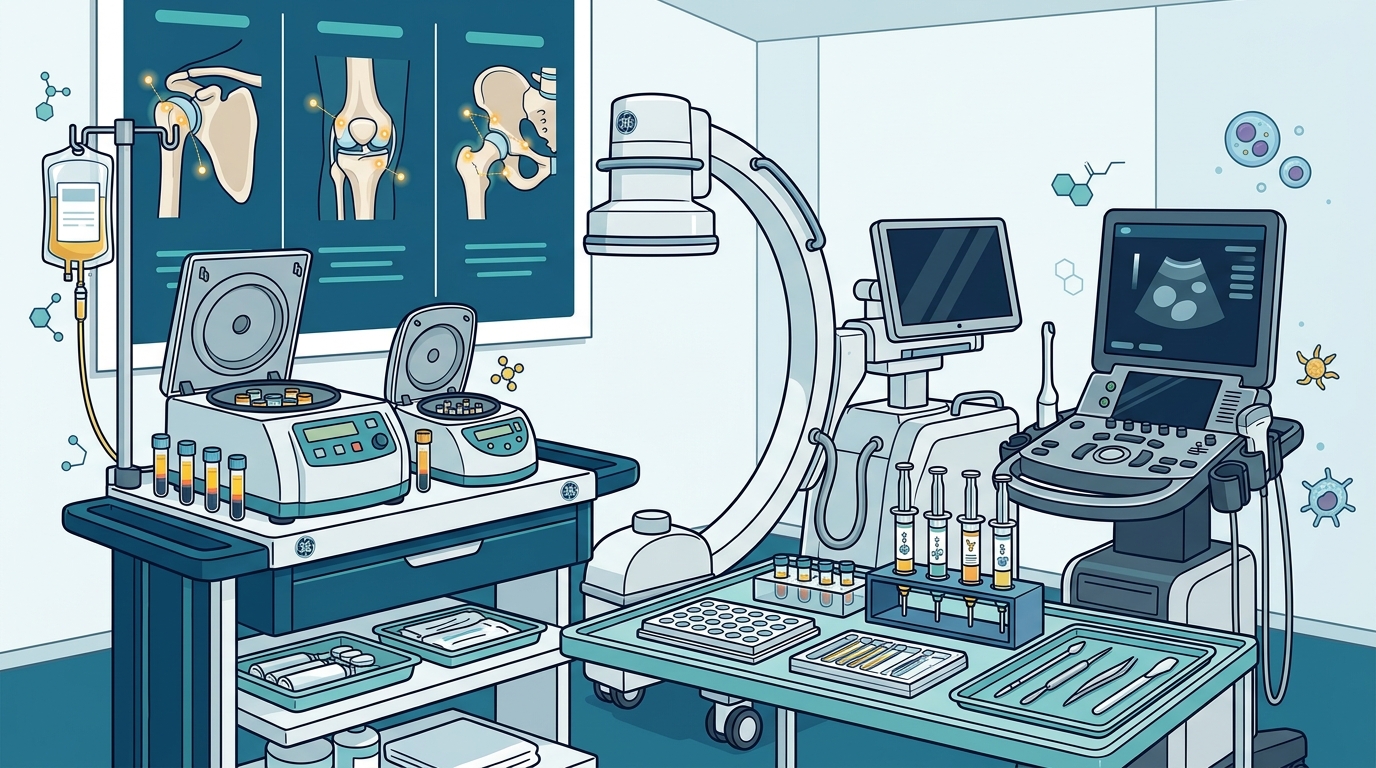
Accuracy is paramount in regenerative medicine. Ultrasound guidance allows physicians to visualize the needle in real-time as it enters the joint or tissue. This ensures that the therapeutic agents are delivered precisely to the area of injury. Without imaging, there is a risk of missing the target site, which can reduce the efficacy of the treatment. At Oregon Regenerative Medicine, our team utilizes advanced ultrasound expertise to guarantee precise injections. This technology minimizes discomfort and maximizes the clinical outcome. It is a standard of care for complex joint interventions, ensuring patient safety and treatment success.
Fluoroscopy for Spine and Complex Joints
In addition to ultrasound, fluoroscopy is used for spine injections and complex joint procedures. Fluoroscopy provides a live X-ray image, allowing for precise placement in bony structures. This is essential for treating conditions like facet joint arthritis or nerve root inflammation. Our facility in Portland offers both ultrasound and fluoroscopy-guided procedures to meet the specific needs of each patient. This dual-modality approach ensures that every patient receives the most accurate and effective treatment possible.
Therapy Comparison
Choosing the right regenerative therapy depends on the specific condition, the stage of degeneration, and patient goals. The following table compares the primary non-surgical options available for joint pain relief.
| Therapy | Primary Mechanism | Best For | Recovery Time |
|---|---|---|---|
| PRP Therapy | Growth factor release (In Vitro and) | Mild to moderate osteoarthritis | 1-3 days |
| Stem Cell Therapy | Cellular differentiation | Severe degeneration, cartilage loss | 3-7 days |
| Prolotherapy | Ligament proliferation | Ligament laxity, instability | 2-5 days |
| A2M Injection | Enzyme inhibition | Advanced arthritis, pain management | Minimal |
Key Takeaways
- Regenerative medicine offers a proven alternative to joint replacement for many patients.
- PRP therapy utilizes your own blood to stimulate natural healing and reduce inflammation.
- Stem cell therapy can regenerate damaged cartilage and slow disease progression.
- Ultrasound guidance ensures precise delivery of therapeutic agents to the injury site.
- Prolotherapy strengthens ligaments to improve joint stability and reduce pain.
- Oregon Regenerative Medicine has over 30 years of experience in holistic pain management.
- Early intervention with biologic therapies can prevent the need for total joint arthroplasty.
Frequently Asked Questions
Can PRP therapy really help with knee pain?
Yes, numerous studies confirm that PRP can significantly reduce knee pain and improve function in patients with osteoarthritis. It is particularly effective for those with mild to moderate cartilage wear.
How long do stem cell injections last?
The effects of stem cell therapy can last from several months to several years, depending on the severity of the condition and the patient's lifestyle. Many patients experience long-term relief without the need for repeated procedures.
Is prolotherapy painful?
Prolotherapy involves an injection that causes temporary inflammation, which is part of the healing process. Patients may experience soreness for a few days, but this is generally manageable with rest and ice.
What is A2M and how does it work?
A2M (Alpha-2-Macroglobulin) is a protein that inhibits enzymes responsible for breaking down cartilage. It helps to protect existing joint tissue and reduce pain in advanced arthritis cases.
Do you offer consultations for joint pain?
Yes, we offer comprehensive consultations to evaluate your condition and determine the best regenerative therapy for your needs. Contact us to schedule an appointment.
How is ultrasound guidance better than blind injections?
Ultrasound guidance allows the physician to see the needle and the target tissue in real-time. This ensures accurate placement and minimizes the risk of complications, leading to better outcomes.
What is the recovery time after PRP?
Recovery time is typically short, with most patients returning to normal activities within a few days. However, strenuous exercise should be avoided for a week to allow the healing process to begin.
Contact Oregon Regenerative Medicine
If you are suffering from shoulder, knee, or hip pain, do not accept joint replacement as your only option. Explore the power of regenerative medicine to restore your mobility and quality of life. Our team of expert physicians is dedicated to providing personalized care using the latest biologic therapies. Visit our facility in Portland, Oregon, located inside the historic Foundry Building at Oswego Pointe. We invite you to schedule a consultation today to discuss your treatment options and take the first step toward pain-free living.