
Biocellular joint regeneration represents a paradigm shift in orthopedic care, focusing on restoring native tissue architecture rather than masking symptoms. According to recent clinical data, over 32 million adults in the United States suffer from chronic joint degeneration, creating an urgent demand for restorative interventions. Clinical trials demonstrate that targeted cellular therapies can significantly delay surgical intervention. This approach leverages concentrated growth factors and autologous cellular components to stimulate endogenous healing pathways. Patients seeking long-term mobility often explore these advanced modalities before considering invasive arthroplasty procedures.
Understanding Biocellular Regeneration
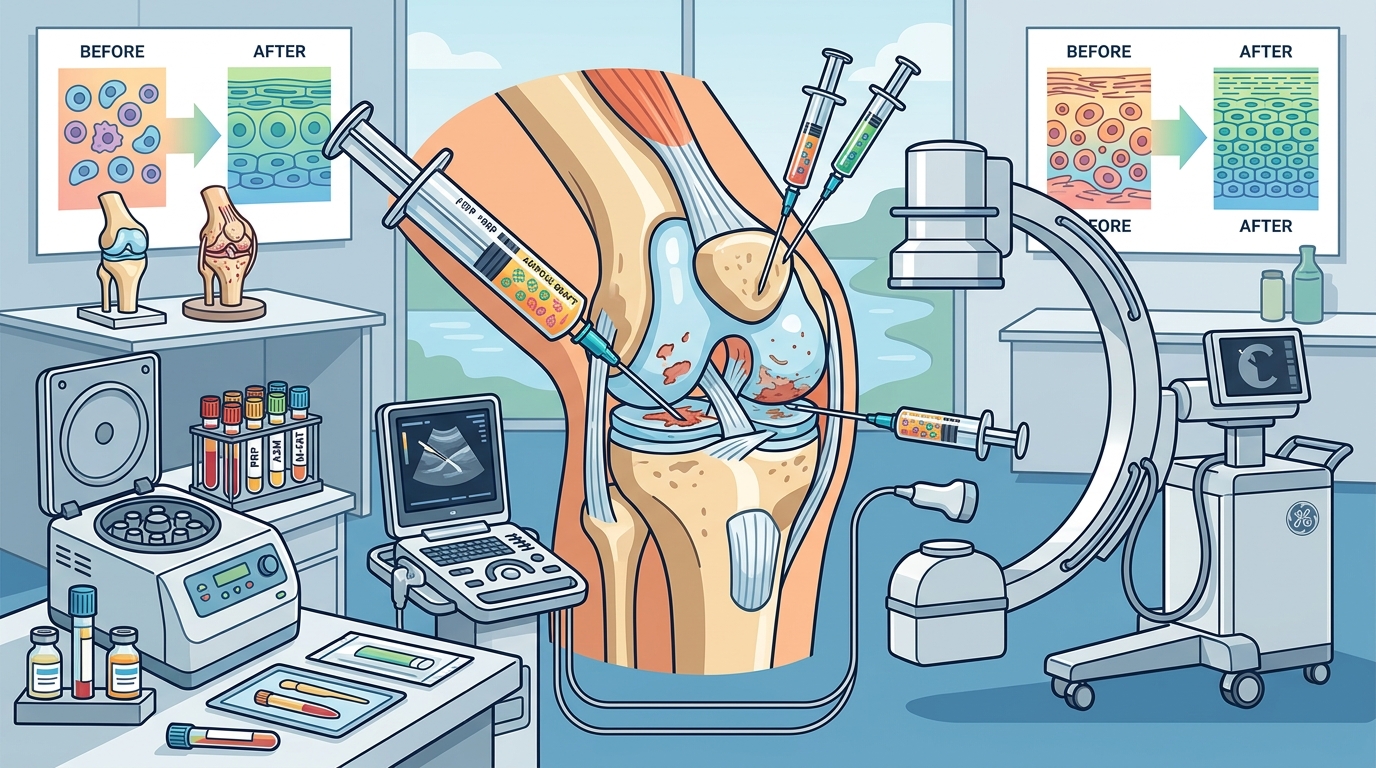
Biocellular joint regeneration is a specialized therapeutic framework that utilizes autologous cellular concentrates to repair damaged musculoskeletal structures. This methodology extracts and processes the patient own blood or adipose tissue to isolate high concentrations of platelets and mesenchymal stem cells. Advanced alpha-2-macroglobulin protocols further enhance the regenerative environment by neutralizing destructive inflammatory enzymes. The procedure requires precise ultrasound guidance to ensure accurate delivery into the targeted anatomical compartment. Ultrasound guidance ensures that therapeutic agents reach the exact site of tissue degradation. Clinicians at established regenerative centers carefully evaluate patient history to determine eligibility. This personalized assessment prevents unnecessary interventions while maximizing therapeutic outcomes.
Osteoarthritis and Cartilage Loss
Osteoarthritis is a degenerative joint disease characterized by progressive cartilage breakdown and chronic inflammation. It remains the most prevalent indication for regenerative joint therapies, affecting millions of individuals worldwide. Meta-analysis results confirm that concentrated platelet therapies can reduce pain scores by nearly forty percent over eighteen months. The treatment protocol focuses on stimulating chondrocyte activity to rebuild degraded articular surfaces. Patients with early to moderate joint space narrowing often experience substantial functional improvements. Peer-reviewed studies validate the efficacy of these interventions for weight-bearing joints. Clinicians typically combine these cellular therapies with structured physical rehabilitation programs. This integrated approach addresses both structural deficits and functional mobility limitations.
| Condition Category | Primary Tissue Target | Recommended Regenerative Protocol | Expected Clinical Outcome |
|---|---|---|---|
| Early Osteoarthritis | Articular Cartilage | Platelet Rich Plasma Concentrates | Pain reduction and delayed surgical referral |
| Advanced Joint Degeneration | Subchondral Bone Marrow | Adipose Derived Stem Cells | Structural remodeling and improved range of motion |
| Chronic Tendon Degeneration | Tendon Fascicles | Fluoroscopy Guided Precision Delivery | Restored tensile strength and functional loading |
| Post-Surgical Recovery | Surgical Scar Tissue | Prolotherapy Solutions | Accelerated tissue maturation and reduced stiffness |
Post-Traumatic Joint Instability
Joint injuries sustained during athletic activities or accidental trauma frequently result in chronic instability and recurrent swelling. Longitudinal tracking data indicates that targeted cellular therapies can restore ligamentous integrity without extensive reconstructive surgery. The regenerative process focuses on reinforcing compromised connective tissue matrices. Patients who experience repeated sprains or partial tears often benefit from concentrated growth factor delivery. Specialized physician oversight ensures that treatment parameters align with individual recovery timelines. Clinicians carefully monitor inflammatory markers to optimize the healing cascade. This proactive management strategy prevents chronic compensatory movement patterns that exacerbate joint stress.
Chronic Tendon Pathologies
Tendinosis is a chronic degenerative condition marked by failed healing responses and micro-tear accumulation. It frequently affects active individuals who place repetitive stress on specific anatomical structures. Systematic review findings reveal that concentrated biocellular injections significantly improve tendon thickness and load-bearing capacity. The therapeutic mechanism involves stimulating fibroblast proliferation and collagen alignment. Athletes and active individuals frequently experience persistent discomfort in the patellar, Achilles, or rotator cuff regions. Real-time imaging protocols allow practitioners to navigate complex anatomical structures safely. Treatment sessions typically require minimal downtime, allowing patients to maintain daily activities. Consistent follow-up evaluations track structural improvements and adjust concentration ratios accordingly.
Inflammatory Joint Conditions
Regenerative medicine is a specialized medical discipline focused on restoring damaged tissues and organs through biological stimulation. Chronic inflammatory responses within synovial joints often accelerate tissue breakdown and limit functional capacity. Immunomodulatory research highlights that autologous cellular concentrates can actively suppress destructive cytokine pathways. The treatment approach focuses on restoring joint homeostasis rather than merely suppressing pain signals. Patients with persistent synovitis or unexplained joint effusion frequently qualify for regenerative interventions. Comprehensive diagnostic evaluations determine whether cellular therapies align with specific inflammatory profiles. Clinicians carefully balance anti-inflammatory mechanisms with regenerative stimulation. This dual-action strategy addresses both the underlying pathology and the resulting structural deficits.
Key Takeaways
- Biocellular joint regeneration utilizes autologous cellular concentrates to stimulate endogenous tissue repair.
- Osteoarthritis represents the primary indication, with clinical data showing nearly forty percent pain reduction over eighteen months.
- Post-traumatic instability often resolves through targeted ligamentous reinforcement without reconstructive surgery.
- Chronic tendinosis responds favorably to concentrated growth factor delivery and structured rehabilitation protocols.
- Chronic inflammatory conditions benefit from immunomodulatory cellular concentrates that restore joint homeostasis.
- Ultrasound and fluoroscopy guidance ensure precise therapeutic delivery to compromised anatomical compartments.
- Established regenerative centers maintain over thirty years of clinical experience delivering these advanced therapies.
Frequently Asked Questions
How long do treatment results typically last?
Most patients experience sustained therapeutic benefits ranging from twelve to twenty-four months. Individual longevity depends on activity levels, joint stress factors, and adherence to rehabilitation protocols. Periodic maintenance sessions may extend structural improvements over multiple years.
Is biocellular joint regeneration covered by insurance?
Regenerative therapies generally fall outside standard insurance coverage parameters. Patients typically manage costs through flexible payment arrangements or specialized financing programs. Clinicians provide transparent pricing structures before initiating any treatment protocols.
What is the typical recovery timeline after injection?
Patients usually resume light daily activities within forty-eight hours. Structured physical therapy often begins within one week to optimize tissue remodeling. Full functional recovery typically requires six to eight weeks of consistent rehabilitation.
Can multiple joints be treated during a single visit?
Clinicians frequently address multiple anatomical regions during comprehensive treatment sessions. Treatment sequencing prioritizes the most compromised joints to maximize therapeutic impact. Extended procedure times allow for thorough preparation and precise delivery.
Are there specific age restrictions for cellular therapies?
Regenerative interventions remain effective across diverse age demographics. Treatment protocols adapt to individual cellular maturity and tissue quality. Younger patients often experience accelerated healing responses compared to older demographics.
How many treatment sessions are typically required?
Most therapeutic protocols require three to five concentrated injection sessions. Treatment intervals typically span four to six weeks to allow adequate tissue response. Clinicians adjust concentration ratios based on individual healing trajectories.
What diagnostic imaging is required before treatment?
Comprehensive diagnostic imaging establishes baseline tissue architecture and identifies specific degeneration patterns. Magnetic resonance imaging and high-resolution ultrasound provide critical structural data. Clinicians utilize this information to design precise treatment delivery pathways.
Schedule Your Regenerative Consultation
Restoring joint function through biocellular therapies requires expert clinical oversight and precise procedural execution. Our multidisciplinary team combines decades of regenerative medicine experience with advanced imaging technologies. Contact our Portland clinic today to schedule a comprehensive evaluation. We will review your diagnostic imaging, assess your functional limitations, and design a personalized treatment roadmap. Take the first step toward lasting joint restoration and reclaim your active lifestyle.