
Recent clinical data shows that approximately 32 percent of patients diagnosed with early-stage osteoarthritis successfully delay or avoid surgical intervention through targeted regenerative protocols. This shift in standard care pathways reflects a growing preference for conservative management strategies that prioritize tissue preservation and functional recovery. Clinics specializing in orthopedic regeneration now offer structured alternatives to traditional surgical referrals. These programs focus on reducing inflammation, stimulating native healing mechanisms, and restoring biomechanical stability without invasive procedures. Understanding these evidence-based pathways allows patients to make informed decisions about long-term joint health. (Fluoroscopy Guided Spine Injections)
Conservative Care Pathways
Many patients assume that a joint diagnosis automatically triggers a surgical consultation. Modern regenerative medicine clinics actively counter this assumption by implementing structured conservative care protocols. These programs prioritize mechanical assessment, targeted physical rehabilitation, and precise diagnostic imaging before considering invasive options. Conservative management is a structured clinical approach that prioritizes tissue preservation and functional recovery before considering invasive procedures. Clinics in the Pacific Northwest frequently utilize fluoroscopy and ultrasound to map joint degradation accurately. This imaging precision prevents unnecessary referrals while establishing a clear baseline for recovery metrics. Patients benefit from personalized rehabilitation schedules that address biomechanical imbalances rather than isolated symptoms. Clinics operating advanced diagnostic centers typically offer both imaging pathways to accommodate varying anatomical requirements. This technical flexibility ensures that every injection reaches the exact target zone without compromising surrounding tissues.
Regenerative Injection Protocols
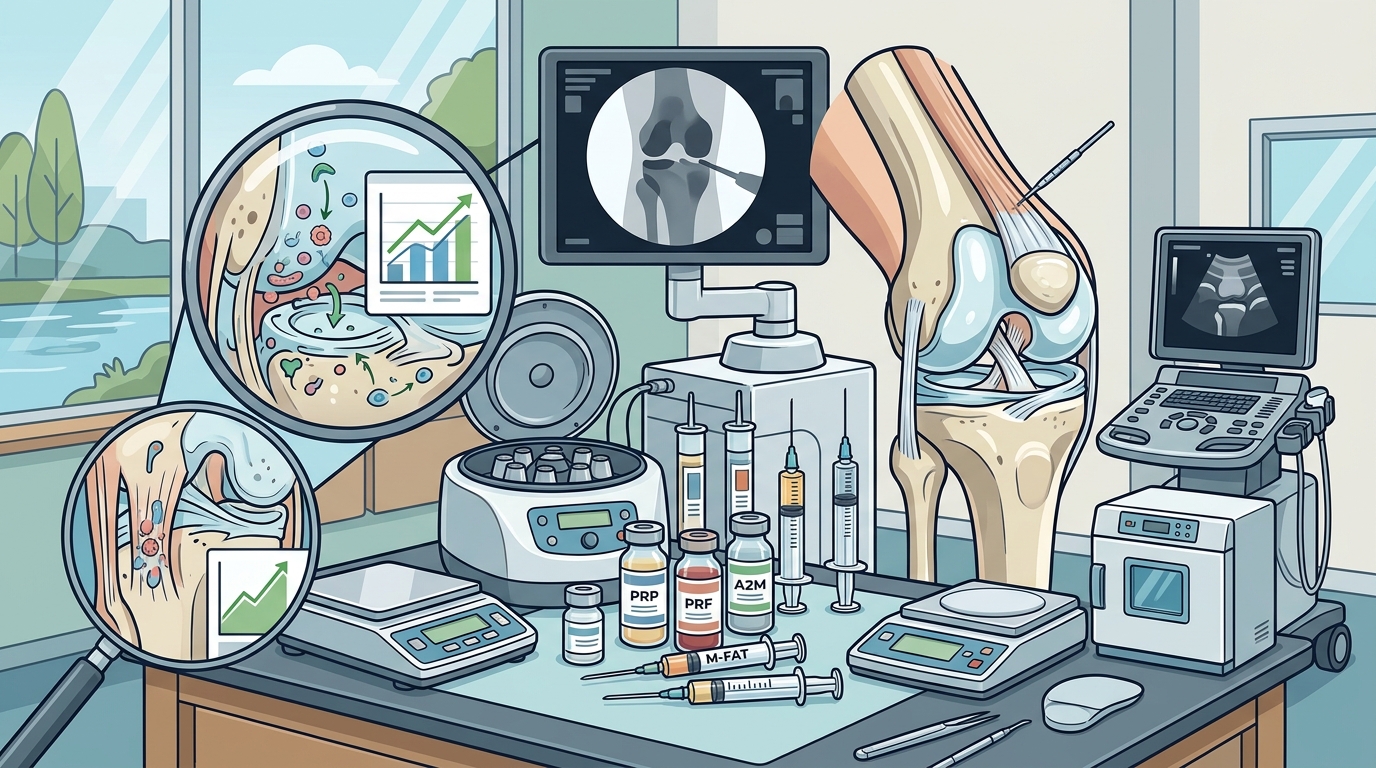
Regenerative medicine focuses on stimulating the body's inherent healing capacity through concentrated biological agents. Platelet-rich plasma therapy is a regenerative procedure that isolates concentrated growth factors from autologous blood to stimulate localized cartilage matrix synthesis. This procedure involves isolating concentrated growth factors from the patient's own blood and delivering them directly to the affected tissue. Research indicates that concentrated growth factors significantly reduce inflammatory markers while promoting cartilage matrix synthesis. Adipose-derived biocellular therapy offers a complementary approach by harvesting mesenchymal stem cells from subcutaneous fat. These cellular components actively modulate the local joint environment to accelerate tissue repair. Both modalities require specialized clinical expertise to ensure optimal cellular viability and precise anatomical placement. Clinics offering both imaging modalities can select the optimal pathway based on specific anatomical requirements.
Ultrasound-Guided Precision
Accurate delivery of regenerative materials depends entirely on real-time visual confirmation. Ultrasound guidance has become the standard of care for orthopedic injections due to its dynamic visualization capabilities. This technology allows practitioners to track needle progression through fascial planes and avoid critical neurovascular structures. Current guidelines recommend ultrasound visualization for all musculoskeletal injections to maximize therapeutic outcomes. Fluoroscopy provides an alternative imaging modality for complex spinal or deep joint procedures. Clinics operating advanced diagnostic centers typically offer both imaging pathways to accommodate varying anatomical requirements. This technical flexibility ensures that every injection reaches the exact target zone without compromising surrounding tissues.
Comparative Treatment Analysis
Selecting the appropriate intervention requires understanding the distinct mechanisms and clinical applications of each modality. The following matrix outlines the primary characteristics of standard regenerative options.
| Therapy Modality | Primary Mechanism | Typical Recovery Window | Best Clinical Application |
|---|---|---|---|
| Platelet-Rich Plasma | Growth factor concentration | 4 to 8 weeks | Mild to moderate cartilage thinning |
| Adipose Biocellular Therapy | Stem cell differentiation | 6 to 12 weeks | Advanced joint space narrowing |
| Prolotherapy Solutions | Controlled inflammatory stimulation | 3 to 6 weeks | Ligamentous laxity and joint instability |
| Alpha-2-Macroglobulin | Protease inhibition | 2 to 4 weeks | Chronic inflammatory degradation |
Key Takeaways
- Approximately 32 percent of early-stage joint patients successfully avoid surgical referrals through structured conservative protocols.
- Platelet-rich plasma therapy concentrates autologous growth factors to stimulate localized cartilage matrix synthesis.
- Adipose-derived biocellular therapy utilizes mesenchymal stem cells to actively modulate the joint microenvironment.
- Ultrasound guidance remains the clinical standard for ensuring precise anatomical delivery of regenerative materials.
- Fluoroscopy provides superior visualization for complex spinal and deep joint injection procedures.
- Prolotherapy solutions focus on controlled inflammatory stimulation to reinforce compromised ligamentous structures.
- Alpha-2-macroglobulin injections inhibit proteolytic enzymes that accelerate cartilage breakdown.
Frequently Asked Questions
What exactly constitutes degenerative joint disease?
Degenerative joint disease is a progressive condition characterized by the gradual breakdown of articular cartilage and underlying bone structures. This pathological process typically results from chronic mechanical stress, genetic predisposition, or prior traumatic injury. The condition manifests as joint stiffness, localized pain, and reduced functional mobility during daily activities.
How long do regenerative injection treatments typically last?
Therapeutic outcomes from regenerative protocols generally persist between 12 and 24 months depending on individual metabolic factors and activity levels. Patients who maintain structured rehabilitation programs and weight management strategies often experience extended symptom relief. Periodic maintenance injections may be recommended to sustain optimal joint function over time.
Is ultrasound guidance mandatory for all joint injections?
Ultrasound guidance is highly recommended for superficial and moderately deep joint procedures due to its real-time visualization capabilities. Complex spinal interventions or deep pelvic joints may require fluoroscopy to ensure accurate needle placement. Clinics offering both imaging modalities can select the optimal pathway based on specific anatomical requirements.
Can conservative care completely reverse joint degeneration?
Conservative regenerative therapies cannot fully regenerate severely eroded cartilage surfaces. These interventions successfully reduce inflammation, stimulate partial matrix repair, and significantly improve functional mobility. The primary objective remains halting disease progression while restoring pain-free movement patterns.
What qualifications should patients verify before selecting a clinic?
Patients should verify that practitioners hold advanced certifications in regenerative medicine and possess extensive hands-on injection experience. Board-certified physicians with specialized training in musculoskeletal ultrasound or fluoroscopy provide the highest standard of care. Reviewing clinical outcomes and patient testimonials offers additional insight into clinic reliability.
How does prolotherapy differ from standard corticosteroid injections?
Prolotherapy utilizes dextrose solutions to trigger a controlled inflammatory response that strengthens compromised ligaments and tendons. Corticosteroid injections deliver potent anti-inflammatory medications that temporarily suppress pain but may accelerate tissue degradation over time. Regenerative approaches prioritize long-term structural reinforcement rather than short-term symptom suppression.
What is the typical cost range for non-surgical joint treatments?
Non-surgical regenerative protocols typically typically range from 800 to 2500 dollars per treatment session depending on the specific modality and anatomical location. Insurance coverage varies significantly across regional health plans and employer-sponsored benefits. Clinics often provide transparent pricing structures and flexible financing options to accommodate patient budgets.
Next Steps
Patients seeking comprehensive joint preservation strategies should schedule a specialized diagnostic consultation to evaluate their specific anatomical requirements. Our clinical team conducts thorough biomechanical assessments and advanced imaging to determine the most appropriate regenerative pathway. Contact our Portland clinic to schedule your comprehensive evaluation and explore personalized treatment options. We prioritize conservative management protocols that align with your long-term health objectives and functional goals.