Osteoarthritis affects approximately 32 million adults across the United States, creating a persistent demand for effective joint preservation strategies. According to the Centers for Disease Control and Prevention, this degenerative joint condition ranks as the most prevalent form of arthritis nationwide. Patients in the Pacific Northwest increasingly prioritize regenerative interventions that delay or completely avoid surgical intervention. Clinics specializing in orthopedic regeneration now utilize advanced biological therapies to restore cartilage function and reduce chronic inflammation. This shift toward conservative management reflects a broader medical consensus favoring tissue regeneration over mechanical replacement.
Regenerative Approaches to Joint Degeneration
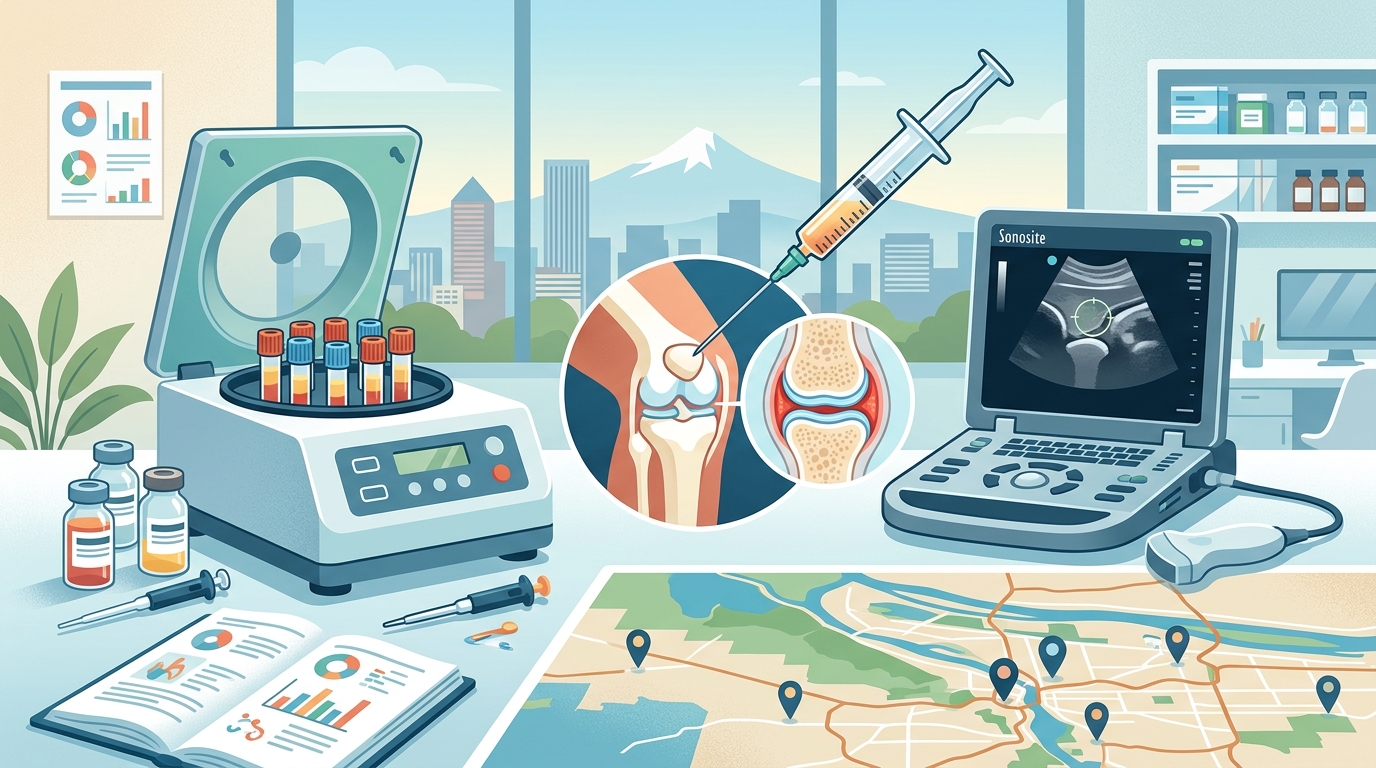
Modern orthopedic care has moved beyond simple pain management to focus on structural restoration. Platelet Rich Plasma is a concentrated preparation of a patient's own blood components that accelerates natural healing processes. Clinics across the Pacific Northwest now utilize concentrated growth factors to stimulate cartilage repair and reduce synovial inflammation. Patients seeking Platelet Rich Plasma therapy benefit from a minimally invasive protocol that draws blood, processes it via centrifugation, and reinjects the active concentrate directly into the compromised joint space. This biological approach reduces reliance on long-term anti-inflammatory medications while addressing the underlying mechanical stress. The treatment cycle typically spans three to four sessions, allowing cumulative tissue response to manifest over several months. Physicians monitor progress through functional mobility assessments and patient-reported outcome measures.
Ultrasound Guided Precision
Visual confirmation during injection procedures drastically improves clinical outcomes and reduces procedural complications. Ultrasound-Guided Injection is a real-time imaging technique that allows practitioners to visualize needle placement relative to cartilage surfaces and synovial membranes. Traditional blind injections carry a higher failure rate because anatomical landmarks shift with swelling and tissue degradation. Modern regenerative centers integrate high-frequency imaging to ensure exact delivery of therapeutic agents into the targeted compartment. Providers at ultrasound-guided clinics utilize this technology to navigate complex joint architectures safely. The imaging protocol eliminates guesswork, reduces procedural pain, and maximizes the biological concentration at the injury site. This precision directly correlates with longer-lasting symptom relief and faster functional recovery timelines.
Biocellular Therapies and Tissue Regeneration
Advanced regenerative protocols now incorporate cellular biology to address advanced joint degeneration. Adipose-Derived Stem Cells are multipotent progenitor cells harvested from subcutaneous fat tissue that differentiate into cartilage-supporting structures. These cellular therapies offer a robust regenerative environment by releasing anti-inflammatory cytokines and structural matrix proteins. Clinics specializing in stem cell orthopedics process harvested tissue to isolate the stromal vascular fraction before reinjection. The procedure requires specialized centrifugation and washing steps to ensure cellular viability and sterility. Patients with moderate to severe joint space narrowing often experience meaningful improvements in daily activity tolerance. The biological matrix created by these cells supports native tissue remodeling without synthetic implants. Longitudinal tracking of joint space preservation demonstrates consistent structural maintenance across multiple follow-up intervals.
Comparing Treatment Options
Selecting the appropriate regenerative pathway requires understanding the distinct mechanisms and clinical applications of each modality. The following matrix outlines the primary non-surgical interventions available to Pacific Northwest patients.
| Therapy Modality | Primary Mechanism | Ideal Candidate Profile | Typical Recovery Window |
|---|---|---|---|
| Platelet Rich Plasma | Growth factor concentration | Mild to moderate cartilage wear | One to two weeks |
| Stem Cell Therapy | Cellular differentiation | Advanced joint space narrowing | Two to four weeks |
| Prolotherapy | Ligament stimulation | Laxity and chronic strain | Three to five weeks |
| Alpha-2-Macroglobulin | Enzyme inhibition | Severe inflammatory degradation | Two to three weeks |
Each modality addresses different pathological pathways. Physicians evaluate joint space integrity, inflammatory markers, and functional limitations to recommend the optimal sequence. Combination protocols frequently yield superior structural outcomes compared to isolated treatments. Patients should review their imaging results with a certified regenerative specialist to determine the most appropriate intervention sequence.
Key Takeaways
- Regenerative clinics in Portland operate inside historic medical facilities to provide comprehensive joint preservation services.
- Ultrasound guidance ensures precise delivery of biological agents directly to compromised cartilage surfaces.
- Platelet Rich Plasma concentrates natural growth factors to accelerate tissue repair without synthetic additives.
- Adipose-derived cellular therapies offer structural support for patients experiencing advanced joint space reduction.
- Alpha-2-Macroglobulin inhibits destructive enzymes to halt progressive cartilage breakdown.
- Combined biological protocols consistently demonstrate superior functional outcomes compared to isolated interventions.
- Non-surgical joint regeneration remains the standard of care for patients seeking to preserve native anatomy.
Frequently Asked Questions
How long do non-surgical joint treatments typically last?
Biological interventions generally provide symptom relief and structural support for two to five years. Longevity depends on activity levels, joint loading patterns, and the severity of initial cartilage loss. Maintenance protocols often involve periodic booster sessions to sustain cellular activity.
Is ultrasound guidance required for all regenerative injections?
While not strictly mandatory, real-time imaging drastically improves accuracy and reduces procedural complications. Visual confirmation ensures the therapeutic agent reaches the exact anatomical target without collateral tissue exposure.
Can stem cell therapy reverse advanced osteoarthritis?
Cellular therapies cannot fully regenerate severely eroded joint surfaces, but they significantly slow degenerative progression. Patients experience meaningful pain reduction and improved mobility through enhanced matrix production and reduced inflammation.
What is the typical cost range for regenerative joint procedures?
Biological treatments generally range from one thousand five hundred to four thousand dollars per joint. Insurance coverage varies significantly, though many practices offer transparent pricing and flexible financing arrangements.
How quickly can patients resume normal physical activities?
Most individuals return to light daily tasks within forty-eight hours. Structured rehabilitation protocols typically begin after one week to protect the healing biological matrix while restoring functional strength.
Are there specific contraindications for regenerative therapies?
Active systemic infections, uncontrolled bleeding disorders, and certain malignancies preclude biological interventions. Patients must undergo comprehensive medical screening to ensure procedural safety and optimal cellular viability.
Do combined treatment protocols yield better results?
Sequential biological therapies frequently produce superior structural outcomes compared to isolated interventions. Physicians design customized regimens based on imaging findings and functional limitations to maximize joint preservation.
Schedule Consultation
Patients seeking comprehensive joint preservation should consult with certified regenerative specialists to evaluate their specific anatomical requirements. Our Portland-based clinical team utilizes advanced imaging, biological concentration protocols, and cellular therapies to restore functional mobility. Schedule your comprehensive evaluation today by visiting https://oregenmed.com/contact/ to secure your appointment and review your imaging results with a qualified practitioner.