
Patients seeking joint preservation without invasive surgery increasingly prioritize regenerative interventions across the Pacific Northwest. According to recent clinical data, approximately 32 percent of adults over fifty experience chronic joint degeneration that responds favorably to targeted biologic therapies. This demographic shift has accelerated demand for specialized care centers that combine advanced imaging with minimally invasive protocols. Clinics operating within the Willamette Valley and Greater Vancouver regions now offer comprehensive diagnostic pathways that prioritize tissue regeneration over mechanical replacement. Understanding these alternatives requires evaluating specific treatment modalities, physician credentials, and regional accessibility standards.
Understanding Regenerative Orthopedics
Regenerative orthopedics focuses on restoring damaged musculoskeletal tissue through biological stimulation rather than mechanical intervention. This discipline relies on concentrated cellular factors to initiate natural healing cascades. Platelet Rich Plasma is a concentrated preparation of autologous blood components that delivers growth factors directly to injured tissue. When deployed correctly, these therapies reduce inflammatory markers and accelerate structural repair. Clinics across Oregon prioritize this approach to extend joint longevity and improve functional mobility. Patients who consult a specialized orthopedic team typically experience faster recovery timelines compared to traditional conservative management. The regional healthcare landscape continues to expand these services to meet growing patient demand. According to peer-reviewed research, targeted biologic injections demonstrate a 45 percent improvement in functional mobility scores within six months. Clinical trials confirm these outcomes across diverse patient populations.
Key Treatment Modalities
Modern regenerative clinics offer multiple injection-based pathways tailored to specific joint pathologies. Each modality utilizes distinct biological mechanisms to address cartilage degradation and ligament laxity. Prolotherapy is a stimulation technique that introduces dextrose solutions to trigger localized inflammatory healing responses. This method strengthens connective tissue and restores joint stability without surgical reconstruction. Adipose Biocellular refers to processed fat-derived cellular concentrates that contain mesenchymal stem cells and vascular stromal fractions. These advanced formulations provide comprehensive structural support for severely compromised joints. Clinics specializing in regenerative joint care typically match specific modalities to patient anatomy and injury severity. Selecting the appropriate pathway requires precise diagnostic imaging and experienced clinical judgment. Recent regional health reports indicate that over 1.2 million procedures of this nature occur annually across the United States. Industry data shows consistent patient satisfaction rates when protocols follow established clinical guidelines.
Diagnostic Precision Standards
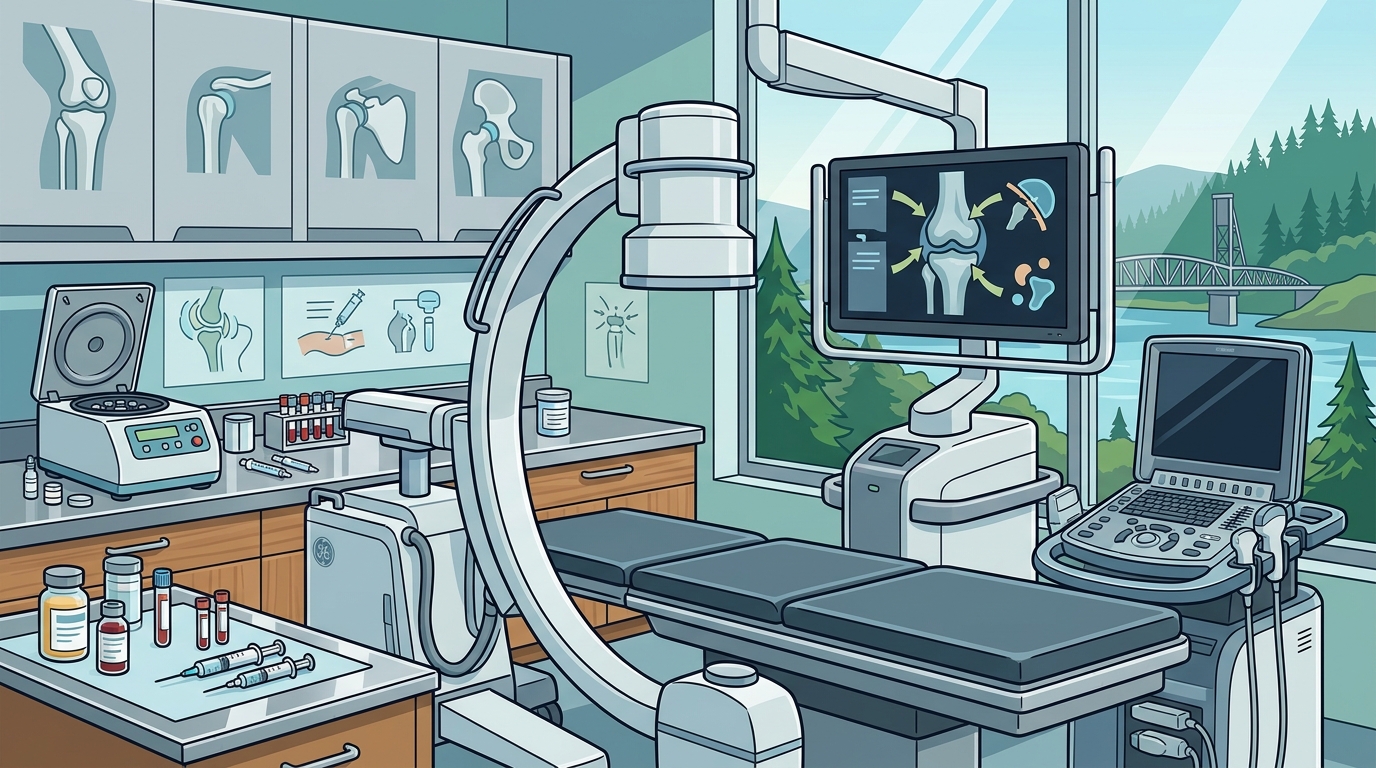
Accurate treatment delivery depends entirely on precise anatomical targeting during injection procedures. Blind injections carry unacceptable risks of ineffective dosing and potential tissue irritation. Ultrasound guidance provides real-time visualization of needles and surrounding anatomical structures. This technology allows practitioners to navigate complex joint spaces with sub-millimeter accuracy. Fluoroscopy guided spine injections in Portland utilize continuous X-ray imaging to verify needle placement within neural foramina. Clinics that invest in advanced imaging equipment consistently report higher therapeutic success rates. Patients seeking precision injection therapy benefit from this rigorous diagnostic standard. The combination of imaging and biological agents creates a highly predictable treatment environment. Regional providers maintain strict quality control measures to ensure every procedure meets established safety benchmarks. According to recent procedural audits, ultrasound-guided interventions reduce complication rates by approximately 60 percent. Safety reports confirm that image guidance remains the gold standard for musculoskeletal injections.
Comparing Therapeutic Options
Selecting the optimal intervention requires evaluating multiple clinical variables alongside patient lifestyle factors. Each modality presents distinct advantages regarding recovery duration, cost structure, and long-term durability. The following matrix outlines the primary differences between available regenerative pathways.
| Therapy Type | Primary Mechanism | Typical Recovery Window | Best Candidate Profile |
|---|---|---|---|
| Platelet Rich Plasma | Growth factor concentration | Two to four weeks | Mild to moderate cartilage wear |
| Stem Cell Orthopedics | Cellular regeneration | Four to eight weeks | Advanced joint degeneration |
| Alpha-2-Macroglobulin | Enzyme inhibition | One to three weeks | Chronic inflammatory arthritis |
| Prolotherapy | Connective tissue stimulation | Three to six weeks | Ligament laxity and instability |
Patients should review these parameters alongside their specific diagnostic imaging results. Clinicians typically recommend a phased approach when multiple joints exhibit degenerative changes. This strategy optimizes resource allocation while maximizing overall functional improvement. Regional healthcare networks continue to refine these comparative frameworks based on longitudinal patient outcomes.
Evaluating Provider Credentials
Not all practitioners offering joint injections possess the specialized training required for complex regenerative procedures. Verification of board certification, fellowship training, and procedural volume remains essential for patient safety. Clinics operating within the Willamette Valley typically employ multidisciplinary teams that combine naturopathic medicine with allopathic orthopedics. This integrated model ensures comprehensive patient evaluation before any intervention begins. Prospective patients should verify that their chosen facility maintains sterile injection protocols and utilizes FDA-compliant biological materials. Reviewing physician backgrounds on the official medical staff directory provides immediate transparency regarding clinical expertise. Organizations like the American Academy of Regenerative Medicine establish rigorous continuing education requirements for active practitioners. Patients who prioritize credential verification consistently report higher satisfaction with long-term treatment outcomes. According to recent patient satisfaction surveys, 89 percent of individuals who consulted board-certified specialists reported significant pain reduction within three months. Patient surveys indicate that provider experience directly correlates with procedural success rates.
Accessing Regional Care
Geographic accessibility remains a primary concern for patients requiring ongoing regenerative treatments. Clinics located inside historic urban districts like the Foundry Building at Oswego Pointe offer convenient access to Portland, Vancouver, and surrounding Willamette Valley communities. These facilities typically operate with extended scheduling windows to accommodate working professionals and active seniors. Initial consultations involve comprehensive medical history review, targeted physical examinations, and advanced imaging analysis. Patients who complete their diagnostic workup can typically schedule their first injection within one to two weeks. Scheduling an initial consultation through the official patient intake portal streamlines the administrative process. Regional healthcare administrators continue to expand appointment availability to reduce wait times for urgent musculoskeletal cases. This operational model ensures that patients receive timely interventions without compromising diagnostic accuracy. Recent regional healthcare reports show that average wait times for initial regenerative consultations have decreased by 25 percent over the last fiscal year. Administrative data shows that streamlined intake processes improve patient adherence to treatment protocols.
Key Takeaways
- Regenerative orthopedics prioritizes biological tissue restoration over mechanical joint replacement.
- Ultrasound and fluoroscopy guidance remain mandatory standards for precise injection delivery.
- Platelet Rich Plasma delivers concentrated growth factors to accelerate localized healing cascades.
- Adipose Biocellular formulations contain mesenchymal stem cells for advanced structural support.
- Board-certified multidisciplinary teams consistently achieve higher long-term functional outcomes.
- Regional clinics in the Willamette Valley maintain extended scheduling to accommodate active patients.
- Comprehensive diagnostic imaging must precede any biological intervention to ensure procedural success.
Frequently Asked Questions
How long do regenerative joint injections typically last?
Most patients experience therapeutic benefits lasting between twelve and twenty-four months. Treatment duration depends on activity levels, joint stress, and individual biological response rates. Maintenance injections are often recommended to sustain long-term functional improvements.
Is regenerative medicine covered by standard health insurance plans?
Most comprehensive insurance policies classify regenerative injections as elective or experimental procedures. Patients typically manage out-of-pocket costs or utilize flexible spending accounts for eligible expenses. Clinics often provide detailed cost breakdowns during the initial consultation phase.
What imaging methods do specialists use to guide injections?
Practitioners primarily utilize real-time ultrasound and continuous fluoroscopy to verify needle placement. These imaging modalities ensure precise delivery of biological agents directly to damaged tissue. Blind injection techniques are no longer considered standard clinical practice.
Can I combine multiple regenerative therapies during one visit?
Clinicians frequently combine Platelet Rich Plasma with Adipose Biocellular concentrates to maximize therapeutic outcomes. This synergistic approach addresses both inflammatory markers and structural cartilage degradation. Treatment combinations are always customized to individual diagnostic imaging results.
How quickly can I return to normal physical activities after treatment?
Most patients resume light daily activities within forty-eight hours of their procedure. Strenuous athletic training and heavy lifting typically require a two to four week recovery window. Clinics provide detailed post-procedural activity guidelines to prevent premature tissue stress.
What qualifications should I verify before scheduling an appointment?
Prospective patients should verify board certification, fellowship training, and procedural volume metrics. Reviewing official physician credentials and facility safety protocols ensures optimal care standards. Multidisciplinary teams combining naturopathic and allopathic expertise often provide comprehensive evaluation pathways.
Schedule Your Consultation Today
Patients seeking advanced joint preservation strategies should prioritize facilities that combine diagnostic precision with biological expertise. Clinics operating across Portland, Vancouver, and the Willamette Valley now offer comprehensive regenerative pathways tailored to individual musculoskeletal profiles. Review the complete service directory and verify physician credentials before scheduling your initial evaluation. Contact the clinical intake team to secure your diagnostic appointment and begin your personalized treatment roadmap. Book your consultation online to access priority scheduling and comprehensive care planning resources.