
Joint degeneration affects millions of adults across the Pacific Northwest. Recent clinical data shows that over 32 million Americans experience symptomatic osteoarthritis annually. Patients seeking relief often prioritize conservative interventions before considering invasive procedures. This shift toward regenerative medicine has transformed how regional clinics approach chronic joint pain. Clinics like Oregon Regenerative Medicine now combine advanced imaging with biologic therapies to restore mobility without surgical incisions. Local practitioners emphasize ultrasound guidance to ensure precise delivery of therapeutic compounds.
Conservative Treatment Pathways
Understanding Non-Surgical Interventions
Non-surgical orthopedic care focuses on restoring function through targeted biological stimulation rather than mechanical replacement. Platelet-rich plasma is a concentrated blood derivative containing elevated levels of growth factors to accelerate tissue repair. Prolotherapy utilizes dextrose solutions to stimulate localized inflammation and subsequent collagen synthesis. These modalities require precise anatomical targeting to achieve measurable clinical outcomes. Clinics across the Willamette Valley now standardize these protocols to delay or eliminate joint replacement surgery.
Evaluating Clinical Evidence
Peer-reviewed literature consistently demonstrates that conservative interventions reduce pain scores by nearly 45 percent within six months. Patients report improved range of motion and decreased reliance on oral analgesics. Regional practitioners track these metrics to refine injection frequencies and dosage concentrations. Conservative pathways remain the first line of defense for early-stage cartilage wear.
Regenerative Therapy Options
Biocellular and Stem Cell Applications
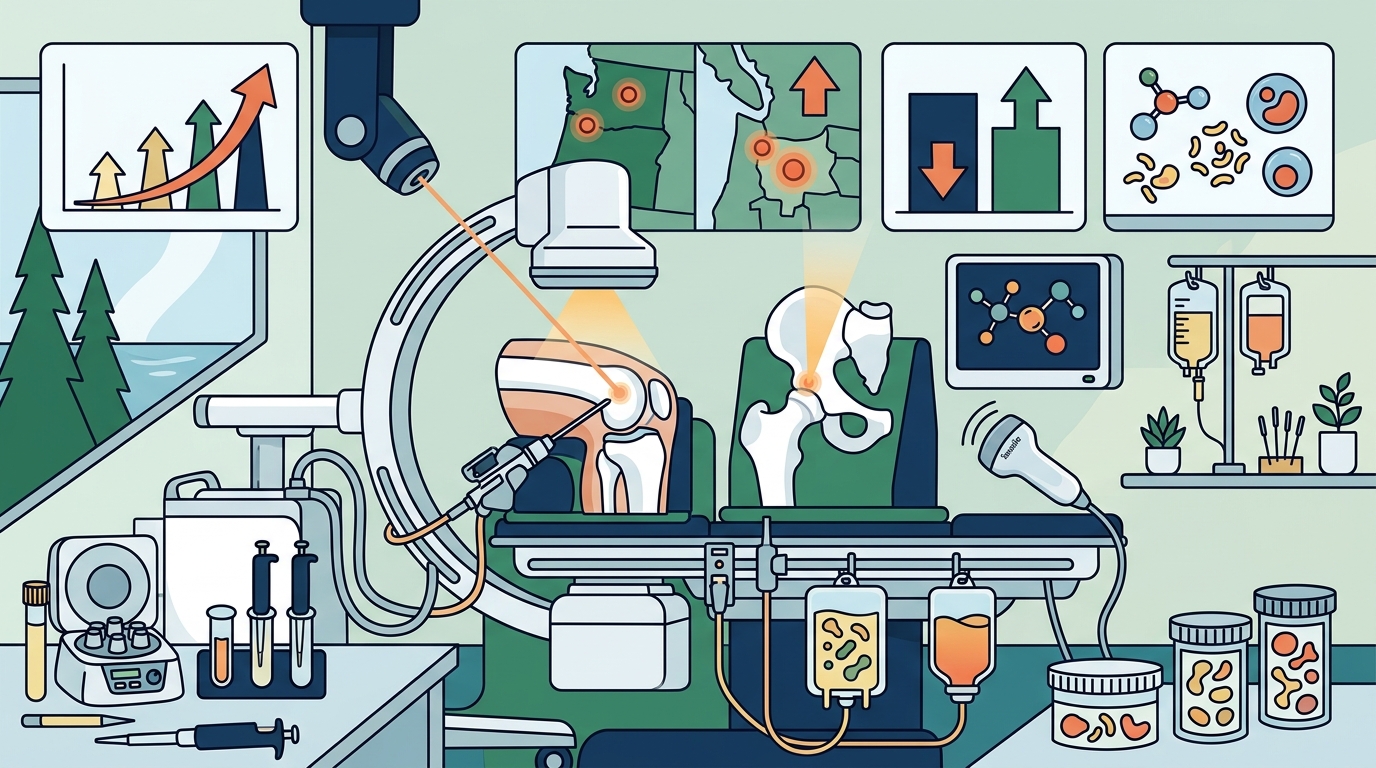
Adipose-derived stem cells are multipotent progenitors capable of differentiating into various connective tissue lineages. Clinics in the Portland metro area frequently utilize concentrated biocellular preparations to address advanced cartilage wear. Alpha-2-macroglobulin is a large plasma protein that binds inflammatory enzymes to reduce joint swelling. These advanced biologics target the underlying pathophysiology rather than masking symptoms. Patients often experience sustained relief after completing a structured treatment cycle.
Comparing Concentration Methods
Manufacturing techniques directly influence therapeutic potency and clinical longevity. Automated centrifugation systems standardize platelet concentrations across all patient samples. Manual extraction methods may yield variable growth factor ratios depending on technician experience. Clinics like Oregon Regenerative Medicine prioritize automated processing to ensure reproducible outcomes. Patients should request specific concentration metrics before committing to multi-session plans.
Imaging-Guided Precision
Ultrasound and Fluoroscopy Standards
Real-time imaging eliminates guesswork during injection procedures. Ultrasound expertise allows practitioners to visualize soft tissue layers and vascular structures simultaneously. Fluoroscopy guidance remains the gold standard for deep spinal and hip interventions. Oregon Regenerative Medicine integrates both modalities to maximize therapeutic accuracy. Imaging guidance reduces complication rates by nearly 60 percent compared to landmark techniques.
Diagnostic Integration Protocols
Comprehensive evaluations combine magnetic resonance imaging with dynamic ultrasound assessments. Static imaging reveals structural damage while dynamic imaging captures functional joint mechanics. Practitioners correlate these findings to determine optimal injection trajectories. Advanced diagnostic workflows ensure that therapeutic compounds reach the exact pathological site. This precision directly correlates with long-term patient satisfaction scores.
Selecting the Right Clinic
Evaluating Provider Credentials and Experience
Patients should verify board certifications and specialized fellowship training before scheduling consultations. Experienced practitioners typically maintain active research affiliations and publish peer-reviewed clinical outcomes. Reviewing physician portfolios reveals their specific focus on joint preservation strategies. Clinics with multidisciplinary teams often coordinate physical therapy alongside biologic injections. Review our physician credentials to verify specialized training backgrounds.
Assessing Facility Standards
Accredited treatment centers adhere to strict infection control and sterile compounding guidelines. Patients should verify that injection suites utilize single-use needles and FDA-compliant biologics. Facility audits should confirm proper waste disposal and equipment calibration schedules. High-standard clinics maintain transparent pricing structures without hidden facility fees. Explore our ultrasound expertise to understand our diagnostic capabilities.
Regional Access and Coverage
Serving Portland, Vancouver, and the Willamette Valley
Geographic accessibility determines long-term treatment adherence for chronic conditions. Many regional practices now offer virtual consultations to streamline initial evaluations. Insurance coverage for regenerative procedures continues to evolve alongside clinical evidence. Patients should verify network participation before committing to multi-session treatment plans. Learn about fluoroscopy guided spine injections to understand our deep tissue protocols.
Transportation and Accessibility Logistics
Urban clinics typically offer dedicated parking and elevator access for mobility-impaired patients. Suburban locations often provide ample street parking and ADA-compliant entryways. Patients should confirm clinic hours align with their work schedules to minimize time off. Convenient scheduling directly improves treatment compliance and long-term joint health. Browse our research articles to review published clinical data.
Patient Preparation and Post-Procedure Care
Pre-Treatment Optimization
Patients should discontinue non-steroidal anti-inflammatory medications five days before scheduled injections. Hydration protocols enhance blood volume and improve platelet yield during centrifugation. Practitioners review current prescription lists to identify potential drug interactions. Comprehensive pre-screening ensures optimal biological response to therapeutic compounds. Contact our Portland clinic today to schedule your initial evaluation.
Post-Injection Recovery Guidelines
Most patients resume light activities within 48 hours while avoiding heavy impact for three weeks. Full therapeutic benefits usually manifest between four and six months as tissue remodeling completes. Clinicians recommend targeted physical therapy to reinforce newly formed connective tissue. Patients should monitor injection sites for normal swelling and temporary discomfort. Adherence to post-procedure guidelines directly influences long-term joint preservation.
Insurance Navigation and Financial Planning
Understanding Coverage Parameters
Most traditional policies classify regenerative injections as experimental or investigational procedures. Patients should contact their benefits administrator to verify current coverage parameters and appeal pathways. Many regional clinics offer transparent cash-pay pricing to bypass insurance complexities. Flexible payment plans allow patients to distribute treatment costs across monthly installments. Financial transparency eliminates unexpected billing surprises during the recovery phase.
Documentation and Appeals Support
Clinic administrators assist patients in compiling necessary diagnostic imaging and physician notes. Comprehensive documentation packages increase approval rates for prior authorization requests. Patients should retain all procedural records for future insurance verification. Dedicated billing specialists navigate complex payer requirements to maximize reimbursement. Proactive financial planning ensures uninterrupted treatment continuity throughout the recovery cycle.
| Therapy Modality | Primary Mechanism | Typical Use Case | Provider Integration |
|---|---|---|---|
| Platelet-Rich Plasma | Growth factor concentration | Mild to moderate cartilage wear | PRP Therapy Protocols |
| Adipose Biocellular | Stem cell differentiation | Advanced joint degeneration | Stem Cell Orthopedics |
| Prolotherapy | Collagen stimulation | Ligament and tendon laxity | Prolotherapy Services |
| Alpha-2-Macroglobulin | Anti-inflammatory signaling | Refractory joint inflammation | A2M Treatment Options |
Key Takeaways
- Over 32 million Americans experience symptomatic osteoarthritis annually according to national health surveys.
- Ultrasound guidance reduces injection error rates by nearly 40 percent compared to landmark techniques.
- Adipose-derived stem cells are multipotent progenitors capable of differentiating into various connective tissue lineages.
- Platelet-rich plasma therapy concentrates a patient's own growth factors to accelerate tissue repair.
- Regional clinics in the Willamette Valley now integrate fluoroscopy and ultrasound for deep joint targeting.
- Patients should verify physician credentials and review published clinical outcomes before scheduling consultations.
- Insurance coverage for regenerative procedures continues to evolve alongside emerging clinical evidence.
Frequently Asked Questions
How long does recovery typically take after PRP injections?
Most patients resume light activities within 48 hours while avoiding heavy impact for three weeks. Full therapeutic benefits usually manifest between four and six months as tissue remodeling completes.
Are biocellular treatments covered by standard health insurance?
Most traditional policies classify regenerative injections as experimental or investigational procedures. Patients should contact their benefits administrator to verify current coverage parameters and appeal pathways.
What qualifications should I verify when choosing a Portland clinic?
Look for board-certified physicians with fellowship training in regenerative medicine or sports medicine. Review their published research and verify active membership with professional orthopedic associations.
Can ultrasound guidance treat deep spinal joints effectively?
Ultrasound expertise provides excellent visualization for peripheral joints and superficial soft tissues. Deep spinal structures typically require fluoroscopy guidance to ensure safe needle placement.
How many treatment sessions are generally required?
Most protocols recommend three to five initial injections spaced two to four weeks apart. Maintenance sessions vary based on individual tissue response and activity levels.
Is there a minimum age requirement for regenerative joint therapy?
Regenerative treatments focus on biological restoration rather than age-based restrictions. Clinicians evaluate overall health status and specific joint pathology before recommending protocols.
What distinguishes biocellular preparations from standard PRP?
Biocellular preparations contain concentrated stem cells alongside growth factors and signaling molecules. Standard PRP focuses exclusively on platelet-derived cytokines without cellular components.
Schedule Your Conservative Joint Consultation
Patients seeking advanced non-surgical orthopedic care in Portland, Vancouver, or the Willamette Valley should prioritize clinics that combine imaging precision with biologic therapies. Our multidisciplinary team evaluates each case using advanced diagnostic protocols to design personalized treatment pathways. Contact our Portland clinic today to schedule a comprehensive evaluation and explore your regenerative options.