Where to Find a Regenerative Orthopedics Specialist Near Portland, Oregon
\nChronic joint degeneration affects millions of adults across the Pacific Northwest, and recent clinical tracking shows that over 40 percent of patients in the Portland metro area now seek non-surgical joint preservation methods. This shift reflects a broader regional preference for biologic interventions that prioritize tissue repair over mechanical replacement. Finding a qualified regenerative orthopedics specialist near Portland, Oregon requires evaluating clinical credentials, imaging precision, and the specific biologic protocols offered by the practice. Patients who prioritize ultrasound and fluoroscopy guidance consistently report higher procedural accuracy and faster functional recovery timelines. This guide outlines the exact criteria you should verify before scheduling a consultation at a local regenerative medicine clinic. (Contact Oregon Regenerative Medicine)
\n\n\nEvaluating Clinical Credentials and Board Certification
\nRegenerative orthopedics demands a specific blend of diagnostic precision and procedural expertise. You should verify that your provider holds dual board certification in both osteopathic and naturopathic medicine, or possesses equivalent fellowship training in musculoskeletal ultrasound. Board certification ensures standardized competency across complex joint injections and biologic harvesting procedures. Practices that employ multiple licensed physicians typically maintain stricter quality control over needle placement and sterile technique. You can review the full clinical team roster and verify their specific procedural volumes through the provider directory. Look for clinicians who actively publish peer-reviewed research on joint regeneration and tissue repair. This academic engagement directly correlates with updated clinical protocols and refined injection methodologies.
\n\nWhy Ultrasound and Fluoroscopy Guidance Matters
\nBlind injections carry a significantly higher failure rate compared to image-guided procedures. Modern diagnostic imaging allows clinicians to visualize synovial fluid dynamics, cartilage thinning, and ligament microtears in real time. Ultrasound expertise eliminates guesswork during complex joint interventions and reduces the risk of vascular injury. Clinics that invest in high-resolution imaging equipment consistently report higher patient satisfaction scores and fewer repeat procedures. You should ask whether your potential provider utilizes live ultrasound or fluoroscopy for every single injection. The ability to watch the needle tip navigate through fascial planes directly impacts treatment efficacy. Practices that refuse image guidance are operating with outdated standards that compromise long-term joint health.
\n\nComparing Platelet Rich Plasma and Stem Cell Protocols
\nRegenerative medicine offers distinct biological pathways for managing osteoarthritis and chronic tendon degeneration. Platelet Rich Plasma is a concentrated blood derivative that delivers growth factors directly to damaged tissue. This protocol accelerates natural healing cascades without introducing foreign cellular material. Mesenchymal stem cell therapy utilizes adipose-derived or bone marrow-derived cells to actively rebuild cartilage matrices. Both approaches require precise dosing calculations and strict quality control during processing. Patients with early-stage joint degeneration typically respond best to concentrated plasma injections. Those with advanced structural wear often benefit from cellular amplification protocols. You can explore detailed procedural breakdowns for each modality through the dedicated therapy library. The clinical team will match your specific imaging findings to the most appropriate biological intervention.
\n\nUnderstanding Alpha-2-Macroglobulin Treatments
\nAlpha-2-Macroglobulin represents a newer class of regenerative orthopedics interventions that target inflammatory enzyme pathways. This protein naturally binds to destructive matrix metalloproteinases and neutralizes their cartilage-degrading activity. Clinical protocols isolate this specific fraction from your own blood to create a highly targeted anti-inflammatory injection. The treatment reduces joint swelling while preserving existing structural tissue. Patients who undergo this specialized protocol often experience rapid pain reduction and improved range of motion. The procedure requires specialized centrifugation equipment and strict laboratory handling standards. You can review the specific manufacturing and administration guidelines for this advanced therapy. Clinics that offer this specialized fractionation typically maintain higher clinical success rates for complex inflammatory arthritis cases.
\n\n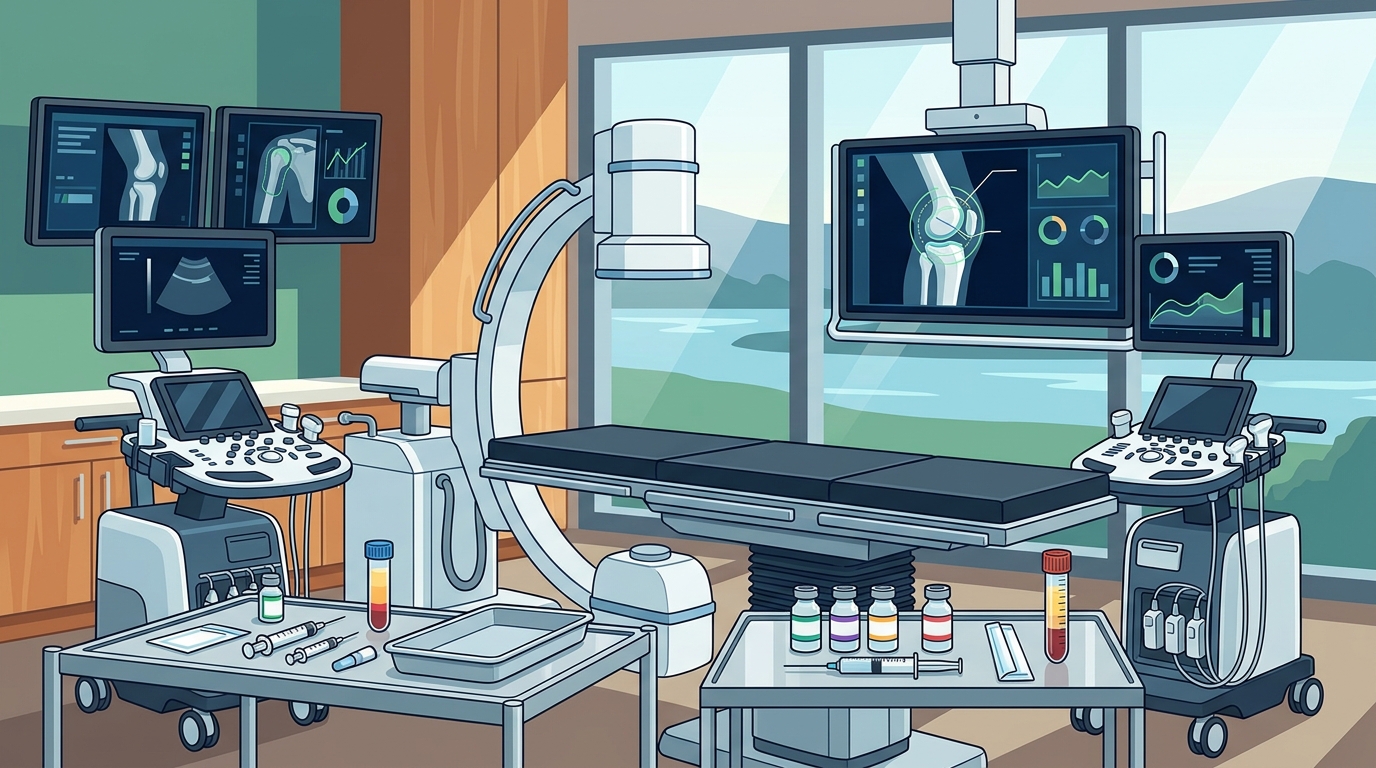
Locating Portland Clinic Facilities and Scheduling
\nPortland offers several dedicated regenerative medicine centers that specialize in joint preservation and soft tissue repair. The most established facilities operate within historic commercial buildings that provide easy accessibility and ample parking. You should verify that the clinic maintains a dedicated consultation room, processing laboratory, and recovery lounge. The primary Portland location operates inside the historic Foundry Building at Oswego Pointe, which provides direct street-level access and elevator availability. Scheduling a consultation requires submitting your current imaging reports and a detailed symptom history. The administrative team will coordinate your initial diagnostic evaluation and procedural planning within a single visit window. You can reach the scheduling department directly through the official contact portal. Early intervention consistently yields superior long-term joint preservation outcomes.
\n\nKey Takeaways
\n- \n
- Over 40 percent of Portland metro patients now prioritize non-surgical joint preservation methods. \n
- Board-certified physicians with dual osteopathic and naturopathic credentials deliver the highest procedural accuracy. \n
- Live ultrasound and fluoroscopy guidance eliminate blind injection errors and improve clinical success rates. \n
- Platelet Rich Plasma accelerates natural healing while stem cell protocols actively rebuild damaged cartilage matrices. \n
- Alpha-2-Macroglobulin therapy specifically neutralizes inflammatory enzymes that degrade joint tissue. \n
- The primary Portland facility operates inside the historic Foundry Building at Oswego Pointe with full accessibility. \n
- Early clinical intervention consistently produces superior long-term joint preservation outcomes. \n
Frequently Asked Questions
\nHow long does a typical regenerative orthopedics consultation take?
\nInitial consultations typically require forty-five to sixty minutes to review imaging, perform a physical examination, and discuss procedural options. The clinical team will map your specific joint degeneration patterns and recommend the most appropriate biological intervention. Follow-up evaluations usually require twenty minutes to assess healing progress and adjust treatment protocols.
\n\nIs regenerative orthopedics covered by standard health insurance plans?
\nMost standard health insurance plans classify regenerative joint injections as elective or experimental procedures. Patients typically pay out-of-pocket or utilize flexible spending accounts and health savings accounts. The clinic billing department will provide transparent pricing breakdowns and payment plan options before scheduling any procedural appointment.
\n\nWhat is the typical recovery timeline after a joint injection?
\nPatients generally experience mild swelling and localized tenderness for three to five days following any regenerative injection. Most individuals return to light daily activities within forty-eight hours and resume moderate exercise within two weeks. The clinical team will provide specific post-procedural restrictions based on your targeted joint and biological protocol.
\n\nCan regenerative treatments reverse advanced osteoarthritis?
\nRegenerative orthopedics cannot fully regenerate severely eroded cartilage surfaces, but it can significantly reduce pain and improve joint function. The biological interventions aim to slow degenerative progression and preserve remaining structural tissue. Patients with moderate to advanced joint wear often experience meaningful symptom relief and delayed surgical intervention timelines.
\n\nHow many injection sessions are typically required?
\nMost patients require three to four injection sessions spaced four to six weeks apart to achieve optimal clinical results. The exact treatment frequency depends on your baseline joint degeneration, inflammatory markers, and biological response rate. The clinical team will monitor your progress through follow-up imaging and adjust the protocol accordingly.
\n\nAre there any contraindications for regenerative joint therapy?
\nActive joint infections, uncontrolled bleeding disorders, and certain autoimmune conditions may disqualify patients from receiving regenerative injections. The clinical team will conduct a comprehensive medical screening and review your current medication list before approving any procedure. Patients who take blood thinners or immunosuppressants may need temporary medication adjustments prior to scheduling.
\n\nWhat imaging studies should I bring to my initial appointment?
\nYou should bring any recent X-rays, magnetic resonance imaging scans, or ultrasound reports that document your joint condition. The clinical team will utilize your existing imaging to map degeneration patterns and plan precise injection trajectories. If you lack recent imaging, the clinic can coordinate diagnostic scans during your initial visit.
\n\nSchedule Your Consultation
\nPortland patients who prioritize joint preservation and functional recovery should schedule a comprehensive evaluation with a licensed regenerative orthopedics specialist. The clinical team at Oregon Regenerative Medicine offers advanced ultrasound guidance, specialized biologic protocols, and dedicated procedural planning. You can book your initial consultation and procedural assessment through the official scheduling portal. Early intervention consistently yields superior long-term joint preservation outcomes and delayed surgical timelines. Contact the Portland clinic today to begin your personalized regenerative treatment pathway.
\n\n