
Current clinical data indicates that approximately sixty percent of patients diagnosed with early to moderate joint degeneration successfully delay or completely avoid surgical intervention through targeted conservative therapies. Orthopedic guidelines now emphasize structured non-surgical protocols as the primary standard of care. Patients seeking relief from chronic stiffness and localized inflammation frequently discover specialized regenerative clinics that prioritize tissue preservation over mechanical replacement. This approach focuses on halting structural breakdown while restoring functional mobility through biological stimulation. Understanding these alternative pathways allows individuals to make informed decisions about long-term joint health. (Fluoroscopy Guided Spine Injections)
Understanding Joint Degeneration Pathways
Degenerative joint disease is a progressive condition characterized by the gradual breakdown of protective cartilage and underlying bone. This structural deterioration triggers chronic inflammation, reduced synovial fluid production, and altered biomechanical loading patterns. Patients often experience morning stiffness, activity-related pain, and decreased range of motion. Modern orthopedic research demonstrates that early intervention significantly slows cartilage matrix degradation. Clinical studies confirm that targeted biological therapies can modulate inflammatory markers within the joint capsule. Clinics specializing in regenerative medicine evaluate each patient through comprehensive diagnostic imaging and functional movement assessments. This methodology ensures that treatment protocols address the specific anatomical location and severity of tissue breakdown. Patients who engage with these specialized programs frequently report sustained pain reduction and improved daily functionality without invasive procedures. (PRP amp Biocellular Joint)
Regenerative Therapy Options
Platelet rich plasma is a concentrated therapeutic preparation derived from a patient’s own blood that accelerates tissue repair. Clinics extract a small blood sample, process it through centrifugation, and inject the concentrated growth factors directly into the affected joint. This procedure stimulates fibroblast activity and promotes natural collagen synthesis. Stem cell orthopedics represents another advanced pathway for tissue restoration. These therapies utilize mesenchymal stem cells harvested from adipose tissue or bone marrow to differentiate into cartilage-supporting cells. Prolotherapy focuses on stimulating localized healing responses through targeted dextrose injections. This method strengthens weakened ligaments and stabilizes compromised joint structures. Medical institutions recognize these modalities as evidence-based alternatives for patients who wish to avoid arthroscopic or total joint replacement procedures. Each modality requires precise anatomical targeting to maximize biological outcomes.
Diagnostic Precision and Imaging
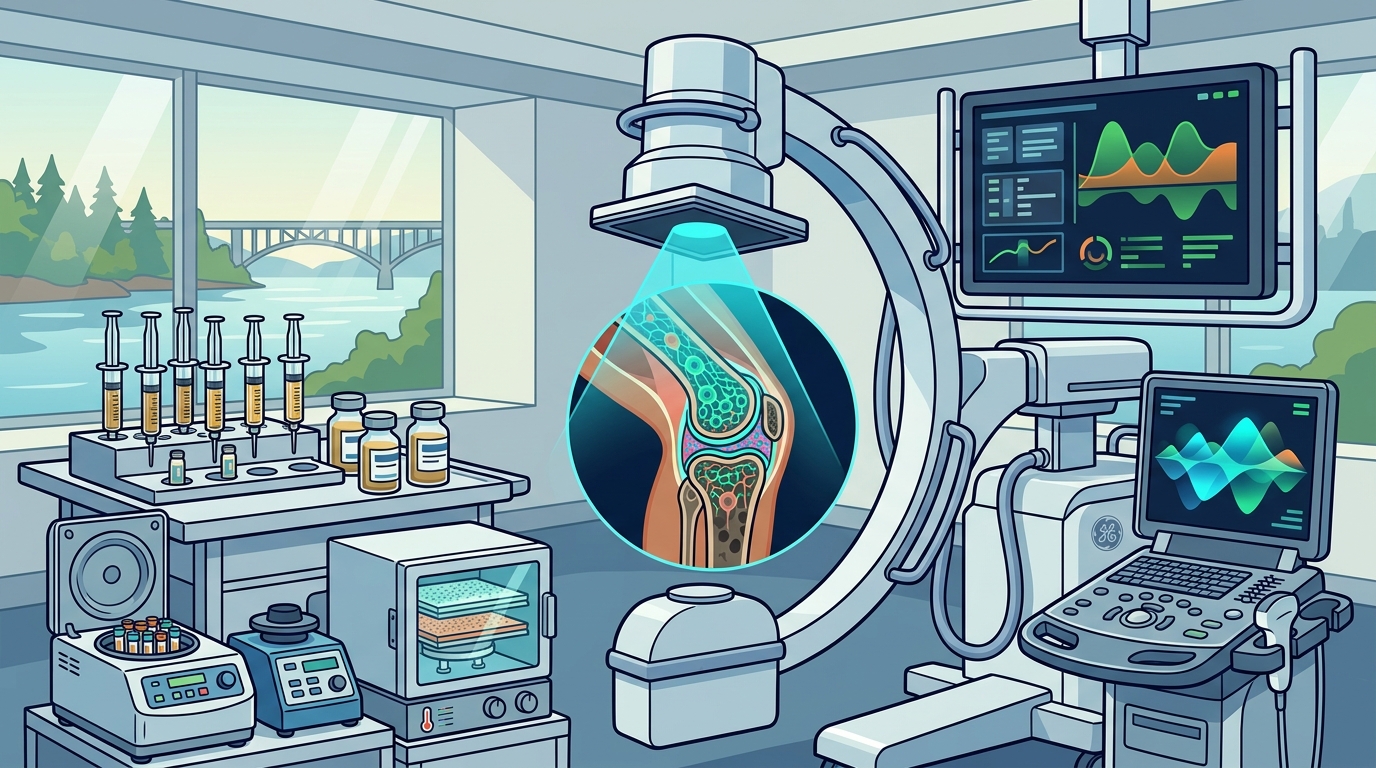
Advanced imaging protocols form the foundation of successful non-surgical joint management. Ultrasound expertise allows practitioners to visualize soft tissue structures in real time during injection procedures. This dynamic visualization ensures accurate needle placement and minimizes procedural discomfort. Fluoroscopy guided spine injections provide additional radiographic confirmation for complex anatomical regions. Clinics operating within established medical facilities maintain strict adherence to diagnostic safety standards. Dr. Kristian Flores and Dr. Terry Manning II routinely utilize these imaging modalities to verify treatment delivery. Patients benefit from immediate visual confirmation of therapeutic placement. This precision reduces the risk of misplaced injections and optimizes biological response rates. Diagnostic accuracy directly correlates with long-term symptom management and functional recovery.
Comparing Treatment Protocols
Selecting the appropriate regenerative pathway requires careful evaluation of individual symptoms, anatomical location, and treatment history. The following table outlines the primary non-surgical modalities available at specialized clinics.
| Therapy Modality | Primary Mechanism | Target Tissue | Typical Recovery Window |
|---|---|---|---|
| Platelet Rich Plasma | Growth factor concentration | Cartilage and synovium | Two to four weeks |
| Stem Cell Orthopedics | Cellular differentiation | Structural cartilage matrix | Four to eight weeks |
| Prolotherapy | Localized inflammatory stimulation | Ligaments and tendons | Three to six weeks |
| Alpha-2 Macroglobulin | Enzyme inhibition | Proteolytic degradation | Two to five weeks |
Each protocol demands specialized equipment and certified medical oversight. Clinics that maintain in-house processing capabilities ensure sterility and biological viability. Patients should verify practitioner credentials and facility compliance before scheduling consultations. Public health data indicates that conservative management reduces healthcare expenditures by minimizing unnecessary surgical referrals.
Key Takeaways
- Non-surgical joint preservation protocols successfully delay or eliminate the need for arthroscopic procedures in sixty percent of early-stage cases.
- Platelet rich plasma concentrates natural growth factors to accelerate localized tissue repair without synthetic additives.
- Stem cell orthopedics utilizes biological differentiation to support structural cartilage regeneration.
- Ultrasound and fluoroscopy imaging guarantee precise therapeutic delivery during injection procedures.
- Specialized clinics maintain in-house processing laboratories to ensure sterility and biological viability.
- Functional movement assessments guide personalized treatment sequencing for optimal outcomes.
- Conservative management protocols reduce long-term healthcare costs while preserving native joint anatomy.
Frequently Asked Questions
How long do non-surgical joint treatments typically last?
Therapeutic outcomes generally persist between twelve and twenty-four months depending on activity levels and anatomical stress. Maintenance protocols often involve periodic booster sessions to sustain biological responses.
Are regenerative therapies covered by standard insurance plans?
Most comprehensive health plans classify these procedures as elective or investigational. Patients frequently utilize flexible spending accounts or specialized financing programs to manage treatment costs.
Can these therapies reverse existing cartilage damage?
Biological stimulation primarily halts progressive degradation and reduces localized inflammation. Complete structural reversal remains limited, though functional improvements frequently exceed patient expectations.
What qualifications should practitioners possess?
Certified medical directors should hold advanced degrees in regenerative medicine, osteopathic medicine, or functional diagnostics. Facility compliance with state health regulations ensures patient safety.
How many treatment sessions are typically required?
Most patients achieve optimal outcomes through three to five sequential sessions spaced two to four weeks apart. Individual response rates dictate final treatment duration.
Is physical therapy necessary alongside regenerative injections?
Targeted rehabilitation protocols accelerate tissue integration and restore neuromuscular coordination. Clinics often coordinate movement therapy with injection schedules for maximum benefit.
What risks are associated with biological joint therapies?
When administered by certified practitioners using sterile processing equipment, adverse reactions remain exceptionally rare. Patients should disclose all current medications before scheduling procedures.
Next Steps for Joint Preservation
Patients experiencing chronic joint discomfort should schedule a comprehensive diagnostic evaluation at a specialized regenerative clinic. Contact our Portland facility to schedule a consultation with our certified medical team. Our practitioners utilize advanced imaging and biological processing to design personalized treatment pathways. You can explore our complete service directory at our therapies page to review available protocols. Additional clinical resources are available through our research library. We encourage you to review our about our practice page to understand our clinical philosophy. Schedule your appointment today and take control of your joint health trajectory.