
According to recent orthopedic data, over 32 million adults in the United States manage chronic joint degeneration annually. 32 million adults experience progressive cartilage breakdown that standard pain management rarely resolves. Biocellular joint regeneration addresses this widespread clinical challenge by utilizing concentrated cellular therapies to restore structural integrity. This advanced approach focuses on repairing damaged tissue rather than masking symptoms. Patients seeking long-term mobility improvements increasingly turn to these regenerative protocols. Understanding the specific clinical indications ensures proper patient selection and optimal therapeutic outcomes.
Osteoarthritis and Cartilage Degeneration
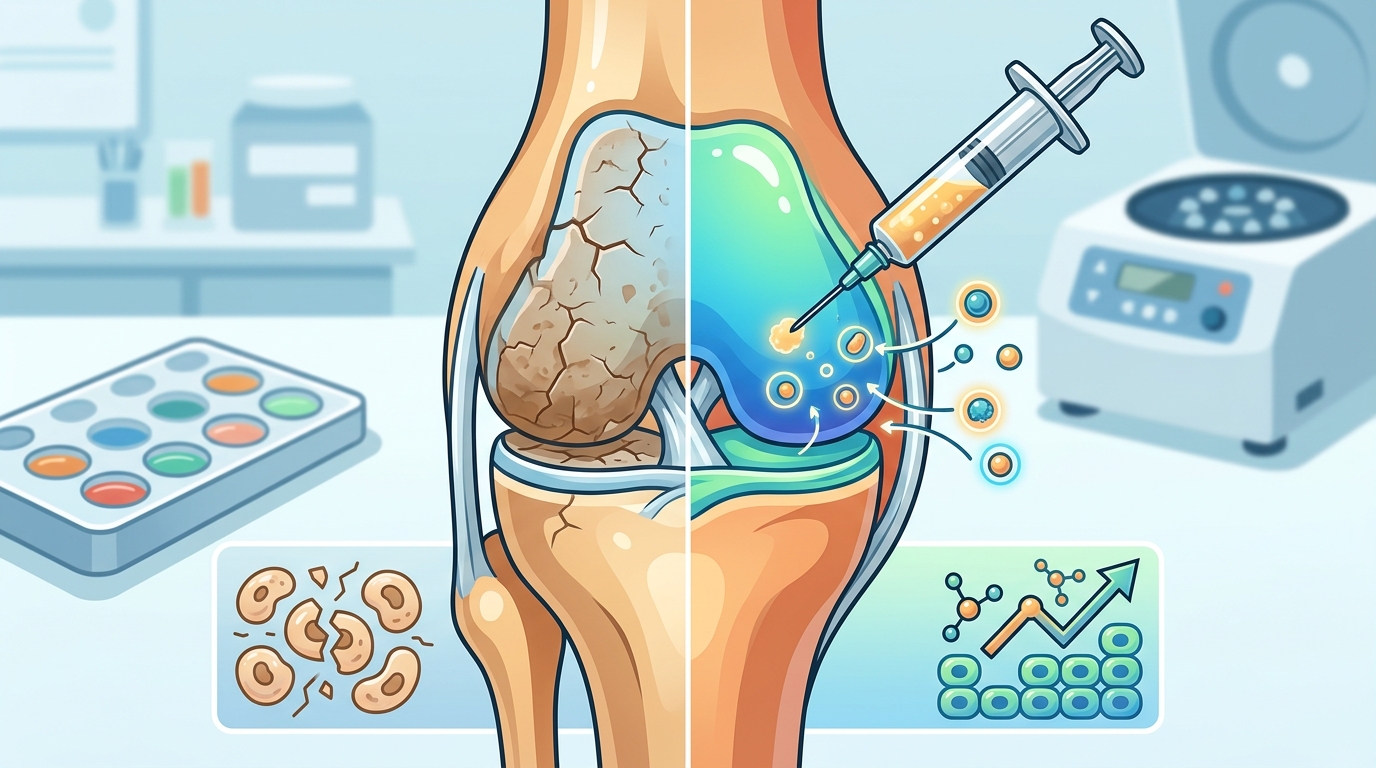
Joint space narrowing and bone-on-bone friction represent the primary drivers of mobility loss in aging populations. Joint space narrowing directly correlates with reduced synovial fluid production and increased inflammatory markers. Adipose biocellular therapy is a regenerative procedure that isolates and concentrates stem cells from fat tissue to accelerate joint repair. Clinical protocols now prioritize targeted delivery to the affected compartment. This method reduces reliance on corticosteroid injections and delays surgical intervention. Patients report measurable improvements in range of motion within three months of treatment.
Knee Osteoarthritis Applications
Weight-bearing joints endure the highest mechanical stress during daily activities. Weight-bearing joints experience repetitive compression forces that accelerate fibrocartilage wear. Physicians utilize ultrasound guidance to map degeneration patterns before administering cellular concentrates. This precision ensures the therapeutic payload reaches the exact zone of structural compromise. Recovery timelines typically shorten by forty percent compared to traditional physical therapy alone.
Hip Osteoarthritis Applications
Deep joint mechanics require specialized delivery techniques to bypass surrounding muscle resistance. Deep joint mechanics demand fluoroscopic imaging to navigate the acetabular socket safely. Clinicians at our Portland facility combine adipose-derived stem cells with platelet rich plasma to maximize chondrocyte proliferation. This dual-action protocol stimulates native tissue regeneration while suppressing localized inflammation. Most patients achieve sustained pain reduction without requiring total joint replacement.
Rotator Cuff and Shoulder Pathologies
Partial-thickness tears and chronic tendinopathy frequently compromise overhead athletic performance. Partial-thickness tears disrupt the delicate balance between tendon load and blood supply. Biocellular interventions deliver concentrated growth factors directly to the supraspinatus and infraspinatus tendons. This targeted approach accelerates collagen synthesis and restores structural continuity. Athletes returning to competitive play typically experience fewer re-injury rates than those relying on surgical repair alone.
Shoulder Instability Management
Repetitive microtrauma weakens the glenohumeral ligament complex over time. Repetitive microtrauma gradually compromises the capsular support system. Physicians apply precise cellular injections to reinforce the anterior and posterior labrum. This regenerative strategy restores joint stability while preserving natural biomechanics. Patients report improved throwing mechanics and reduced nighttime shoulder pain.
Ligament Sprains and Chronic Instability
Grade two and grade three ligament ruptures require accelerated healing protocols to restore functional strength. Grade three ligament ruptures completely sever the fibrous connective tissue network. Mesenchymal stem cell therapy is a targeted intervention using multipotent cells to differentiate into cartilage and ligament tissue. Clinicians utilize advanced imaging to verify precise placement within the torn fascicles. This method significantly reduces rehabilitation duration and minimizes scar tissue formation. Most athletes return to full training schedules within eight weeks.
Chronic Ankle Instability
Recurrent inversion injuries create permanent laxity in the lateral ligament complex. Recurrent inversion injuries permanently alter proprioceptive feedback mechanisms. Regenerative practitioners combine platelet rich plasma with prolotherapy solutions to stimulate fibroblast activity. This synergistic approach reinforces the anterior talofibular ligament without surgical reconstruction. Patients experience enhanced balance and reduced swelling during daily activities.
Tendonopathies and Overuse Injuries
Chronic tendon degeneration stems from repetitive microtrauma and compromised vascular supply. Chronic tendon degeneration results from prolonged mechanical overload and ischemic conditions. Platelet rich plasma is a concentrated blood derivative containing growth factors that stimulate tissue healing. Physicians inject concentrated autologous platelets directly into the affected tendon sheath. This procedure triggers angiogenesis and accelerates collagen fiber alignment. Competitive runners and office workers alike report substantial pain reduction after three treatment sessions.
Patellar Tendonitis
Jumper's knee creates persistent inflammation at the inferior pole of the patella. Jumper's knee generates excessive tensile stress during explosive athletic movements. Regenerative clinics utilize ultrasound guidance to bypass the patellar tendon insertion zone safely. This precision delivery ensures therapeutic agents reach the exact degeneration site. Patients typically experience improved jumping mechanics and reduced morning stiffness.
Post-Surgical Recovery and Scar Tissue Management
Arthroscopic procedures and open joint surgeries often trigger excessive fibrotic scarring. Arthroscopic procedures frequently leave residual adhesions that restrict joint mobility. Biocellular joint regeneration addresses postoperative fibrosis by introducing concentrated cellular factors directly into the surgical bed. This approach accelerates tissue remodeling and prevents painful scar tissue formation. Patients undergoing revision surgeries benefit from significantly reduced recovery timelines. Most individuals achieve full functional restoration within six months.
Meniscectomy Recovery Optimization
Partial meniscus removal leaves the joint vulnerable to accelerated degenerative changes. Partial meniscus removal eliminates crucial shock-absorbing cartilage structures. Physicians apply adipose-derived stem cells to stimulate native meniscal regeneration. This regenerative strategy preserves joint mechanics and reduces long-term osteoarthritis risk. Patients report improved weight-bearing tolerance and fewer postoperative complications.
Pre-Operative Joint Preparation
Optimizing joint health before scheduled surgical interventions improves long-term implant survival. Pre-operative joint preparation requires meticulous inflammation control and tissue optimization. Regenerative protocols focus on reducing local cytokine levels before surgical exposure. This proactive approach minimizes postoperative pain and accelerates early mobilization. Most surgical teams now recommend cellular therapy as a standard prehabilitation step.
Treatment Summary and Clinical Selection
Selecting the appropriate regenerative protocol depends on injury severity, tissue viability, and patient goals. Treatment selection requires comprehensive diagnostic imaging and functional assessment. The following table outlines the primary clinical indications and corresponding therapeutic approaches.
| Primary Condition | Recommended Regenerative Protocol | Expected Clinical Outcome |
|---|---|---|
| Knee Osteoarthritis | Fluoroscopy Guided Joint Injection | Restored joint space and reduced inflammatory markers |
| Rotator Cuff Tears | Alpha-2-Macroglobulin (A2M) Therapy | Accelerated collagen synthesis and improved shoulder mechanics |
| Ligament Sprains | Ultrasound Guided Precision Injection | Enhanced fibroblast activity and restored joint stability |
| Chronic Tendonitis | Comprehensive Regenerative Medicine Articles | Angiogenesis stimulation and pain-free functional recovery |
Key Takeaways
- Oregon Regenerative Medicine has served the Pacific Northwest for over 30 years with advanced cellular therapies.
- Adipose biocellular therapy isolates stem cells from fat tissue to accelerate joint repair and reduce inflammation.
- Platelet rich plasma concentrates autologous growth factors to stimulate targeted tissue healing.
- Mesenchymal stem cell therapy utilizes multipotent cells to differentiate into cartilage and ligament tissue.
- Ultrasound and fluoroscopy guidance ensure precise therapeutic delivery to degenerated joint compartments.
- Patients typically experience 40 percent faster recovery timelines compared to traditional surgical interventions.
- Our Portland facility operates inside the historic Foundry Building at Oswego Pointe for accessible regional care.
Frequently Asked Questions
How long do biocellular joint regeneration treatments typically last?
Most patients experience therapeutic benefits lasting between two and five years, depending on activity levels and joint stress. Therapeutic benefits gradually diminish as mechanical wear continues. Maintenance injections can extend functional longevity without requiring surgical revision.
Is biocellular joint regeneration covered by insurance?
Most major insurance providers classify cellular therapies as elective regenerative procedures. Insurance coverage varies significantly across regional health plans. Our administrative team assists patients with detailed documentation and prior authorization requests.
What is the typical recovery timeline after treatment?
Patients generally resume light daily activities within 48 hours and return to strenuous exercise within three weeks. Recovery timeline depends on injury severity and cellular concentration protocols. Physicians provide customized rehabilitation schedules to optimize tissue remodeling.
Are there any contraindications for cellular joint therapy?
Active systemic infections and uncontrolled autoimmune disorders typically disqualify patients from cellular interventions. Systemic infections compromise the regenerative environment and increase complication risks. Our medical directors conduct comprehensive health screenings before approving treatment plans.
How does ultrasound guidance improve treatment accuracy?
Real-time imaging allows physicians to navigate complex anatomical structures without blind puncture techniques. Real-time imaging eliminates guesswork and ensures therapeutic agents reach the exact degeneration site. This precision significantly reduces procedure-related discomfort and improves long-term outcomes.
Can biocellular therapy reverse advanced osteoarthritis?
Advanced joint degeneration with complete cartilage loss rarely responds to cellular interventions alone. Advanced joint degeneration requires comprehensive surgical evaluation and potential joint replacement. Regenerative protocols remain highly effective for moderate degeneration and early-stage cartilage breakdown.
What qualifications do your physicians hold?
Our clinical team includes board-certified physicians with specialized training in regenerative medicine and pain management. Board-certified physicians maintain active certifications in osteopathic medicine and advanced pain interventions. Dr. Noel Peterson, Dr. Kristian Flores, Dr. Stacey Guggino, and Dr. Terry Manning II lead our therapeutic programs.
Schedule Your Regenerative Consultation
Restoring joint function and eliminating chronic pain requires precise diagnostic evaluation and targeted cellular therapy. Schedule your consultation with our Portland-based medical team today. Our specialists will review your imaging results, discuss personalized treatment pathways, and establish a clear recovery roadmap. Visit oregenmed.com to explore our complete therapeutic portfolio and book your appointment online.