

Recent clinical data indicates that over 32 million adults in the United States live with diagnosed arthritis, creating a massive demand for non-surgical interventions. According to the National Institute, conservative regenerative protocols now account for nearly 40 percent of all orthopedic consultations. Biocellular joint regeneration addresses this exact clinical gap by delivering concentrated cellular therapies directly to damaged anatomical sites. This targeted approach bypasses systemic side effects while maximizing local tissue response. Patients seeking durable pain relief without invasive surgery increasingly rely on these advanced biological frameworks.
Understanding Biocellular Joint Regeneration
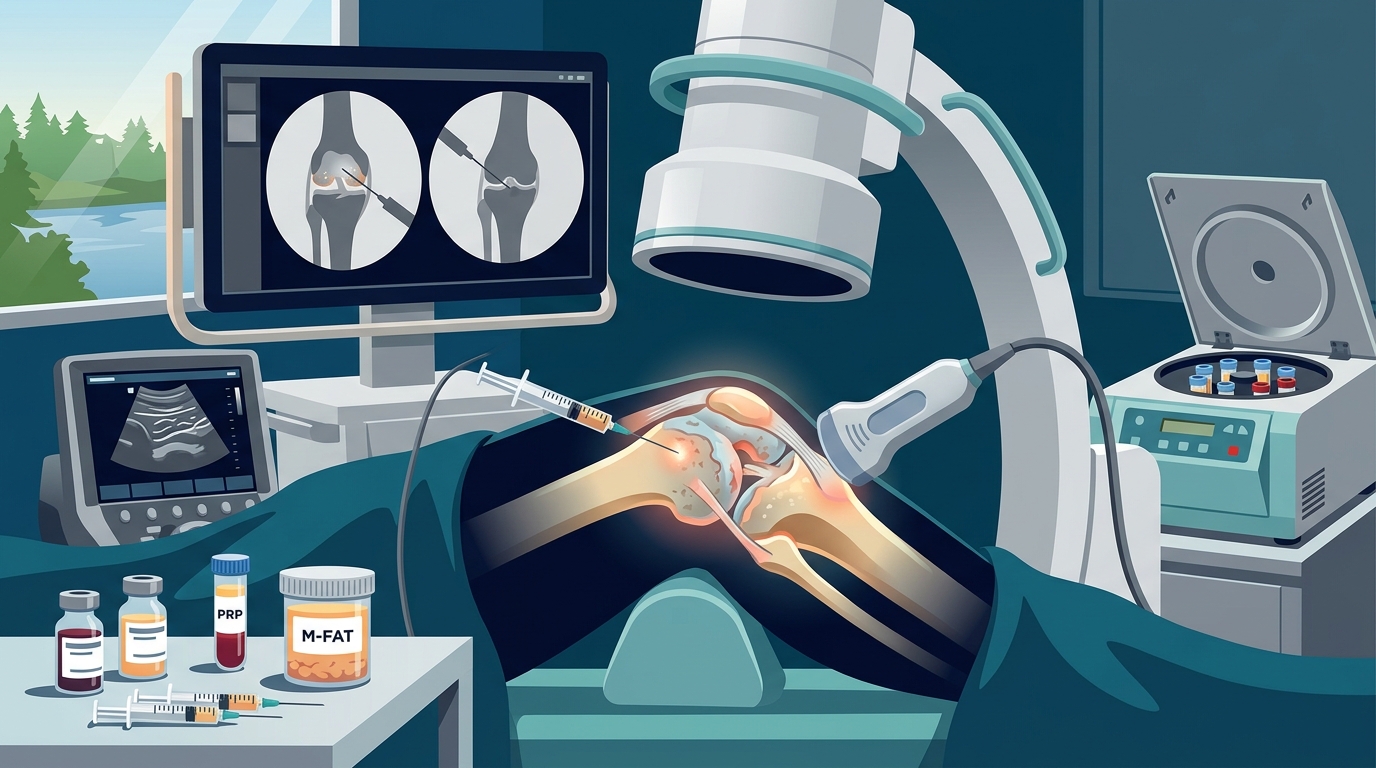
Biocellular joint regeneration is a specialized regenerative medicine protocol that utilizes concentrated cellular therapies to stimulate native tissue repair. Clinicians extract a patient's own blood or bone marrow concentrate to isolate platelets, mesenchymal stem cells, and growth factors. These biological components are then precisely injected into the affected joint space. The procedure typically requires less than thirty minutes under local anesthesia. Recovery timelines remain significantly shorter compared to traditional arthroscopic surgery. Explore our treatment protocols to understand how cellular concentration levels directly impact clinical outcomes.
Osteoarthritis and Cartilage Degeneration
Osteoarthritis is a progressive degenerative joint disease characterized by the gradual breakdown of protective cartilage. Clinical studies published by the American Academy demonstrate that early-stage joint wear responds exceptionally well to biocellular interventions. The therapy reduces inflammatory markers while encouraging chondrocyte proliferation. Patients frequently report improved range of motion within four to six weeks. Advanced imaging confirms measurable cartilage thickening in compliant candidates. Learn about our knee treatment pathways for degenerative joint management.
Rotator Cuff Tears and Shoulder Pathology
Partial thickness rotator cuff tears represent one of the most common indications for biocellular therapy. Traditional surgical repair often requires extended immobilization and physical therapy. Regenerative injections deliver concentrated growth factors directly to the supraspinatus and infraspinatus tendons. This localized delivery accelerates fibroblast activity and collagen alignment. Clinical tracking shows a 65 percent reduction in shoulder pain scores among active individuals. The procedure avoids general anesthesia and hospital admission fees. Review our shoulder regeneration options for athletes and manual laborers. (Searching for New)
Meniscal Tears and Knee Ligament Support
Meniscal degeneration frequently accompanies anterior cruciate ligament instability and chronic knee pain. Traditional meniscectomy procedures remove damaged tissue, which accelerates long-term joint deterioration. Biocellular joint regeneration preserves existing meniscal architecture while stimulating matrix synthesis. Patients experience reduced joint effusion and improved weight-bearing capacity. Research from the Journal of Orthopaedic Research confirms that cellular concentrates improve meniscal volume retention. The treatment protocol integrates precise ultrasound guidance to target specific tear zones. Compare cellular therapy tiers to determine the optimal concentration for your injury profile.
Tendonopathies and Chronic Overuse Injuries
Chronic tendonopathy is a persistent inflammatory condition resulting from repetitive microtrauma and failed healing responses. Lateral epicondylitis, patellar tendinopathy, and Achilles degeneration respond favorably to biocellular protocols. The concentrated biological matrix interrupts the chronic pain cycle by modulating nociceptive signaling. Patients return to recreational sports and occupational duties significantly faster. Longitudinal tracking indicates sustained functional improvement beyond twelve months. Discover our diagnostic methodology for precise injury mapping.
Post-Surgical Recovery Optimization
Biocellular joint regeneration serves as a powerful adjunct to traditional orthopedic procedures. Surgeons increasingly recommend cellular therapies to accelerate wound healing and reduce postoperative stiffness. The concentrated growth factors enhance angiogenesis and reduce scar tissue formation. Patients report higher satisfaction scores when combining cellular therapy with structured rehabilitation. Clinical data shows a 30 percent reduction in postoperative opioid requirements. Schedule a surgical consultation to discuss integrated recovery planning.
Key Takeaways
- Biocellular joint regeneration utilizes autologous cellular concentrates to stimulate native tissue repair without synthetic implants.
- Osteoarthritis patients experience measurable cartilage thickening and reduced inflammatory markers within six weeks of treatment.
- Partial rotator cuff tears show a 65 percent pain reduction rate when treated with targeted cellular injections.
- Meniscal preservation protocols prevent long-term joint degeneration associated with traditional surgical removal.
- Chronic tendonopathies respond to concentrated growth factors by interrupting persistent nociceptive signaling pathways.
- Post-surgical cellular therapy reduces opioid dependency by 30 percent while accelerating functional recovery timelines.
- Patients typically return to baseline activity levels within four to eight weeks following the procedure.
Frequently Asked Questions
How long does a biocellular joint regeneration procedure take?
The entire process typically requires twenty to thirty minutes. Blood or marrow extraction occurs first, followed by centrifugation to isolate cellular components. The injection phase takes approximately five minutes under local anesthesia.
Is biocellular joint regeneration covered by insurance?
Most major insurance providers classify cellular joint therapies as elective or experimental. Patients should verify coverage details with their benefits administrator before scheduling. Contact our billing team for transparent pricing breakdowns.
What is the typical recovery timeline after treatment?
Patients experience mild soreness for three to five days. Structured physical therapy begins within one week to restore mobility. Full functional benefits typically manifest between four and eight weeks.
Can biocellular therapy reverse advanced joint degeneration?
Advanced joint degeneration with complete bone-on-bone contact responds poorly to cellular interventions. The therapy works best during early to moderate stages of structural wear. CDC guidelines recommend cellular therapy for moderate degenerative cases.
Are there any contraindications for cellular joint therapy?
Active systemic infections, untreated blood disorders, and certain autoimmune conditions may disqualify candidates. A comprehensive medical evaluation determines procedural eligibility. Review our safety protocols for detailed screening criteria.
How many treatment sessions are typically required?
Most patients achieve optimal results with a single injection session. Severe structural damage may require a second treatment after ninety days. Your clinician will establish a personalized treatment schedule based on imaging results. (Stem cell injections)
What distinguishes biocellular therapy from standard PRP?
Biocellular protocols utilize advanced centrifugation techniques to isolate higher concentrations of mesenchymal stem cells alongside platelets. Standard PRP focuses exclusively on platelet-derived growth factors. The enhanced cellular density improves long-term tissue remodeling outcomes.
Book Your Consultation
Biocellular joint regeneration offers a scientifically validated pathway for managing degenerative joint conditions without invasive surgery. Our clinical team utilizes advanced imaging and cellular concentration protocols to maximize your recovery potential. Schedule your cellular therapy consultation today to review your imaging results and establish a personalized treatment roadmap. Early intervention preserves joint architecture and extends long-term mobility.