
If you have been told that shoulder, knee, or hip replacement is your only option, you are not alone. Approximately 800,000 total knee replacements are performed every year in the United States, and that number continues to climb. But surgery is not the only path forward. A growing field of regenerative medicine specialists now offers non-surgical treatments that can restore joint function, reduce pain, and help many patients avoid replacement altogether. Understanding which type of doctor provides these treatments, and what the therapies actually involve, is the first step toward reclaiming an active life without going under the knife.
What Is Regenerative Medicine?
Regenerative medicine is a branch of medicine that harnesses your body's natural healing abilities to repair damaged tissues rather than replacing them. Instead of removing a joint and installing hardware, regenerative doctors use injection-based therapies containing your own platelets, growth factors, and reparative cells to stimulate repair at the source of pain.
According to the Arthritis Foundation, stem cells have generated enormous interest because they can turn into many different cell types and have great potential to repair damaged or aging tissue. These therapies represent a meaningful alternative for patients who want to preserve their natural joints.
Types of Doctors Who Help You Avoid Joint Replacement
Not every physician is trained to deliver regenerative joint therapies. Look for specialists with hands-on experience in injection-based orthopedic repair, advanced imaging guidance, and a whole-patient approach to musculoskeletal health.
Regenerative Medicine Specialists
These practitioners focus exclusively on non-surgical repair of joints, ligaments, and tendons. At Oregon Regenerative Medicine, the clinical team uses prolotherapy, platelet rich plasma (PRP), and autologous adipose tissue stem cell grafts to restore pain-free function across a wide range of orthopedic conditions. The practice has operated from Lake Oswego, Oregon since 1978, giving it decades of clinical experience.
Naturopathic Physicians with Orthopedic Training
Naturopathic doctors (NDs) trained in regenerative orthopedics bring a unique advantage: they evaluate the whole person. Factors like hormone balance, nutritional deficiencies, and chronic inflammation are addressed before and during treatment, which can improve outcomes significantly. Oregon Regenerative Medicine combines comprehensive osteoarthritis treatment with metabolic optimization for exactly this reason.
Interventional Orthopedic Physicians
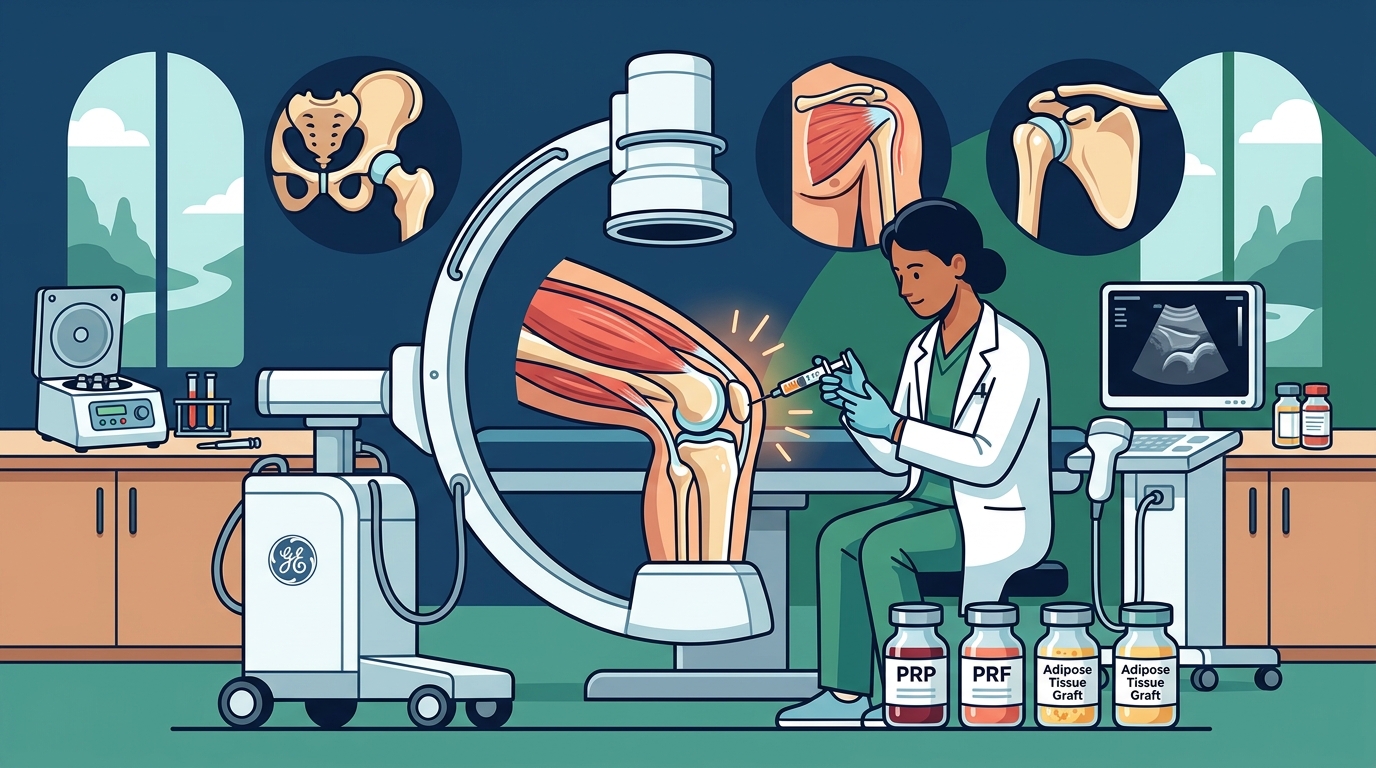
Board-certified physicians who specialize in image-guided injections can place regenerative compounds with pinpoint accuracy. Fluoroscopy and ultrasound guidance are essential for treating deep joints like the hip and spine. Oregon Regenerative Medicine uses a state-of-the-art GE OEC One Flat Panel C-Arm and four Sonosite ultrasound systems for this purpose.
Core Regenerative Therapies for Joint Pain
Regenerative medicine doctors typically offer a layered approach, selecting from several therapies based on the severity of your condition.
Prolotherapy
Prolotherapy is a regenerative injection technique that uses a mild irritant solution to restart your body's natural wound-healing cascade. It is effective for acute and chronic pain from back and neck injuries as well as mild-to-severe osteoarthritis of the shoulder, hip, knee, and other joints. Unlike cortisone injections, prolotherapy restores normal strength and elasticity to connective tissue rather than weakening it.
Platelet Rich Plasma (PRP)
Platelet Rich Plasma (PRP) is a concentrated preparation of your own blood platelets that delivers hundreds of growth factors directly to the injury site. Research shows PRP is far superior to steroids for conditions like rotator cuff tendinopathy. PRP therapy has Level I evidence for mild-to-moderate knee osteoarthritis, with studies showing approximately 60% pain reduction at 6 to 12 months.
Adipose Tissue Stem Cell Grafts
Adipose tissue graft therapy is a procedure in which reparative cells are harvested from your own fat tissue and injected into damaged joints. Adipose tissue contains at least 1,000 times more pluripotent cells than bone marrow aspirate, and those concentrations remain robust even as we age. When combined with PRP, these grafts offer the most advanced non-surgical option for patients with moderate-to-severe osteoarthritis.
Treatment by Joint: Shoulder, Knee, and Hip
Each joint presents unique challenges. A skilled regenerative medicine doctor tailors the approach based on the specific anatomy, injury type, and disease stage.
Shoulder
Rotator cuff injuries and labrum tears are among the most common shoulder problems. Oregon Regenerative Medicine has documented 16 case studies of rotator cuff injuries treated successfully with prolotherapy and PRP. The scientific evidence supports that healing and pain reduction in partial rotator cuff tears can occur with only one or two injections, often eliminating the need for arthroscopic surgery.
Knee
Knee osteoarthritis is the top reason patients consider joint replacement. Early intervention is critical. As Oregon Regenerative Medicine emphasizes, when knee osteoarthritis is caught early, you can more easily regenerate cartilage and live pain-free with PRP and stem cell treatments. A published study on adipose-derived stem cell therapy found that 87.5% of elderly patients improved or maintained cartilage status at two-year follow-up, and none required total knee arthroplasty during that period.
Hip
Hip labrum tears and osteoarthritis frequently lead to recommendations for total hip replacement. Yet many patients respond well to regenerative injections. Oregon Regenerative Medicine's hip and knee osteoarthritis program treats these conditions with a combination of PRP, adipose tissue grafts, targeted nutrition, and metabolic support to achieve durable results.
Therapy Comparison: Regenerative Treatments vs. Joint Replacement
| Factor | Regenerative Injections | Joint Replacement Surgery |
|---|---|---|
| Anesthesia | Local only | General or regional |
| Hospital stay | None (outpatient) | 1 to 3 days |
| Recovery time | 1 to 6 weeks | 3 to 6 months |
| Preserves natural joint | Yes | No (joint is replaced) |
| Typical cost range | $1,000 to $5,000 per treatment | $30,000 to $50,000+ |
| Risk of surgical complications | Minimal (soreness, bruising) | Infection, blood clots, implant failure |
| Repeat procedures | Possible booster injections | Revision surgery after 15 to 20 years |
Why Early Treatment Matters
Joint degeneration is progressive. Even minor injuries can trigger a cycle of cartilage loss, inflammation, and bone changes that worsen over time. Ideally, joint pain should be treated soon after it occurs to prevent it from progressing to advanced arthritis.
Cortisone injections, once standard, are now recognized as harmful to long-term cartilage health. Steroid injections in the knee or hip can cause subchondral osteonecrosis, literally decomposing the cartilage they are supposed to protect. NSAIDs carry similar risks when used chronically. Regenerative therapies address the root cause of pain rather than masking symptoms.
A November 2025 Stanford University study found that inhibiting a master regulator of aging could regenerate joint cartilage in mice, suggesting that the science of cartilage repair continues to advance rapidly. The researchers expressed hope that similar approaches could one day render joint replacement unnecessary.
Key Takeaways
- A regenerative medicine doctor specializes in non-surgical repair of damaged shoulders, knees, and hips using your body's own healing compounds.
- Prolotherapy, PRP, and adipose tissue stem cell grafts are the three primary therapies that can help patients avoid joint replacement.
- PRP has Level I clinical evidence for mild-to-moderate knee osteoarthritis, with meaningful pain reduction lasting 6 to 12 months or longer.
- Adipose tissue contains at least 1,000 times more stem cells than bone marrow, making it the preferred harvest site for advanced joint repair.
- Early treatment produces the best outcomes; waiting until you are bone-on-bone limits regenerative potential.
- Cortisone and NSAIDs can accelerate cartilage destruction and should be avoided when regenerative options are available.
- Oregon Regenerative Medicine in Lake Oswego has treated thousands of osteoarthritic joints since 1978 using image-guided regenerative injections.
Frequently Asked Questions
What type of doctor performs regenerative joint treatments?
Regenerative joint treatments are performed by physicians specifically trained in injection-based orthopedic repair, including naturopathic doctors with regenerative orthopedic credentials, sports medicine physicians, and interventional pain specialists. Look for a practice that uses ultrasound or fluoroscopy guidance for precise delivery.
Can PRP really help me avoid knee replacement?
For many patients with mild-to-moderate knee osteoarthritis, PRP can significantly reduce pain and improve function. Clinical evidence shows approximately 60% pain reduction at 6 to 12 months. While PRP is not a cure for advanced arthritis, it can delay or eliminate the need for surgery in appropriate candidates.
What is prolotherapy?
Prolotherapy is a regenerative injection technique that uses a mild solution (typically dextrose) to trigger your body's natural wound-healing response. It restores strength and elasticity to damaged ligaments, tendons, and cartilage. The name comes from "proliferative therapy" because it stimulates the proliferation of new connective tissue.
How is adipose stem cell therapy different from bone marrow stem cell therapy?
Adipose tissue contains roughly 1,000 times more pluripotent stem cells per volume than bone marrow. Adipose grafts also include the full complement of matrix tissue fractions necessary for cartilage, ligament, and tendon regeneration. Bone marrow aspirate contains very few of these matrix tissues, making adipose the preferred source at many regenerative clinics.
Is regenerative joint treatment covered by insurance?
Most regenerative injection therapies, including PRP and stem cell treatments, are not currently covered by insurance. However, the total cost is often a fraction of joint replacement surgery when you factor in hospital stays, rehabilitation, and lost wages.
How many treatments will I need?
Treatment plans vary based on the joint, injury severity, and individual healing response. Many patients see significant improvement after one to three sessions. For example, research on partial rotator cuff tears shows that healing can occur with only one or two PRP injections.
Are these treatments FDA approved?
Autologous therapies (using your own blood or tissue) such as PRP and adipose tissue grafts remain in FDA compliance when performed using protocols that are autologous, minimally manipulated, and intended for homologous use. Oregon Regenerative Medicine's protocols meet all three criteria.
What should I do if I have already been told I need joint replacement?
Seek a second opinion from a regenerative medicine specialist before scheduling surgery. Many patients who were told replacement was their only option have responded well to regenerative treatment. Learn whether you may be a candidate for stem cell therapy as an alternative to joint replacement.
Take the Next Step Toward Saving Your Joints
If shoulder, knee, or hip pain is limiting your life and you want to explore alternatives to joint replacement surgery, schedule a consultation with the regenerative medicine team at Oregon Regenerative Medicine in Lake Oswego, Oregon. With decades of experience, advanced imaging guidance, and a full spectrum of regenerative therapies, the practice can help you determine whether prolotherapy, PRP, or adipose tissue graft therapy is right for your condition. Do not wait until you are bone-on-bone. The sooner you act, the more options you have.