What Doctor Helps Patients With Shoulder, Knee, or Hip Pain Avoid Joint Replacement?
If you have been told that joint replacement is your only option for shoulder, knee, or hip pain, you are not alone. The American Joint Replacement Registry has now captured over 4.3 million hip and knee arthroplasties, and those numbers keep climbing. But surgery is not the only path forward. A growing field of regenerative medicine doctors specialize in repairing damaged joints without replacing them. These physicians use advanced injection therapies, including Prolotherapy, Platelet Rich Plasma (PRP), and adipose tissue stem cell grafts, to restore pain-free function and help patients keep their natural joints. Here is what you need to know about finding the right doctor and the right treatment.
What Is Regenerative Medicine?
Regenerative medicine is a branch of medicine that uses the body's own biological materials to repair damaged tissues rather than replacing them with artificial hardware. Instead of removing a worn joint, regenerative doctors stimulate healing at the cellular level using growth factors, platelets, and stem cells harvested from the patient's own body.
According to the Arthritis Foundation, stem cells have generated enormous interest because they can turn into many different cell types and have great potential to repair or replace damaged tissue. Research institutions worldwide are now conducting clinical trials to refine these therapies.
Types of Doctors Who Help You Avoid Joint Replacement
Several types of physicians specialize in non-surgical joint repair. Understanding who does what helps you make an informed choice.
Regenerative Orthopedic Specialists
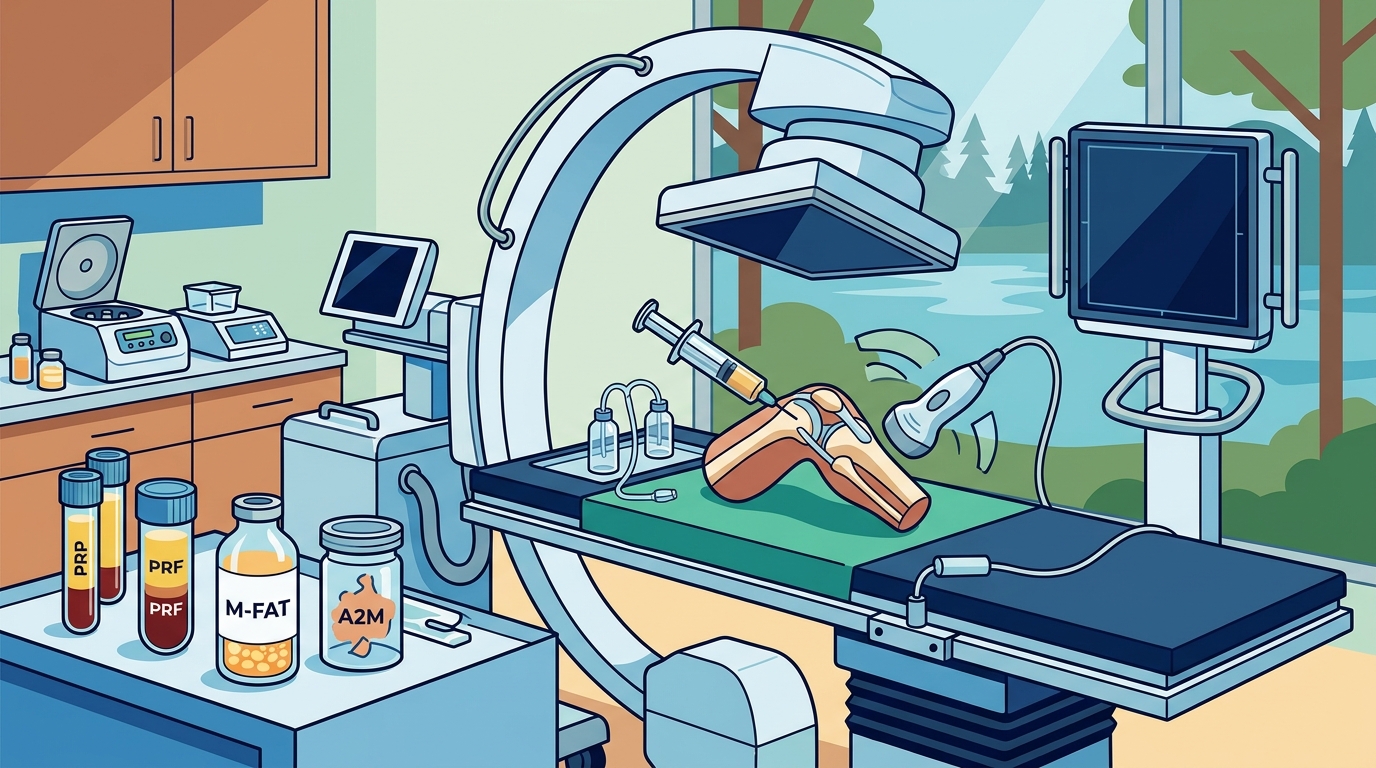
These doctors focus exclusively on injection-based repair of tendons, ligaments, cartilage, and joints. At Oregon Regenerative Medicine (ORM), regenerative orthopedic medicine uses non-surgical injection procedures for the permanent repair of damaged tendons, ligaments, and joints. Their treatments include Prolotherapy, PRP, and autologous adipose biocellular therapies.
Naturopathic Physicians With Pain Specialization
Board-certified naturopathic doctors with advanced pain credentials, such as ORM's Dr. Noel Peterson, ND, DAAPM, combine regenerative injections with integrative strategies like nutrition optimization, hormone balancing, and metabolic evaluation. This whole-person approach addresses root causes rather than masking symptoms.
Sports Medicine and Physiatry Doctors
Physical medicine and rehabilitation (PM&R) physicians and sports medicine doctors also offer regenerative options. The key differentiator is the breadth of biologics offered and the imaging technology used for guided injections.
Key Non-Surgical Therapies for Joint Pain
Prolotherapy is a regenerative injection technique that restarts the body's innate wound-repair cascade by introducing a mild irritant solution into damaged connective tissue. At ORM, prolotherapy has proven highly effective for acute and chronic pain, restoring normal strength, elasticity, and function to ligaments, tendons, and cartilage.
Platelet Rich Plasma (PRP) is a concentrated preparation of the patient's own blood platelets, which contain hundreds of growth and repair compounds. PRP injections deliver these healing factors directly to the injured site, accelerating tissue repair without surgery.
Adipose tissue stem cell therapy is a procedure in which reparative cells are harvested from the patient's own fat tissue and injected into damaged joints. Research published in PubMed found that adipose-derived stem cell therapy for elderly patients with knee osteoarthritis was effective in cartilage healing, reducing pain, and improving function, with 87.5% of patients maintaining or improving cartilage status at two-year follow-up.
Shoulders, Knees, and Hips: How Each Joint Is Treated
Shoulder Pain and Rotator Cuff Injuries
Rotator cuff tears are the most common type of shoulder injury. ORM evaluated 16 case studies of rotator cuff injuries treated with Prolotherapy and PRP, demonstrating meaningful recovery without arthroscopic surgery. Their clinical evidence shows that PRP, autologous adipose tissue grafts, and dextrose prolotherapy provide an efficacious, time-efficient, and cost-effective method to improve pain and heal damaged shoulder tissue.
Knee Osteoarthritis
The knee is the most commonly replaced joint, accounting for approximately 47.9% of all joint replacement market revenue. When knee osteoarthritis is caught early, it is far easier to regenerate cartilage and live pain-free with PRP and stem cell treatments. ORM strongly advises against cortisone injections, which can cause subchondral osteonecrosis and accelerate cartilage breakdown.
Hip Pain and Labral Tears
For hip osteoarthritis, stem cell therapy combined with PRP offers the best alternative to hip and knee joint replacement for patients with more advanced arthritis. Researchers in the journal International Orthopaedics have noted that regenerative approaches have the potential to effectively delay or reduce the requirement for invasive procedures.
Why Early Intervention Matters
Joint damage is progressive. Even minor injuries can cause a gradual loss of cartilage that worsens over years. As ORM's clinical team explains, ideally joint pain should be treated soon after it occurs to prevent cartilage tears and full-blown arthritis.
A 2025 study in PMC notes that current non-surgical management of osteoarthritis does not arrest disease progression, while joint replacement is reserved for end-stage disease. This underscores the value of regenerative interventions during earlier stages, when biologic repair is still achievable.
Clinical guidelines also recommend non-surgical, non-pharmacological treatment as core components of osteoarthritis management, including education, exercise, and weight management.
Comparing Joint Replacement vs. Regenerative Treatment
| Factor | Joint Replacement Surgery | Regenerative Injection Therapy |
|---|---|---|
| Procedure type | Major surgery under anesthesia | In-office injection (ultrasound or fluoroscopy guided) |
| Recovery time | 3 to 6 months of rehabilitation | Minimal downtime; most resume activity in days |
| Risks | Infection, blood clots, anesthesia reactions, implant failure | Minor soreness, bruising at injection site |
| Reversibility | Permanent and irreversible | Non-destructive; preserves natural joint |
| Best candidates | End-stage joint disease with bone-on-bone wear | Early to moderate osteoarthritis, ligament and tendon injuries |
| Cost range | $30,000 to $50,000+ (with insurance variables) | $1,000 to $5,000+ per treatment area |
| Longevity | Implants may need revision after 15 to 20 years | Durable results; may require periodic maintenance |
ORM reports that the vast majority of their patients achieve durable pain-free function without surgery, joint replacement, or drugs, though no treatment has a 100% success rate.
Key Takeaways
- Regenerative medicine doctors specialize in repairing joints non-surgically using your body's own healing biology.
- Prolotherapy, PRP, and adipose stem cell grafts are the three primary regenerative therapies for shoulder, knee, and hip pain.
- Early intervention produces better outcomes; do not wait until you are bone-on-bone.
- Cortisone injections can accelerate cartilage destruction and should be avoided when regenerative options exist.
- Ultrasound and fluoroscopy guidance ensures precise injection placement for optimal results.
- A whole-person approach addressing nutrition, hormones, and metabolic health improves regenerative treatment success.
- Joint replacement surgery is permanent and irreversible; regenerative therapy preserves your natural joint.
Frequently Asked Questions
What type of doctor can help me avoid joint replacement?
Regenerative orthopedic specialists, naturopathic physicians with pain medicine credentials, and sports medicine doctors trained in biologic injections can all help. Look for a practice that offers PRP, prolotherapy, and stem cell therapies with image-guided injection capability.
What is PRP therapy for joint pain?
PRP therapy is a treatment in which a concentrated preparation of your own blood platelets is injected into the damaged joint. The platelets release growth factors that stimulate tissue repair and reduce inflammation.
Can regenerative medicine actually regrow cartilage?
Research shows that adipose-derived stem cell therapy can support cartilage healing. In one study, 87.5% of elderly patients improved or maintained cartilage status at least two years after treatment. Results vary by individual and severity of damage.
Is prolotherapy effective for shoulder injuries?
Yes. Evidence-based research supports prolotherapy and PRP as first-line modalities for chronic shoulder pain, including partial rotator cuff tears. Healing and pain reduction can occur with as few as one or two injection sessions.
How long does recovery take after regenerative injections?
Most patients experience only minor soreness at the injection site for a day or two. Unlike joint replacement surgery, which requires months of rehabilitation, regenerative injections involve minimal downtime.
Are regenerative treatments covered by insurance?
Most regenerative injection therapies, including PRP and stem cell treatments, are not currently covered by standard health insurance. Costs typically range from $1,000 to $5,000 per treatment area depending on the therapy used.
How do I know if I am a candidate for regenerative treatment?
Candidates typically have early to moderate osteoarthritis, ligament injuries, tendon tears, or labral tears. A thorough evaluation including imaging and metabolic assessment helps determine if regenerative therapy is right for you. Oregon Regenerative Medicine offers detailed candidacy guidance for those considering stem cell therapy as a surgery alternative.
Where is Oregon Regenerative Medicine located?
Oregon Regenerative Medicine is located in Lake Oswego, Oregon, on the Willamette River. The practice has served the Portland metro area since 1978 and treats patients from across the country.
Take the First Step Toward Saving Your Joints
If you are dealing with shoulder, knee, or hip pain and want to explore non-surgical alternatives to joint replacement, schedule a consultation with the regenerative medicine team at Oregon Regenerative Medicine. Their physicians combine decades of experience with advanced imaging technology, in-house biologic preparation, and a whole-person treatment philosophy designed to get you back to living without pain or surgery.