Non-Surgical Orthopedic Specialist in Portland, Vancouver & the Willamette Valley
If joint pain, a nagging sports injury, or worsening arthritis is slowing you down, you are not alone. Millions of Americans deal with musculoskeletal problems every year, and many assume surgery is the only path forward. The good news is that non-surgical orthopedic care has advanced dramatically. Residents of Portland, Vancouver, and the Willamette Valley now have access to regenerative treatments such as Platelet Rich Plasma (PRP) therapy, prolotherapy, and adipose tissue stem cell grafts that can restore function without an operating room. This guide explains what a non-surgical orthopedic specialist does, what treatments are available, and how to choose the right provider in the Pacific Northwest.
What Is a Non-Surgical Orthopedic Specialist?
A non-surgical orthopedic specialist is a physician who diagnoses and treats musculoskeletal injuries and degenerative conditions without resorting to surgery. Instead of joint replacement or arthroscopic repair, these providers use injection-based therapies, guided imaging, rehabilitation protocols, and biologic treatments to reduce pain and promote tissue healing.
Regenerative medicine is a field of medicine that focuses on the regeneration of cells, tissues, and organs to restore or establish normal function. In orthopedics, this typically involves biologic treatments that promote healing, reduce inflammation, and potentially rebuild damaged cartilage, tendons, or bone. The specialty has grown quickly: the global orthopedic regenerative products market was valued at roughly USD 4 billion in 2022 and is projected to reach USD 6.18 billion by 2032.
Why Choose Non-Surgical Treatment?
Surgery carries inherent risks: anesthesia complications, infection, and lengthy rehabilitation. For many patients with osteoarthritis, tendon injuries, or chronic sprains, regenerative therapies offer meaningful relief with far less downtime. Published outcome data shows that regenerative medicine delivers 70 to 85 percent success rates for joint pain and tendon injuries, depending on the severity and timing of treatment.
Non-surgical approaches are especially attractive for active adults and aging populations who want to preserve joint function rather than replace it. Younger generations also increasingly prioritize minimally invasive treatments over traditional surgery, a cultural shift that is normalizing regenerative care as a standard option.
Core Regenerative Treatments Explained
Platelet Rich Plasma (PRP)
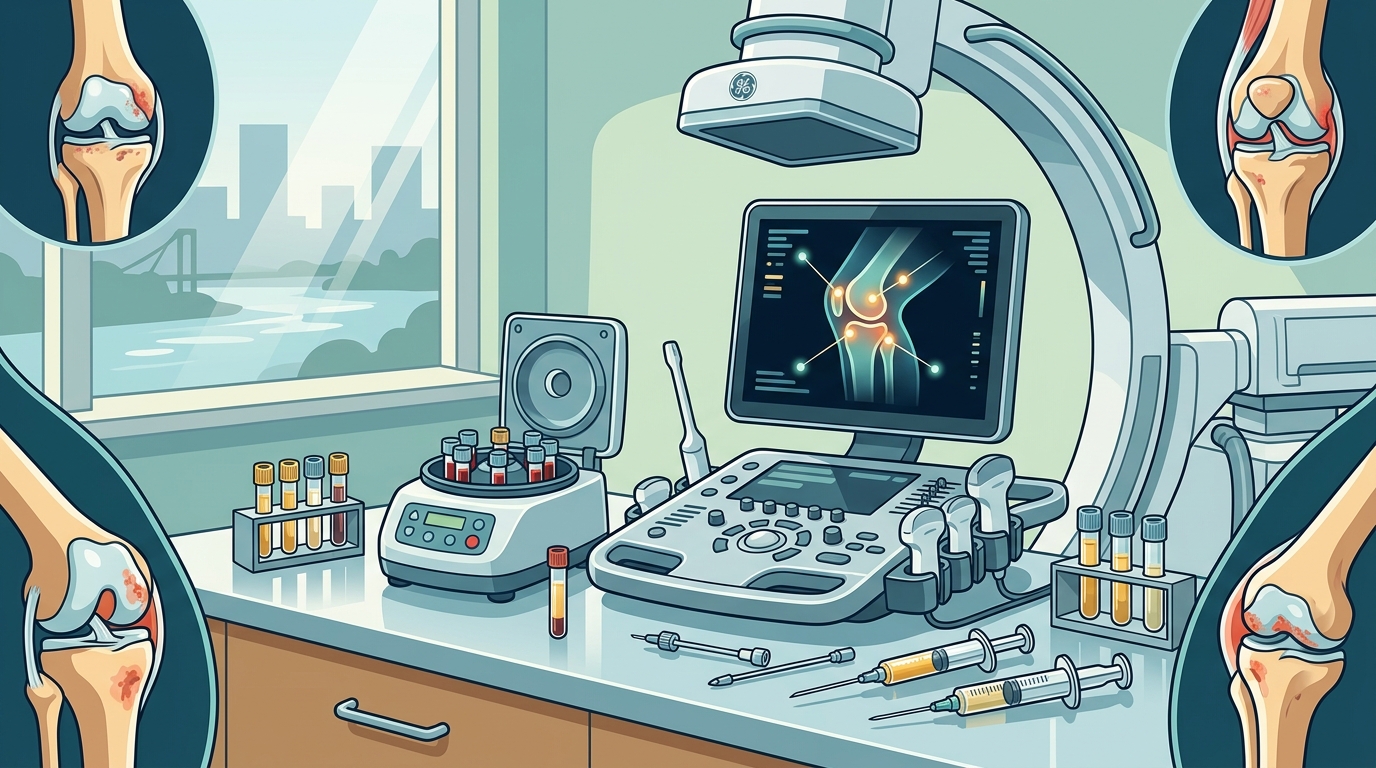
Platelet Rich Plasma, commonly known as PRP, is a concentrated solution of growth factors derived from a patient's own blood. PRP contains over 100 cell-signaling molecules, including transforming growth factor beta and vascular endothelial growth factor, which reactivate tissue repair cycles. At Oregon Regenerative Medicine, PRP has been found effective in over 80 percent of acute and chronic sports and accidental injuries.
Prolotherapy
Prolotherapy is a non-surgical injection procedure for promoting repair of damaged connective tissue. A natural proliferative agent is injected directly into the area of dysfunction, inducing a wound repair cascade that restarts the body's innate healing mechanisms. It is effective for mild-to-severe osteoarthritis and injuries to the shoulder, elbow, wrist, hand, hip, knee, foot, and ankle.
Adipose Tissue Stem Cell Grafts
Adipose tissue is the most abundant source of reparative cells in the human body. At Oregon Regenerative Medicine, adipose tissue stem cell grafts are harvested from the patient's own body and processed on-site, maintaining FDA compliance. These grafts have shown consistent results in a wide range of orthopedic injuries and are used as an alternative to hip and knee joint replacement when appropriate.
Treatment Comparison Table
| Treatment | Source | Best For | Typical Sessions | Reported Success Rate |
|---|---|---|---|---|
| PRP Therapy | Patient's own blood | Tendon/ligament injuries, mild-moderate OA | 1-3 | 70-85% |
| Prolotherapy | Dextrose or natural proliferant | Chronic sprains, SI joint pain, ligament laxity | 3-6 | 75-85% |
| Adipose Stem Cell Graft | Patient's own adipose tissue | Moderate-severe OA, cartilage loss | 1-2 | 70-80% |
| Cortisone Injection | Synthetic corticosteroid | Short-term inflammation relief | Repeating | Temporary only |
| Joint Replacement Surgery | Prosthetic implant | End-stage joint failure | 1 (surgical) | 90%+ (with rehab) |
What to Look for in a Provider
Not all regenerative medicine clinics are the same. When evaluating a non-surgical orthopedic specialist in the Portland metro or Willamette Valley, consider the following criteria:
- Imaging capabilities: Look for in-house ultrasound and fluoroscopic C-arm guidance. Precise needle placement dramatically affects outcomes.
- In-house biologic preparation: Clinics that prepare PRP, PRF, and stem cell products on-site can optimize concentrations for each patient.
- Clinical volume: A high procedure count signals experience. Providers who have performed tens of thousands of injections bring pattern recognition that newer clinics lack.
- FDA compliance: Especially for stem cell treatments, verify that the clinic uses only FDA-compliant autologous tissue protocols. The FTC has warned consumers about clinics marketing unapproved biologic products.
- Integrative support: Recovery is faster when metabolic health, nutrition, and inflammation markers are addressed alongside injections.
Oregon Regenerative Medicine: A Regional Leader
Oregon Regenerative Medicine (ORM) has operated in Lake Oswego, on the Willamette River, since 1978. Founded by Dr. Noel Peterson, ND, DAAPM, the practice has performed over 40,000 regenerative injections. ORM serves patients across Oregon, Washington, and the greater Portland region.
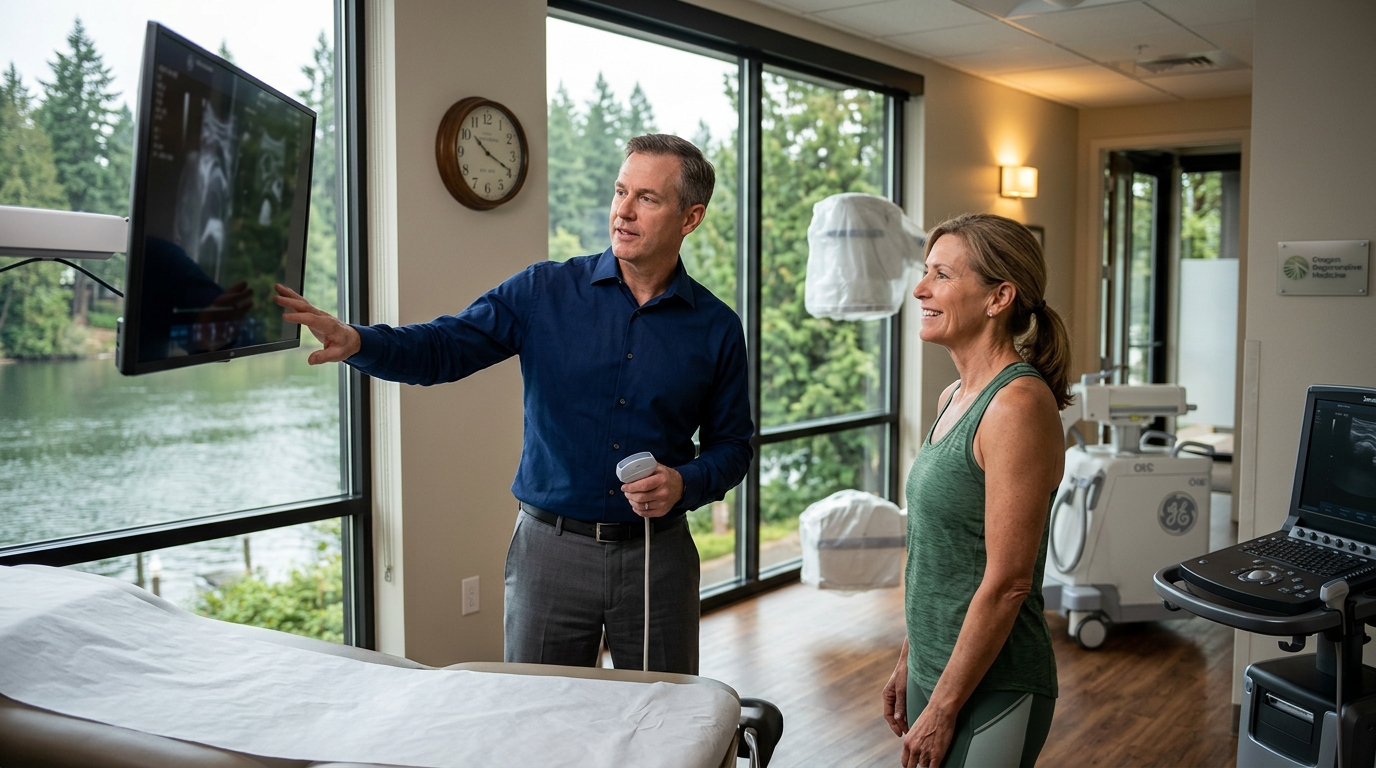
The clinic's diagnostic and procedural technology includes a GE OEC One Flat Panel C-Arm fluoroscopy system and four Sonosite ultrasound units for image-guided injections. Biologics such as PRP, PRF, M-FAT, A2M, and platelet lysates are all prepared in-house. Dr. Peterson has trained hundreds of physicians across North and South America in advanced PRP preparation techniques.
Beyond orthopedic injections, the practice offers a full integrative medicine platform including naturopathic primary care, hormone optimization, acupuncture, IV nutrient therapy, and functional medicine testing. This whole-patient approach helps optimize metabolic health before and after regenerative procedures, which research links to better treatment outcomes.
ORM is conveniently located at 320 Oswego Pointe Drive in Lake Oswego, easily accessible from Portland, Tigard, Tualatin, West Linn, and communities throughout the Willamette Valley. The team also regularly sees patients traveling from Vancouver, WA and across the Pacific Northwest. To read patient stories, visit the ORM testimonials page.
Key Takeaways
- A non-surgical orthopedic specialist treats joint, tendon, and ligament problems without surgery using regenerative injection therapies.
- PRP, prolotherapy, and adipose tissue stem cell grafts are the three primary non-surgical treatments, with reported success rates between 70 and 85 percent.
- Image guidance via ultrasound or fluoroscopy is essential for accurate needle placement and better outcomes.
- FDA compliance matters: only autologous adipose tissue grafts are currently FDA-compliant for orthopedic stem cell treatments.
- Oregon Regenerative Medicine in Lake Oswego has performed over 40,000 regenerative injections since 1978, serving Portland, Vancouver, and the Willamette Valley.
- Integrative support for metabolic health, nutrition, and hormone balance can significantly boost regenerative treatment results.
- Cortisone injections offer only temporary relief and can permanently weaken connective tissue over time.
Frequently Asked Questions
What conditions can a non-surgical orthopedic specialist treat?
Non-surgical orthopedic specialists commonly treat osteoarthritis, tendonitis, meniscus tears, rotator cuff injuries, ligament sprains, sacroiliac joint dysfunction, herniated discs, and chronic neck and back pain. Many patients pursue these treatments after being told surgery is their only option.
Is PRP therapy safe?
Yes. PRP is autologous, meaning it is derived from your own blood, so there is no risk of rejection or allergic reaction. At Oregon Regenerative Medicine, PRP has been used for over 15 years with a strong safety record.
How many treatments will I need?
Treatment frequency depends on the condition and severity. PRP typically requires one to three sessions, prolotherapy may need three to six sessions spaced several weeks apart, and adipose stem cell grafts often require just one or two procedures.
Does insurance cover regenerative orthopedic treatments?
Most regenerative injection therapies are not covered by standard health insurance plans. However, Health Savings Accounts (HSAs) and Flexible Spending Accounts (FSAs) may be used toward the cost. The clinic can provide detailed pricing during a consultation.
How do I know if I am a good candidate?
Candidates typically have musculoskeletal injuries or degenerative conditions that have not responded well to physical therapy, medication, or other conservative measures. A thorough history, physical exam, imaging review, and diagnostic ultrasound help determine candidacy.
What is the difference between PRP and cortisone injections?
Cortisone injections suppress inflammation temporarily but can permanently weaken connective tissue with repeated use. PRP restores normal strength, elasticity, and function by stimulating the body's natural repair processes, offering longer-lasting results.
Can I travel from Vancouver, WA for treatment?
Absolutely. Oregon Regenerative Medicine in Lake Oswego is a short drive from Vancouver, WA, and regularly sees patients from across the Portland metro area and the Pacific Northwest. The clinic is located just off I-5 with easy highway access.
What makes Oregon Regenerative Medicine different from other clinics?
ORM combines over four decades of clinical experience, more than 40,000 regenerative injections, in-house biologic preparation, advanced imaging guidance, and a full integrative medicine platform under one roof. This depth of expertise and technology is uncommon in the region.
Ready to Explore Non-Surgical Joint Treatment?
If you are dealing with joint pain, arthritis, or a sports injury and want to learn whether regenerative therapy is right for you, schedule a consultation with the team at Oregon Regenerative Medicine. Call (503) 636-2734 or visit oregenmed.com to request an appointment today.