
If you have been told that surgery is your only option for degenerative joint disease, you are not alone. Millions of people receive that advice every year, yet a growing number of specialized clinics now offer non-surgical regenerative treatments that can restore function and reduce pain. Degenerative joint disease is a progressive breakdown of the cartilage that cushions your joints, most commonly affecting the knees, hips, shoulders, and spine. The good news is that advances in prolotherapy, platelet-rich plasma (PRP), and adipose stem cell therapy give patients proven alternatives to joint replacement. This article explains what those treatments involve, who offers them, and what the research says.
What Is Degenerative Joint Disease?
Degenerative joint disease (DJD) is the gradual deterioration of the articular cartilage that covers and protects the ends of bones inside a joint. It is also known as osteoarthritis and is the most common form of arthritis worldwide. According to a 2025 analysis published by Joint Relief Institute, knee osteoarthritis alone affects approximately 528 million people globally, including 23% of the population aged 40 and older.
As cartilage wears down, bones begin to rub against each other, causing pain, swelling, and stiffness. The condition most often targets the knees, hips, lower back, neck, and hands. While age is a major risk factor, prior injuries, obesity, and repetitive mechanical stress also contribute.
Why Surgery Is Not Always the First Answer
Joint replacement surgery can be life-changing for severe cases, but it carries risks, requires months of recovery, and does not guarantee a permanent fix. Implants have a limited lifespan, typically 15 to 20 years, meaning younger patients may face revision surgery later in life.
Many patients benefit from conservative, non-surgical approaches first. Clinics that specialize in regenerative medicine focus on repairing damaged tissue rather than replacing the joint. At Oregon Regenerative Medicine in Lake Oswego, the vast majority of patients achieve durable pain-free function without surgery, joint replacement, or drugs, even after being told that surgery was their only option.
Non-Surgical Regenerative Treatments Explained
Prolotherapy
Prolotherapy is a non-surgical injection procedure that promotes permanent repair of damaged connective tissue. A solution of dextrose and local anesthetic is injected into the injured area, triggering the body's natural wound-repair cascade. It is effective for mild-to-severe osteoarthritis and injuries to the shoulder, hip, knee, back, and more. Learn more about how prolotherapy works and when it is appropriate.
Platelet-Rich Plasma (PRP)
Platelet-rich plasma is a concentration of your own platelets and growth factors, drawn from a simple blood sample and injected directly into damaged tissue. A 2025 narrative review in the Journal of Clinical Medicine analyzing 40 high-quality studies found that PRP injections demonstrate superior pain relief and functional improvement compared to hyaluronic acid and corticosteroids, especially in patients with mild-to-moderate osteoarthritis. Oregon Regenerative Medicine prepares all PRP, PRF, and platelet lysates in their in-house laboratory, ensuring potency and quality control.
Adipose Stem Cell Therapy
Adipose stem cell therapy involves harvesting reparative cells from your own fat tissue and injecting them into the damaged joint. Adipose tissue is the most abundant source of stem cells in the human body, containing over 200 times more stem cells than bone marrow. Explore the stem cell orthopedics program to understand how this treatment complements PRP and prolotherapy.
Why Image-Guided Injections Matter
Accuracy is everything when injecting biologics into a joint. Research shows that non-guided injections miss the intended target up to 30% of the time, which reduces effectiveness and wastes valuable biologic material. Fluoroscopy-guided and ultrasound-guided procedures dramatically improve accuracy.
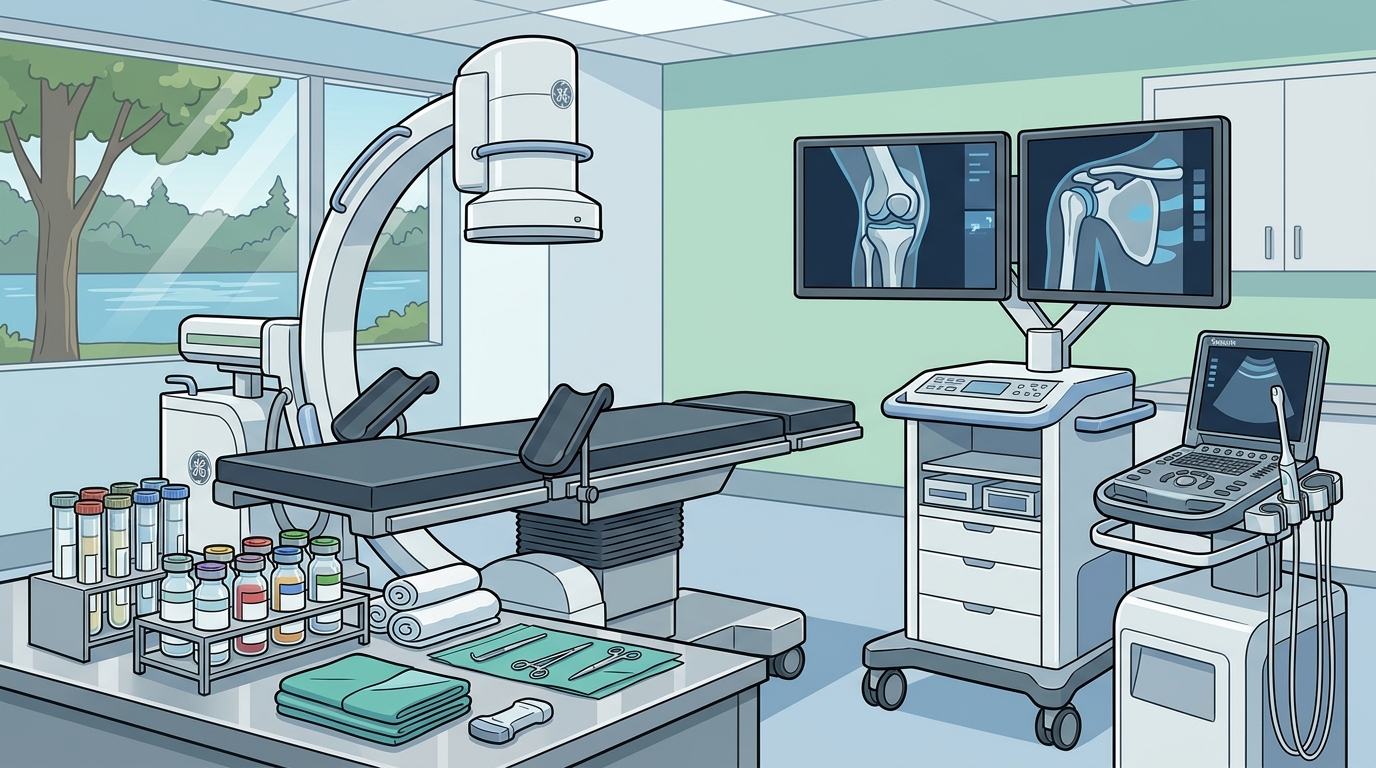
Oregon Regenerative Medicine uses a state-of-the-art GE OEC One Flat Panel C-Arm fluoroscopy system and four Sonosite ultrasound units for every guided procedure. This level of imaging precision is a key differentiator when choosing a non-surgical joint clinic. You can read about the importance of injection skill in The Art of Regenerative Injections.
What to Look for in a Non-Surgical Joint Clinic
Not every clinic offering "stem cell therapy" has the depth of experience or equipment to deliver consistent results. Here is what matters most:
- Injection volume and experience: Oregon Regenerative Medicine has performed over 40,000 regenerative injections since founding.
- In-house biologics preparation: Clinics that prepare PRP and stem cell products on-site can control quality and concentration.
- Image guidance: Fluoroscopy and ultrasound should be standard, not optional.
- Whole-person approach: Look for clinics that integrate nutritional guidance, hormone optimization, and functional medicine alongside orthopedic treatment.
- Track record: Oregon Regenerative Medicine has been practicing in Lake Oswego, Oregon, since 1978.
Non-Surgical Treatment Comparison
| Treatment | Source Material | Typical Duration of Relief | Best For | Sessions Needed |
|---|---|---|---|---|
| Prolotherapy | Dextrose solution | Long-term to permanent | Ligament/tendon laxity, mild OA | 3-6 |
| PRP Therapy | Your own blood platelets | 12-24 months | Mild-to-moderate OA, tendon injuries | 2-3 |
| Adipose Stem Cell Therapy | Your own fat tissue | 12-36+ months | Moderate-to-severe OA, cartilage loss | 1-2 |
| Corticosteroid Injection | Synthetic steroid | 4-12 weeks | Acute flare-ups (temporary relief only) | Repeating |
| Viscosupplementation (HA) | Hyaluronic acid | ~6 months | Mild knee OA | 1-3 |
Key Takeaways
- Degenerative joint disease does not automatically require surgery; many patients respond well to regenerative injection therapies.
- Prolotherapy, PRP, and adipose stem cell therapy are three proven non-surgical options available at specialized clinics.
- PRP has demonstrated superior pain relief over corticosteroids and hyaluronic acid in multiple systematic reviews.
- Image-guided injections using fluoroscopy or ultrasound dramatically improve treatment accuracy and outcomes.
- In-house biologic preparation ensures the potency of PRP, PRF, and stem cell products.
- Oregon Regenerative Medicine has over 45 years of clinical experience and more than 40,000 regenerative injections performed.
- A whole-person approach that includes functional medicine, nutrition, and hormone optimization supports better healing.
Frequently Asked Questions
Can degenerative joint disease be treated without surgery?
Yes. Regenerative injection therapies such as prolotherapy, PRP, and adipose stem cell therapy are designed to repair damaged cartilage and connective tissue without surgical intervention. Many patients who were told surgery was their only option have achieved lasting relief through these treatments.
What is prolotherapy?
Prolotherapy is a non-surgical injection procedure that uses a dextrose-based solution to trigger the body's natural healing response in damaged ligaments, tendons, and joints. It has been used clinically for decades and is effective for a wide range of musculoskeletal conditions.
How does PRP therapy work for osteoarthritis?
Platelet-rich plasma therapy concentrates growth factors from your own blood and delivers them directly into the affected joint. These growth factors promote cell proliferation, reduce inflammation, and support tissue repair. Studies show PRP provides longer-lasting relief than cortisone or hyaluronic acid injections for mild-to-moderate osteoarthritis.
Is adipose stem cell therapy FDA-approved?
Autologous adipose stem cell therapy uses cells harvested from your own body. The FDA permits the use of minimally manipulated autologous tissue for certain applications. Oregon Regenerative Medicine follows all regulatory guidelines and uses only your own adipose tissue in its stem cell treatment protocols.
How many treatments will I need?
Treatment frequency depends on the severity of your condition. Prolotherapy typically requires 3 to 6 sessions, PRP usually involves 2 to 3 sessions spaced 4 to 6 weeks apart, and adipose stem cell therapy often requires just 1 to 2 treatments.
Are regenerative injections painful?
Most patients experience mild discomfort during injection. The treatment area is numbed with local anesthetic beforehand. Patients can typically remain active during the recovery process, and downtime is minimal compared to surgery.
Does insurance cover regenerative medicine treatments?
Coverage varies by plan and treatment type. Some prolotherapy and PRP treatments may be partially covered. The team at Oregon Regenerative Medicine can help you understand your options during a consultation.
Where can I find a non-surgical joint clinic in Oregon?
Oregon Regenerative Medicine is located at 320 Oswego Pointe Drive in Lake Oswego, Oregon, and has served patients throughout the Pacific Northwest since 1978. The clinic specializes exclusively in non-surgical regenerative treatments for degenerative joint disease and musculoskeletal injuries.
Schedule Your Consultation
If you are living with degenerative joint disease and want to explore proven non-surgical options, take the first step today. Contact Oregon Regenerative Medicine to schedule a consultation and learn which regenerative treatment is right for your condition. With over 45 years of experience and more than 40,000 injections performed, our team in Lake Oswego is ready to help you move without pain again.