
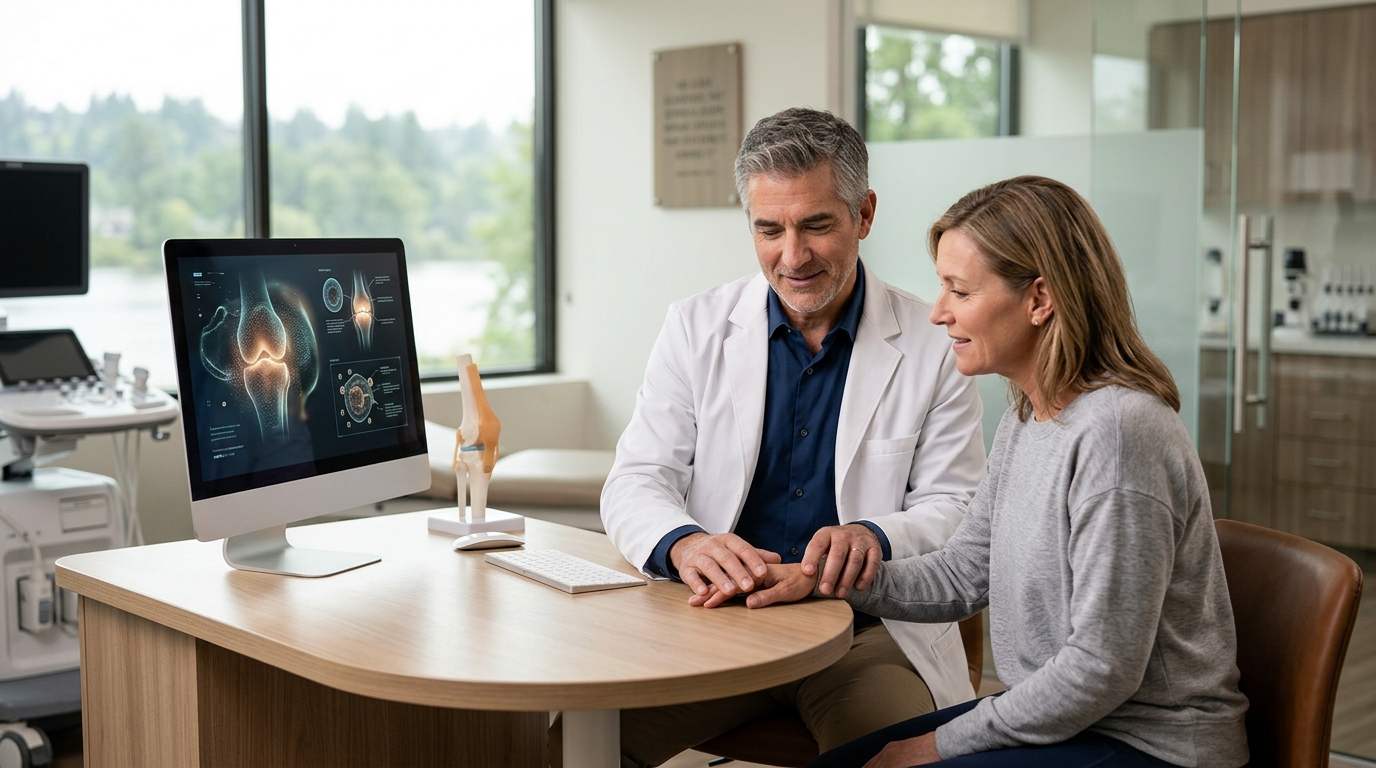
How to Find a Qualified Provider for Biocellular Joint Treatments
Biocellular joint treatment is a regenerative injection therapy that uses your own adipose tissue, platelet-rich plasma (PRP), and growth factors to repair damaged cartilage, ligaments, and tendons without surgery. As demand for these non-surgical alternatives grows, so does the number of clinics offering them. Not every provider, however, has the training, equipment, or clinical experience to deliver safe, effective results. This guide walks you through the essential criteria for choosing a qualified biocellular therapy provider, so you can make a confident, informed decision about your joint health.
What Is Biocellular Joint Treatment?
Biocellular joint treatment is a regenerative procedure that harvests adipose-derived mesenchymal stem cells (MSCs) and tissue matrix from your own body, concentrates them with PRP, and injects the combination directly into damaged joints. Unlike cortisone shots that mask pain temporarily, biocellular therapy aims to stimulate actual tissue repair.
Adipose tissue is the most abundant source of adult mesenchymal stem cells in the human body. These grafts contain the full complement of matrix tissue fractions necessary for cartilage, ligament, tendon, and fascia regeneration. When combined with PRP, the resulting mixture provides the cytokines, cell signaling, and scaffolding needed for MSCs to differentiate and begin repairing the target injury. Learn more about adipose biocellular orthopedics and how the procedure works.
Verify Provider Credentials and Training
The single most important step is confirming that your provider holds recognized medical credentials. Look for physicians or naturopathic doctors with advanced training specifically in regenerative orthopedic medicine, not simply general practice experience.
Board Certifications to Look For
The American Board of Regenerative Medicine (ABRM) provides board certification at the diplomat and fellow level, requiring at least one year of dedicated regenerative medicine practice and a documented case log of PRP and stem cell procedures. Providers may also hold a Certificate of Added Qualification (CAQ) in Orthopedic Regenerative Medicine. Additional credentials like the DAAPM (Diplomate, American Academy of Pain Management) or RMSK (Registered in Musculoskeletal Sonography) signal deep specialization.

Ask About Continuing Education
Regenerative medicine evolves rapidly. Qualified providers attend annual conferences, publish case studies, and pursue ongoing CME credits. At Oregon Regenerative Medicine, for example, Dr. Noel Peterson, ND, DAAPM, has practiced regenerative and naturopathic medicine in Lake Oswego, Oregon, since 1978, while Dr. Terrance Manning, ND, RMSK, brings nationally recognized expertise in musculoskeletal sonographic diagnosis and orthobiologics.
Look for Image-Guided Injection Capabilities
Image guidance is a non-negotiable standard for precision regenerative injections. Ultrasound-guided injection is the process of using real-time sonographic imaging to visualize needle placement and ensure biologics reach the exact site of tissue damage.
Top-tier clinics use multiple ultrasound systems alongside fluoroscopic C-arm technology for spinal procedures. Oregon Regenerative Medicine, for instance, uses four Sonosite ultrasound systems and a state-of-the-art GE OEC One Flat Panel C-Arm for fluoroscopy-guided spine injections. Without image guidance, injections may miss the target tissue entirely, reducing effectiveness and increasing risk.
Ask About In-House Laboratory Processing
How your biologics are prepared matters enormously. In-house laboratory preparation is the on-site processing of autologous tissues (PRP, PRF, M-FAT, A2M, platelet lysates) in the same clinical session, ensuring freshness and quality control.
Clinics that send samples to external labs introduce delays and handling variables. A qualified provider prepares PRP and adipose tissue grafts on-site, concentrates them, and injects them the same day. At Oregon Regenerative Medicine, the entire adipose tissue graft procedure takes about 2.5 hours from harvest to injection, all completed in one visit. The FDA regulates autologous cell therapies under 21 CFR 1271, and reputable providers should be able to explain how their processing meets minimal manipulation criteria.
Evaluate Clinical Experience and Procedure Volume
Procedure volume is a reliable proxy for competence. A provider who has performed thousands of regenerative injections has encountered the full range of clinical scenarios. Oregon Regenerative Medicine has performed over 40,000 regenerative injections across knees, hips, shoulders, spine, and other joints since pioneering these treatments in the Pacific Northwest.
Ask prospective providers how many biocellular procedures they have completed, what joints they treat most frequently, and what outcomes they typically observe. Review verified patient testimonials and look for documented before-and-after imaging when available. A provider who tracks and shares outcomes demonstrates confidence in their results.
Red Flags to Watch For
Not every clinic marketing "stem cell therapy" delivers the same quality. The Stem Cell Council recommends caution with clinics that promise miraculous cures, pressure you into quick decisions, or lack transparency about costs and staff qualifications.
Warning Signs Include:
- No image guidance during injections
- Using non-autologous (donor) cells without clear sourcing documentation
- Inability to explain their FDA compliance framework
- No formal regenerative medicine training or board certification
- Vague or exaggerated success rate claims
- No post-treatment follow-up protocol
A reputable provider will welcome your questions, offer thorough medical evaluations, and tailor treatment plans to your individual condition. Explore our detailed guide on who is a good candidate for regenerative cell therapy to understand what a proper evaluation looks like.
Provider Qualification Checklist
| Qualification Criteria | What to Ask | Green Flag |
|---|---|---|
| Board certification | "Are you board-certified in regenerative medicine?" | ABRM Diplomate, DAAPM, or equivalent |
| Image guidance | "Do you use ultrasound or fluoroscopy for injections?" | Multiple ultrasound units plus C-arm for spine |
| In-house lab | "Where is my PRP/tissue processed?" | On-site, same-day preparation |
| Procedure volume | "How many regenerative injections have you performed?" | Thousands of documented procedures |
| Autologous sourcing | "Are the cells from my own body?" | Yes, adipose or bone marrow derived |
| FDA compliance | "How do your procedures comply with FDA guidelines?" | Clear explanation referencing 21 CFR 1271 |
| Post-treatment care | "What follow-up do you provide?" | Structured follow-up visits and outcome tracking |
Key Takeaways
- Biocellular joint treatment uses your own adipose-derived stem cells and PRP to repair damaged cartilage, tendons, and ligaments without surgery.
- Always verify that your provider holds board certification or advanced credentials specific to regenerative medicine.
- Image-guided injections using ultrasound and fluoroscopy are essential for accurate needle placement and optimal outcomes.
- In-house, same-day processing of biologics (PRP, M-FAT, A2M) ensures freshness and quality control.
- High procedure volume and documented patient outcomes are strong indicators of clinical competence.
- Avoid clinics that promise guaranteed cures, lack transparency, or skip diagnostic imaging.
- Oregon Regenerative Medicine in Lake Oswego has performed over 40,000 regenerative injections since 1978, making it one of the most experienced practices in the Pacific Northwest.
Frequently Asked Questions
What is biocellular joint treatment?
Biocellular joint treatment is a regenerative injection procedure that harvests stem-cell-rich adipose tissue and PRP from your own body to repair damaged joints, cartilage, and connective tissue without surgery.
How do I know if a provider is qualified for biocellular therapy?
Look for board certification in regenerative medicine (such as ABRM Diplomate status), image-guided injection capability, in-house lab processing, and a high volume of documented procedures.
Why is image guidance important for regenerative injections?
Ultrasound and fluoroscopy allow the provider to see exactly where the needle is placed, ensuring biologics reach the damaged tissue. Without it, injections may miss the target area entirely.
What is the difference between autologous and donor stem cells?
Autologous stem cells come from your own body (typically adipose tissue or bone marrow), eliminating rejection risk. Donor (allogeneic) cells come from another person and carry additional screening and sourcing considerations.
How long does a biocellular joint procedure take?
At Oregon Regenerative Medicine, the entire procedure from adipose tissue harvest to injection takes approximately 2.5 hours and is completed in a single office visit. Learn more about the stem cell therapy process.
Does the FDA regulate biocellular treatments?
Yes. The FDA regulates human cells, tissues, and cellular products under 21 CFR 1271. Reputable providers use autologous, minimally manipulated tissue and can explain their compliance framework clearly.
What conditions can biocellular therapy treat?
Common conditions include osteoarthritis of the knee and hip, rotator cuff tears, meniscus injuries, ACL/MCL tears, sacroiliac pain, and degenerative disc disease. See our full list of treatable hip and knee conditions.
How much does biocellular joint treatment cost?
Costs vary by provider, location, and the number of joints treated. Most regenerative treatments are not covered by insurance. A transparent clinic will discuss fees upfront during your consultation.
Ready to Find the Right Provider?
Choosing the right biocellular therapy provider could mean the difference between lasting relief and wasted time and money. Oregon Regenerative Medicine has served patients in Portland, Lake Oswego, and across the Pacific Northwest since 1978, with over 40,000 regenerative injections performed using advanced imaging and in-house lab preparation. Schedule a consultation today to discuss whether biocellular joint treatment is right for you.