
Biocellular joint regeneration is a non-surgical approach that uses your body's own cells and tissues to repair damaged joints, tendons, and ligaments. At Oregon Regenerative Medicine in Lake Oswego, Oregon, this approach has been refined over more than four decades. Combining Prolotherapy, Platelet Rich Plasma (PRP), and adipose tissue graft therapies, the clinic has performed over 40,000 regenerative injections. If you have been told surgery is your only option, understanding which conditions respond to biocellular therapy could change your outlook entirely.
What Is Biocellular Joint Regeneration?
Biocellular joint regeneration is the use of autologous biological materials, harvested from your own blood and adipose (fat) tissue, to stimulate repair of damaged cartilage, connective tissue, and joints. The three core therapies are Prolotherapy, PRP, and adipose tissue grafts containing mesenchymal stem cells (MSCs).
Prolotherapy is a non-surgical injection procedure that promotes repair of damaged connective tissue by restarting the body's innate wound-healing cascade. PRP is a concentrated preparation of your own platelets and growth factors delivered directly into damaged tissue. Adipose tissue grafting harvests fat tissue rich in MSCs and bio-scaffolding, which are then combined with PRP and injected under ultrasound or fluoroscopic guidance into the target area.
Why Adipose Tissue?
Adipose tissue is the most abundant source of reparative stem cells in the human body. Research published in Bioengineering & Translational Medicine (2024) confirms that adipose-derived MSCs are superior to bone marrow in safety and effectiveness for osteoarthritis, with significant improvements in pain management and functional outcomes. Adipose grafts also contain the full complement of matrix tissue fractions necessary for cartilage, ligament, tendon, and fascia regeneration.
Osteoarthritis of the Knee, Hip, and Shoulder
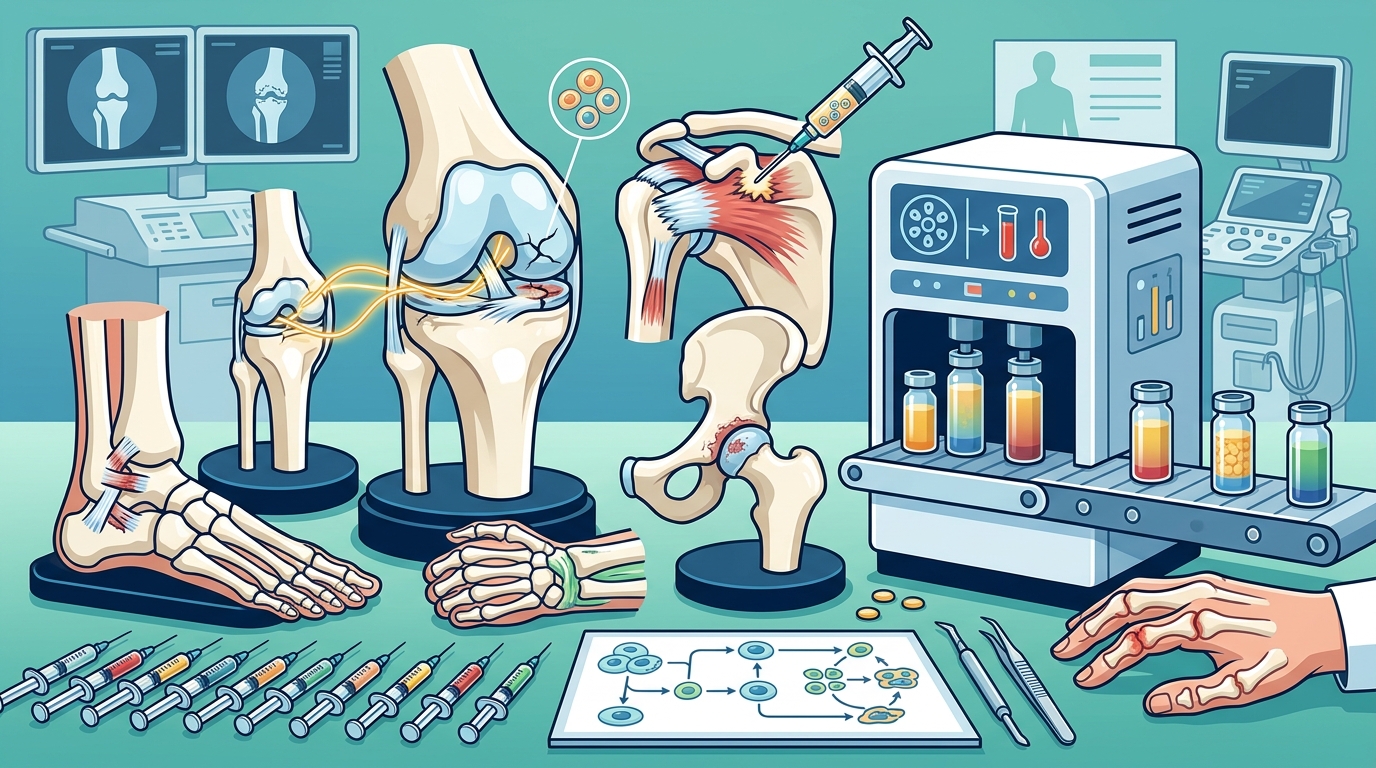
Osteoarthritis (OA) is a degenerative joint disease characterized by cartilage breakdown, inflammation, and progressive pain. It is the single most common condition treated with biocellular regeneration. Oregon Regenerative Medicine has successfully treated thousands of osteoarthritic hips, knees, and shoulders using a combination of PRP and adipose biocellular orthopedics.
Knee Osteoarthritis
Knee OA is a leading cause of disability worldwide. A 2026 systematic review in the Indian Journal of Orthopaedics found that both PRP and adipose-derived cell therapies significantly improved pain, function, and quality of life in knee OA patients with no reported complications. Even bone-on-bone cartilage loss can respond to PRP therapy, helping patients avoid joint replacement.
Hip Osteoarthritis
Patients facing hip replacement surgery represent a large segment of biocellular therapy candidates. A 2025 scoping review in Cureus documented significant pain score reductions following adipose-based injections for hip OA. At ORM, patients routinely report 80-85% return to full function after adipose tissue graft treatment.
Back, Neck, and Spinal Conditions
Chronic spinal pain from arthritis, disc degeneration, lumbar stenosis, and sacroiliac dysfunction responds well to regenerative injection therapy. Prolotherapy and PRP for cervical, thoracic, and lumbar spine arthritis provides relief to over 85% of patients treated at ORM.
Common spinal conditions treated include cervical facet arthritis, thoracic and lumbar disc degeneration, sacroiliac joint sprains, and sciatica from lumbar stenosis. All spinal injections at ORM are performed under fluoroscopic C-Arm or ultrasound guidance for precision and safety.
Tendon, Ligament, and Soft Tissue Injuries
Biocellular therapy is not limited to joints. Damaged tendons, ligaments, and fascia also benefit from regenerative injections. Rotator cuff tears, ACL and MCL injuries, meniscus tears, plantar fasciitis, and tennis elbow are all conditions routinely treated. ORM has documented 16 case studies of rotator cuff injuries showing strong responses to Prolotherapy and PRP.
PRP has been found to be more effective long-term than cortisone for severe chronic plantar fasciitis, making it a preferred first-line biologic treatment for foot and ankle pain.
Small Joint and TMJ Disorders
Biocellular regeneration also treats smaller joints including elbows, wrists, hands, feet, ankles, and the temporomandibular joint (TMJ). TMJ dysfunction is a condition involving pain and limited movement of the jaw joint. Patients at ORM facing TMJ disc replacement surgery have reported sufficient improvement after adipose tissue regenerative treatment to avoid surgery entirely.
Osteoarthritis of the thumbs and small hand joints, common in aging adults, also responds to PRP therapy, restoring grip strength and reducing chronic pain.
How Biocellular Therapies Compare
Not all regenerative therapies are the same. The table below summarizes the three main biocellular approaches used at Oregon Regenerative Medicine.
| Therapy | Source Material | Best For | Typical Sessions |
|---|---|---|---|
| Prolotherapy | Dextrose solution | Ligament laxity, mild OA, joint instability | 3-6 sessions |
| Platelet Rich Plasma (PRP) | Patient's own blood platelets | Moderate OA, tendon injuries, plantar fasciitis | 1-3 sessions |
| Adipose Tissue Graft | Patient's own adipose tissue + PRP | Severe OA, cartilage loss, joint replacement alternative | 1-2 sessions |
Your clinician will determine the right therapy based on a thorough history, physical exam, imaging review, and diagnostic ultrasound. Learn more about who is a good candidate for regenerative cell therapy.
Key Takeaways
- Biocellular joint regeneration treats osteoarthritis, tendon and ligament injuries, spinal conditions, TMJ disorders, and small joint pain without surgery.
- Adipose-derived stem cells are the most abundant and accessible source of reparative cells in the body.
- Clinical evidence shows PRP and adipose therapies significantly improve pain and function in knee and hip OA.
- Prolotherapy and PRP relieve cervical, thoracic, and lumbar spine arthritis in over 85% of treated patients.
- All injections should be performed under ultrasound or fluoroscopic guidance for optimal accuracy.
- Early treatment produces the best outcomes; do not wait until you have severe, end-stage arthritis.
- Oregon Regenerative Medicine has performed over 40,000 guided regenerative injections since 1978.
Frequently Asked Questions
What is biocellular joint regeneration?
Biocellular joint regeneration is a non-surgical treatment that uses your body's own platelets, growth factors, and adipose-derived stem cells to repair damaged cartilage, tendons, ligaments, and joints.
What conditions respond best to biocellular therapy?
Osteoarthritis of the knee, hip, and shoulder are the most commonly treated conditions. Tendon tears, ligament injuries, spinal arthritis, sacroiliac dysfunction, TMJ disorders, and plantar fasciitis also respond well.
Is biocellular regeneration a good alternative to joint replacement surgery?
For many patients, yes. Adipose biocellular therapy combined with PRP offers a viable alternative to hip and knee replacement, especially when treated at earlier stages of degeneration.
How many treatments will I need?
Treatment plans vary. Prolotherapy typically requires 3-6 sessions, PRP 1-3 sessions, and adipose tissue grafts 1-2 sessions. Your clinician will customize a plan based on imaging and examination findings.
Are biocellular treatments safe?
Yes. These treatments use autologous materials, meaning cells and tissues harvested from your own body. Clinical studies report no significant complications from PRP or adipose-derived cell therapies for osteoarthritis.
Does insurance cover biocellular joint regeneration?
Most insurance plans do not cover regenerative injection therapies. Contact Oregon Regenerative Medicine directly to discuss costs and payment options.
How long does the adipose tissue graft procedure take?
The entire procedure, from harvesting adipose tissue to injecting the prepared cells under ultrasound guidance, takes approximately 2.5 hours in the clinic.
Where is Oregon Regenerative Medicine located?
The clinic is located at 320 Oswego Pointe Drive in Lake Oswego, Oregon, serving patients throughout Portland, Oregon, Washington, and the Pacific Northwest.
Schedule Your Evaluation
If you are living with joint pain, osteoarthritis, or a soft tissue injury and want to explore non-surgical options, the first step is a comprehensive evaluation. Oregon Regenerative Medicine provides a thorough history, physical exam, imaging review, and diagnostic ultrasound before recommending a treatment plan. Request your consultation today and find out if biocellular joint regeneration is right for you.