How Regenerative Medicine Injections Promote Natural Joint Healing
Regenerative medicine injections are non-surgical procedures that harness your body's own biological repair systems to heal damaged joints, tendons, and ligaments. Rather than masking pain with drugs or replacing joints with hardware, these therapies restart and amplify the natural healing cascade at the cellular level. From prolotherapy's dextrose-triggered inflammation to the concentrated growth factors in platelet-rich plasma (PRP) and the reparative stem cells found in adipose tissue grafts, each injection type works through a distinct but complementary mechanism. This guide explains exactly how these treatments promote joint healing, what the clinical evidence says, and what to expect from start to finish.
What Is Regenerative Injection Therapy?
Regenerative Injection Therapy (RIT) is a category of non-surgical injection treatments used to restore injured tissue in joints, ligaments, and tendons. These therapies stimulate the body's immune and repair systems to respond to injuries by repairing, rebuilding, and strengthening damaged structures. Unlike corticosteroid injections, which suppress inflammation and can weaken tissue over time, regenerative injections activate inflammation purposefully to jumpstart healing.
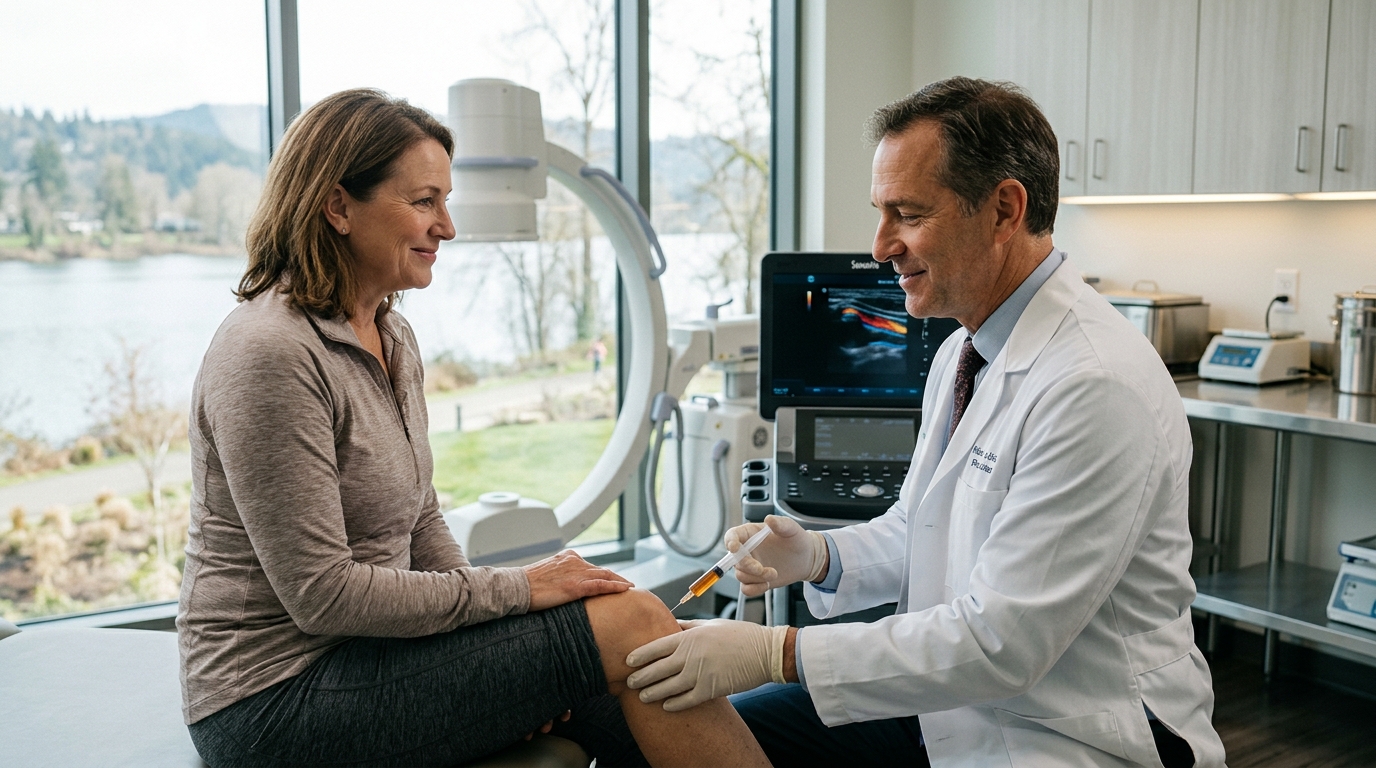
At Oregon Regenerative Medicine, the team has performed over 40,000 regenerative injections using prolotherapy, PRP, and biocellular stem cell therapies. Every procedure is guided by diagnostic ultrasound or fluoroscopic C-Arm imaging for pinpoint accuracy.
How the Healing Cascade Works
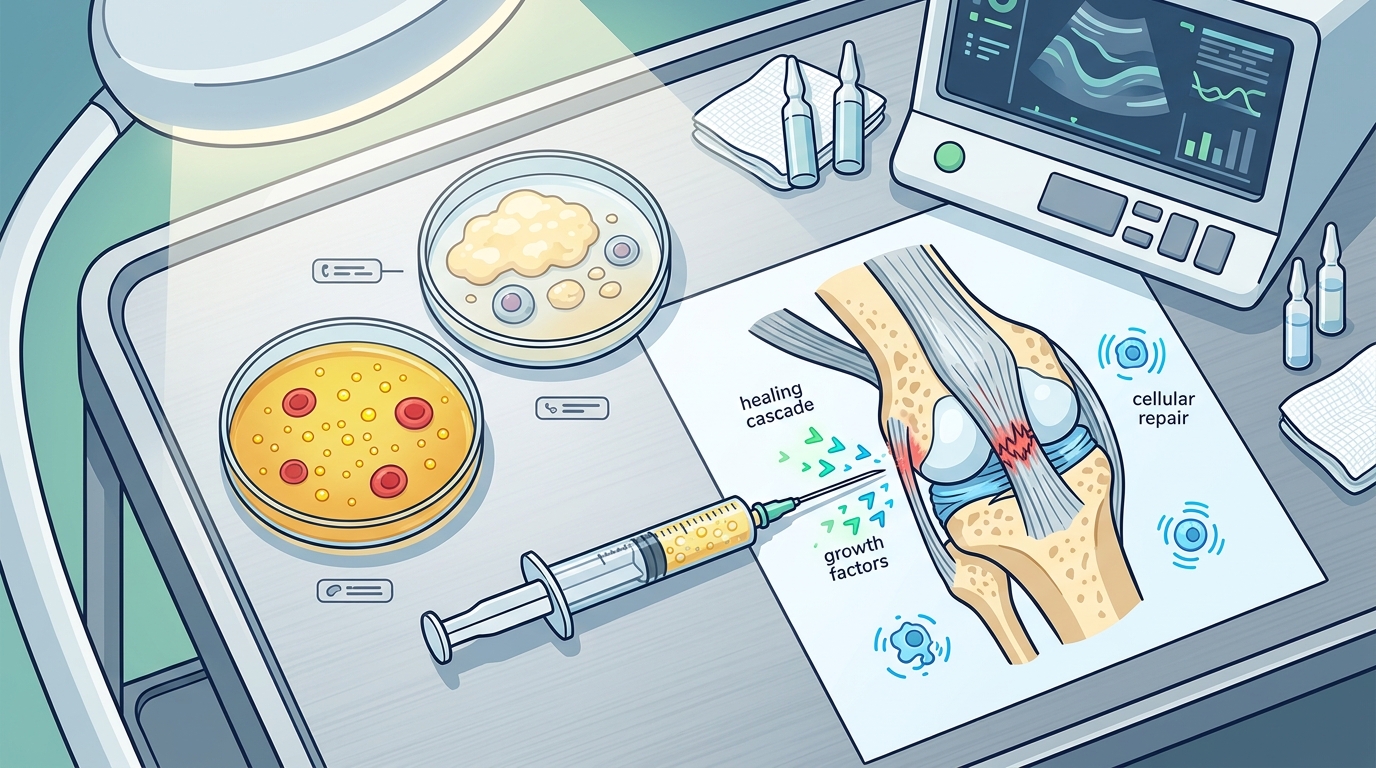
The healing cascade is the body's organized, multi-phase response to tissue injury. It begins with an inflammatory phase that recruits immune cells, transitions into a proliferative phase where new collagen and blood vessels form, and concludes with a remodeling phase that strengthens the repaired tissue. Regenerative injections work by reactivating or amplifying one or more of these phases in areas where healing has stalled.
Why Chronic Injuries Stop Healing
Tendons and ligaments have limited blood supply, which means chronic injuries often fail to progress through the full cascade. Regenerative injections deliver concentrated biological signals directly to these poorly vascularized tissues, restarting the repair process where the body left off.
The Role of Growth Factors
Growth factors are signaling proteins that direct cellular behavior during healing. Over 250 signaling molecules have been identified in platelets, including PDGF, TGF-beta, VEGF, and EGF. These molecules recruit stem cells, stimulate collagen production, and promote new blood vessel formation at the injection site.
Prolotherapy: Restarting the Repair Process
Prolotherapy is short for proliferative therapy and is the predecessor of all modern regenerative injection therapies. It involves injecting a hypertonic dextrose solution into damaged ligaments, tendons, or joint capsules to trigger a controlled inflammatory response.
According to the National Library of Medicine (StatPearls), hypertonic dextrose induces localized tissue trauma that recruits granulocytes and macrophages to facilitate repair, while enhancing cellular proliferation and the production of growth factors that upregulate type 1 and type 3 collagen expression. This mechanism makes prolotherapy especially effective for joint instability and chronic ligament sprains.
Developed by George Hackett, MD, in the 1950s, prolotherapy has decades of clinical use behind it. Oregon Regenerative Medicine has offered prolotherapy for over 25 years, treating conditions from sacroiliac pain to rotator cuff injuries.
PRP Therapy: Concentrated Growth Factors
Platelet-rich plasma (PRP) is a concentration of your own platelets processed from a small blood draw to deliver potent growth factors directly into injured tissue. PRP is defined as one million platelets per microliter in a small volume of plasma with a full complement of growth and repair factors.
How PRP Heals Joints
When injected into a damaged joint, PRP releases growth factors from platelet alpha granules that stimulate collagen production, cartilage cell proliferation, and new blood vessel formation. A 2025 meta-analysis published in The American Journal of Sports Medicine found that PRP offered clinically relevant functional improvement at 1, 3, 6, and 12 months compared with placebo, with higher platelet concentrations producing superior outcomes.
Why Platelet Concentration Matters
Not all PRP is created equal. Most positive outcome studies support a platelet concentration of four to six times the patient's normal level. At Oregon Regenerative Medicine, every PRP sample is analyzed in-house before injection to confirm 1 to 2 billion platelets per milliliter, ensuring biologically active concentrations that drive tissue regeneration.
Adipose Stem Cell Therapy: Cellular Regeneration
Adipose-derived stem cell (ADSC) therapy uses reparative cells harvested from your own fat tissue to promote deeper joint healing. Adipose tissue is the most abundant source of reparative mesenchymal stem cells in the human body.
These cells neutralize chronic inflammatory environments by recruiting cytokines, function as immunomodulators to clear damaged tissue, and then proliferate the cell lines that produce bone and cartilage. This is the mechanism by which pain is reduced and joint health is regenerated in conditions like advanced osteoarthritis. Learn more about the differences between prolotherapy, PRP, and stem cell therapy.
Comparing Regenerative Injection Therapies
| Feature | Prolotherapy | PRP | Adipose Stem Cell Therapy |
|---|---|---|---|
| Mechanism | Dextrose triggers controlled inflammation | Concentrated growth factors amplify repair | Stem cells modulate inflammation and regenerate tissue |
| Source Material | Dextrose solution | Patient's own blood | Patient's own adipose (fat) tissue |
| Best For | Ligament laxity, joint instability, chronic sprains | Tendon injuries, mild-moderate osteoarthritis | Advanced osteoarthritis, cartilage loss |
| Typical Sessions | 4-6 treatments | 2-3 treatments | 1-2 treatments |
| Onset of Improvement | Weeks to months | Weeks to months | Weeks to months |
| Image Guidance | Ultrasound or fluoroscopy | Ultrasound or fluoroscopy | Ultrasound or fluoroscopy |
Oregon Regenerative Medicine frequently combines these therapies based on diagnostic findings. Their integrated approach addresses both the site of pain and the surrounding stabilizing structures for comprehensive joint restoration.
Key Takeaways
- Regenerative injections heal joints by reactivating the body's natural healing cascade rather than masking symptoms.
- Prolotherapy uses dextrose to trigger a controlled inflammatory response that recruits repair cells and strengthens connective tissue.
- PRP concentrates your own platelets to deliver over 250 signaling molecules, including growth factors that stimulate collagen and cartilage production.
- Adipose stem cell therapy provides reparative cells that modulate inflammation and regenerate bone and cartilage in advanced joint disease.
- Platelet concentration directly influences PRP efficacy; lab-verified preparations outperform generic commercial kits.
- Ultrasound and fluoroscopic guidance are essential for injection accuracy and optimal outcomes.
- Patients should avoid NSAIDs for at least five days before PRP treatment to preserve platelet function.
Frequently Asked Questions
What conditions can regenerative injections treat?
Regenerative injections are effective for osteoarthritis of the knee, hip, and shoulder, tendon injuries like rotator cuff tears and tennis elbow, ligament sprains, sacroiliac pain, and chronic neck and back pain. They are also used for meniscus tears, plantar fasciitis, and post-surgical recovery support.
Are regenerative injections safe?
Yes. Because PRP and adipose therapies use your own cells (autologous), the risk of allergic reaction or rejection is virtually zero. Platelet-rich substances are actively anti-microbial, making infection risk exceedingly low. As with any injection, temporary soreness or swelling at the site is normal.
How many treatments will I need?
Treatment plans vary by condition and severity. Prolotherapy typically requires 4 to 6 sessions, PRP usually 2 to 3, and adipose stem cell therapy often 1 to 2. Your physician will create a personalized protocol after a thorough diagnostic evaluation.
How long until I see results?
Most patients begin noticing improvement within a few weeks, with continued healing over 3 to 6 months as new tissue matures and strengthens. The regenerative effects develop progressively as your body completes the repair process.
Should I stop taking pain medication before treatment?
Yes. Research published in the Orthopedic Journal of Sports Medicine showed that NSAIDs significantly inhibit platelet function and PRP's ability to stimulate tissue repair. Patients should avoid NSAIDs for at least five days prior to treatment.
What is the difference between PRP and PRF?
Platelet-rich fibrin (PRF) is an autologous biomaterial similar to PRP but processed without additives. PRF contains a dense fibrin network that acts as a biological scaffold, releasing growth factors more gradually for sustained tissue repair. Learn more on the PRF therapy page.
Does insurance cover regenerative injections?
Most regenerative injection therapies are not covered by insurance, as many remain classified as investigational by the FDA. However, many patients find the investment worthwhile compared to the cost, downtime, and risks of surgical alternatives.
How does Oregon Regenerative Medicine ensure PRP quality?
Oregon Regenerative Medicine analyzes every PRP sample in their in-house laboratory before injection, confirming platelet concentrations of 1 to 2 billion per milliliter. This quality control step ensures biologically active preparations that drive measurable healing.
Take the Next Step Toward Natural Joint Healing
If chronic joint pain is limiting your life and you want a non-surgical solution backed by decades of clinical experience, schedule a consultation with the team at Oregon Regenerative Medicine in Lake Oswego, Oregon. With over 40,000 regenerative injections performed and four decades of practice, their physicians will evaluate your condition, explain your options, and build a personalized treatment plan designed to restore pain-free function.