
PRP Therapy for Chronic Joint Pain: How It Works and Why It Matters
Chronic joint pain from osteoarthritis, tendon injuries, or ligament damage affects tens of millions of Americans each year. For many, the options have traditionally been limited to pain medications, steroid injections, or surgery. Platelet rich plasma (PRP) therapy is changing that equation. By concentrating your body's own healing factors and delivering them directly to damaged tissue, PRP offers a non-surgical path to pain relief and functional recovery. Below, we break down the science, the evidence, and what patients should know before choosing this regenerative treatment.
What Is Platelet Rich Plasma?
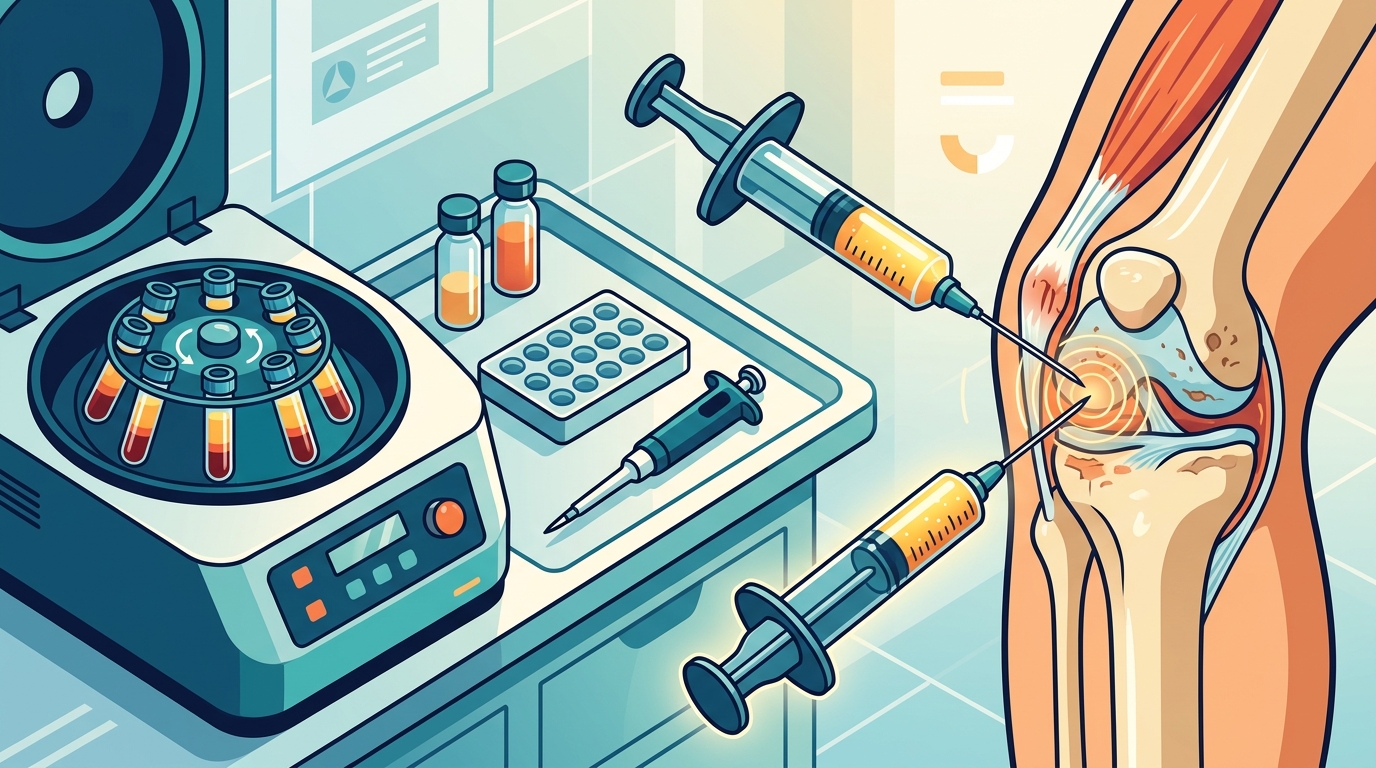
Platelet rich plasma is a concentrated preparation derived from your own blood that contains a high density of platelets and bioactive growth factors. PRP is defined as one million platelets per microliter in a small volume of plasma with a full complement of growth and repair factors. The process concentrates fibrin, mesenchymal stem cells, and platelets to achieve up to a ten-fold increase in platelets and bioactive growth factors.
Because PRP is autologous, meaning it comes from the patient being treated, there is virtually no risk of allergic reaction or rejection. Over 250 signaling molecules have been identified in platelets, including key growth factors like PDGF, TGF-beta, VEGF, and EGF that regulate tissue repair.
How PRP Therapy Targets Chronic Joint Pain
Chronic joint pain typically results from incomplete healing, cartilage degradation, or ongoing inflammation. PRP addresses the root cause rather than masking symptoms. When injected into the injury site, concentrated growth factors reactivate tissue repair cycles, promoting repair of both acute and chronic injuries while reducing pain and enhancing function.
Cartilage Repair
PRP stimulates chondrocytes, the cells responsible for cartilage maintenance, to proliferate and produce new extracellular matrix. Studies show that PRP induces the production of new collagen by fibroblasts, bone cells, and cartilage cells at the injection site. This new collagen is naturally incorporated into existing cartilage and ligaments, making them thicker, stronger, and more elastic.
Anti-Inflammatory Action
The growth factors in PRP help modulate the inflammatory environment inside a degenerating joint. Rather than suppressing inflammation entirely the way steroids do, PRP redirects the inflammatory response toward a productive healing cascade. The healing cascade is the body's organized process of regeneration and remodeling of damaged cells.
Clinical Evidence: What the Research Shows
A growing body of peer-reviewed research supports PRP for chronic joint pain. A 2025 narrative review in the Journal of Clinical Medicine synthesized 40 high-quality studies and found that PRP injections demonstrate superior pain relief and functional improvement compared to hyaluronic acid and corticosteroids, especially in patients with mild to moderate knee osteoarthritis.
A 2025 systematic review and meta-analysis in Pain and Therapy evaluated PRP for chronic noncancer pain across randomized controlled trials and confirmed its analgesic benefit compared to both placebo and active treatments at follow-ups beyond three months.
Additionally, a 2025 retrospective study from West China Hospital reported that repeated PRP injections were about four times more effective than a single injection in reducing pain, and VAS pain scores dropped significantly at six-month follow-up.
Conditions PRP Treats Most Effectively
PRP has shown strong results across a wide range of musculoskeletal conditions. Oregon Regenerative Medicine's therapy protocols address the following:
| Condition | Common Symptoms | PRP Benefit |
|---|---|---|
| Knee Osteoarthritis | Stiffness, swelling, reduced range of motion | Pain reduction, cartilage preservation |
| Hip Osteoarthritis | Groin or thigh pain, difficulty walking | Functional improvement, surgery avoidance |
| Rotator Cuff Injuries | Shoulder pain, weakness, limited overhead reach | Tendon healing, restored strength |
| Chronic Tendinopathy | Persistent tendon pain (elbow, Achilles, patellar) | Tissue remodeling, long-term relief |
| Plantar Fasciitis | Heel pain, morning stiffness | Superior long-term outcomes vs. cortisone |
| Spinal Disc/Facet Pain | Back pain, sciatica, limited mobility | Reduced inflammation, structural support |
Oregon Regenerative Medicine has extensive experience treating injuries to the hips, knees, ACL, meniscus tears, rotator cuffs, elbows, wrists, hands, ankles, and feet.
PRP vs. Cortisone, Hyaluronic Acid, and Surgery
Cortisone injections provide short-term relief but can accelerate cartilage breakdown with repeated use. Hyaluronic acid lubricates the joint but does not stimulate tissue repair. Surgery carries risks and long recovery times.
PRP stands apart because it targets the underlying biology of the injury. Multiple systematic reviews confirm that PRP outperforms both corticosteroids and hyaluronic acid for knee osteoarthritis, particularly in long-term management. For patients facing joint replacement surgery, stem cell therapy combined with PRP offers an effective non-surgical alternative, especially at earlier stages of joint deterioration.
What to Expect During a PRP Treatment
The process begins with a thorough evaluation. At Oregon Regenerative Medicine in Lake Oswego, every patient receives a detailed history, physical exam, X-ray and MRI review, and diagnostic ultrasound imaging before treatment is recommended.
The Procedure
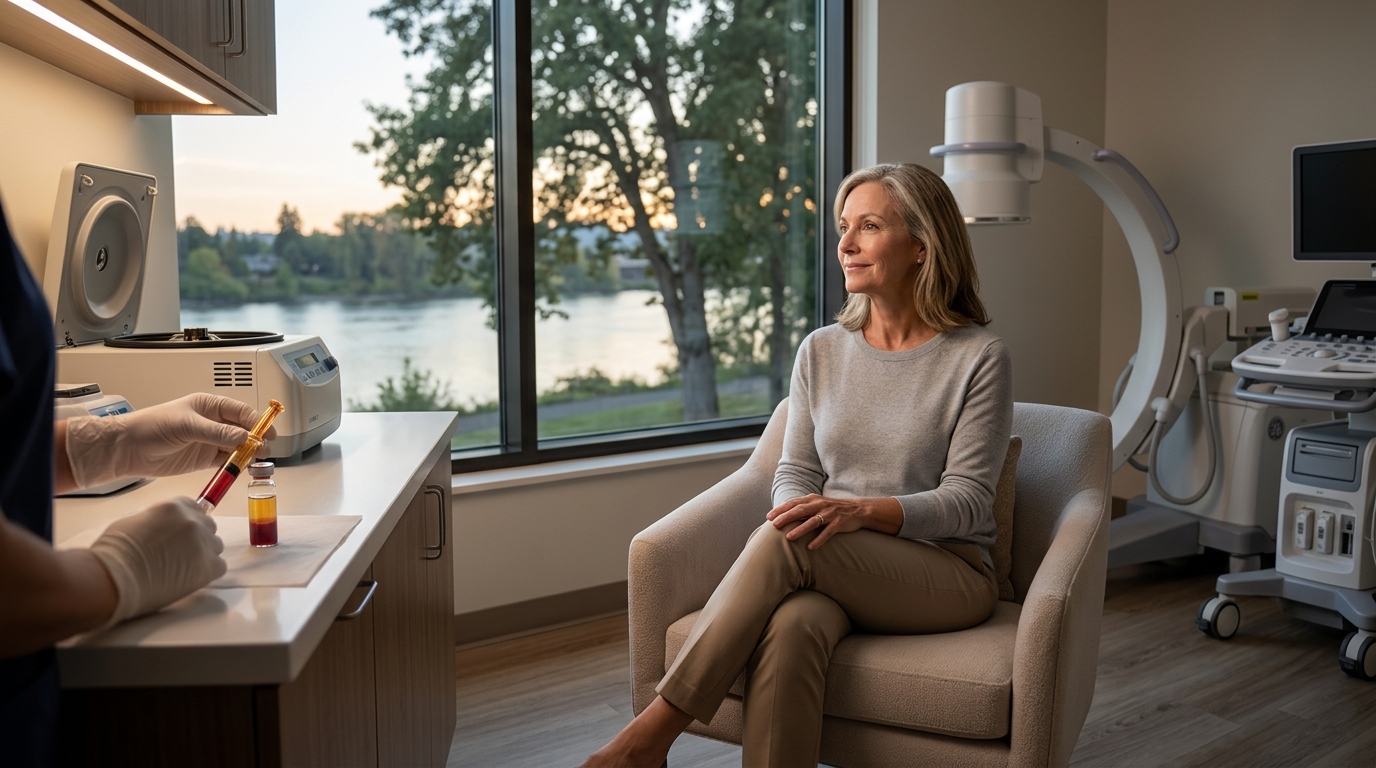
A small blood draw is taken, then processed in the clinic's in-house laboratory to concentrate platelets and growth factors. The resulting PRP is injected precisely into the damaged tissue under ultrasound or fluoroscopic guidance using the clinic's GE OEC One Flat Panel C-Arm system.
Recovery
Most patients remain active during the treatment period, and recovery time is swift. Patients should avoid NSAID use for at least five days prior to treatment, as research shows NSAIDs significantly impair platelet function and PRP's ability to stimulate tissue repair.
Why PRP Quality Matters
Not all PRP is created equal. Many clinics use commercial kits that fail to achieve therapeutic platelet concentrations. Oregon Regenerative Medicine analyzes every patient's PRP sample in their laboratory before injection, confirming concentrations of 1 to 2 billion platelets per milliliter. Most positive outcome studies support a platelet concentration of four to six times the patient's normal level.
Dr. Noel Peterson has been a researcher and pioneer in PRP use since 2004, training physicians throughout North and South America. The clinic's commitment to laboratory-verified PRP quality is a key differentiator in the Pacific Northwest.
Key Takeaways
- PRP therapy concentrates your body's own platelets and growth factors to stimulate natural tissue repair in damaged joints.
- A 2025 review of 40 studies confirmed PRP provides superior pain relief compared to cortisone and hyaluronic acid for knee osteoarthritis.
- PRP is effective for knee and hip arthritis, tendon injuries, rotator cuff damage, plantar fasciitis, and spinal conditions.
- Repeated PRP injections may be up to four times more effective than a single treatment for pain reduction.
- PRP quality varies dramatically between clinics; laboratory-verified platelet concentrations are essential for results.
- Patients should stop NSAIDs at least five days before treatment to preserve platelet function.
- Oregon Regenerative Medicine has offered PRP therapy in Lake Oswego since 2004 with ultrasound and fluoroscopic guidance.
Frequently Asked Questions
What is PRP therapy?
PRP therapy is a regenerative injection treatment that uses a concentrated preparation of platelets and growth factors from your own blood. These growth factors are injected directly into injured or degenerated tissue to stimulate the body's natural healing cascade.
How long does PRP take to work for joint pain?
Most patients begin noticing improvement within three to six weeks after treatment. Research shows that benefits continue to build over several months, with significant pain reduction often measured at the six-month mark.
Is PRP therapy painful?
Patients may experience mild discomfort during and after the injection, similar to other joint injections. Local anesthetic is typically used to minimize pain during the procedure.
How many PRP sessions are needed?
Most patients benefit from one to three treatment sessions depending on the severity of their condition. Studies suggest that repeated injections produce significantly better outcomes than a single session.
Does insurance cover PRP therapy?
Most insurance plans do not currently cover PRP therapy, as it is considered an elective regenerative procedure. Oregon Regenerative Medicine can discuss payment options during your consultation.
Are there side effects of PRP injections?
Because PRP uses your own blood, the risk of allergic reaction or infection is extremely low. Temporary soreness, swelling, or stiffness at the injection site is normal and typically resolves within a few days.
Who is a good candidate for PRP therapy?
PRP works best for patients with mild to moderate joint degeneration, chronic tendon injuries, or ligament damage who want to avoid or delay surgery. A thorough evaluation including imaging helps determine candidacy.
How is PRP different from cortisone injections?
Cortisone is an anti-inflammatory steroid that temporarily reduces pain but does not heal tissue and may accelerate cartilage loss over time. PRP actively stimulates tissue repair and has demonstrated longer-lasting results in clinical studies.
Schedule Your Consultation at Oregon Regenerative Medicine
If chronic joint pain is limiting your life and you want to explore a non-surgical, evidence-based solution, take the next step. Contact Oregon Regenerative Medicine in Lake Oswego to schedule a comprehensive evaluation. With decades of experience and laboratory-verified PRP quality, our team will help determine whether PRP therapy is right for you.