

Ligament injuries are among the most common and frustrating musculoskeletal problems, often leading to chronic instability, pain, and even early-onset osteoarthritis. For patients who want to avoid surgery or have failed conventional treatments, prolotherapy offers a compelling alternative. Prolotherapy is a non-surgical injection procedure that stimulates the body's natural repair mechanisms to strengthen damaged connective tissue. In this article, we break down seven evidence-backed benefits of prolotherapy for ligament injuries, explain how it works, and help you decide whether it is the right treatment for your condition.
What Is Prolotherapy?
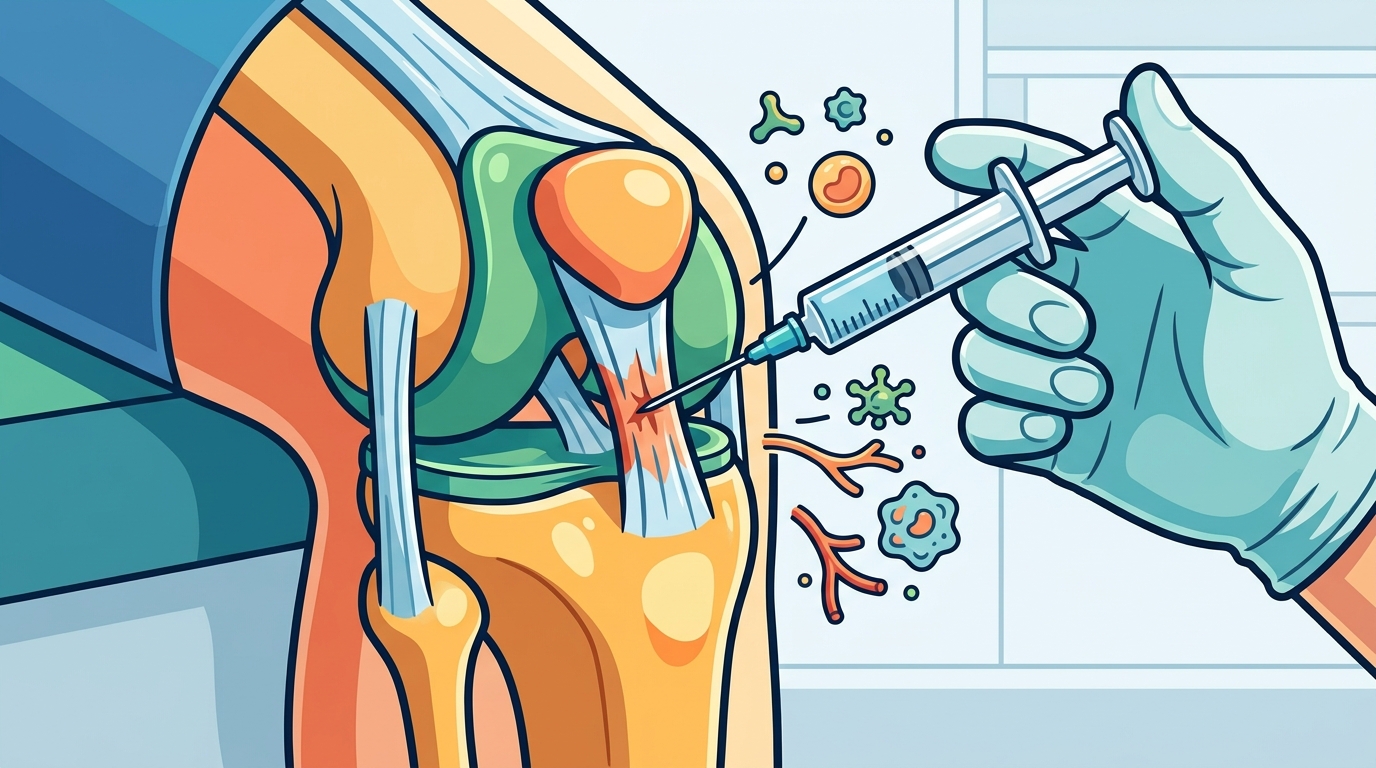
Prolotherapy is a decades-old regenerative injection procedure that prompts the body to produce new collagen within injured ligaments, tendons, and joints. The goal of prolotherapy is to promote tissue repair or growth by prompting the release of growth factors such as cytokines, according to medical literature reviewed by BlueCross BlueShield. Treatment begins by anesthetizing the area of injury, followed by the local injection of a natural proliferative agent, typically hypertonic dextrose, directly into the site of dysfunction.
At Oregon Regenerative Medicine, prolotherapy has been a cornerstone therapy for over 30 years, with the clinic performing more than 40,000 regenerative injections across all modalities.
1. Restores Ligament Strength Without Surgery
The primary appeal of prolotherapy is its ability to restore structural integrity to damaged ligaments without an incision. Unlike surgical reconstruction, which involves long recovery times and inherent procedural risks, prolotherapy works by triggering a controlled inflammatory response at the ligament-bone interface. This stimulates fibroblast activity and new collagen deposition, as documented in a 2025 review published in Frontiers in Endocrinology.
Most patients at Oregon Regenerative Medicine achieve durable, pain-free function without surgery, joint replacement, or drugs.
2. Addresses the Root Cause: Ligament Laxity
Ligament laxity is the looseness or instability that remains after a sprain or tear fails to heal completely. Many conventional treatments manage symptoms but never address this underlying structural deficit. A key analysis in the Journal of Prolotherapy found that none of the standard conservative or surgical interventions address ligament damage or resultant instability directly. Prolotherapy targets the precise attachment points where ligaments anchor to bone, tightening the complex and restoring stability.
Oregon Regenerative Medicine has documented this benefit extensively in ankle ligament treatment, where prolotherapy assists with tightening the ligament complex and regenerating collagen inside the joint capsule.
3. Stimulates Collagen Regeneration
Collagen is the primary structural protein in ligaments. When prolotherapy solution is injected, the intentional inflammatory reaction activates fibroblasts, which are the cells responsible for synthesizing collagen. This results in the deposition of new collagen fibers that strengthen and stabilize the treated tissues.
An average of 3 to 5 treatments is typically required, spaced 2 to 4 weeks apart, according to the prolotherapy protocol at Oregon Regenerative Medicine. Each session builds on the previous one, incrementally reinforcing the repaired tissue.
4. Treats a Wide Range of Joint and Ligament Injuries
Prolotherapy is not limited to a single joint. Virtually any joint or ligament injury is a candidate for prolotherapy, including shoulder, elbow, wrist, hand, hip, knee, foot, ankle, as well as neck, thoracic, lumbar, and sacroiliac pain. It is also effective for mild-to-moderate osteoarthritis and temporomandibular joint (TMJ) injuries.
Conditions Commonly Treated
- ACL and other knee ligament sprains
- Chronic ankle instability
- Sacroiliac joint dysfunction
- Rotator cuff and shoulder instability
- TMJ disorders
- Ehlers-Danlos and joint hypermobility syndromes
5. Safer Long-Term Alternative to Cortisone
Cortisone injections are a common first-line treatment for joint pain, but they come with a significant drawback: they weaken connective tissue over time. Prolotherapy takes the opposite approach, restoring normal strength and function to ligaments, tendons, cartilage, and other connective tissues rather than masking pain while tissues continue to degrade.
| Factor | Prolotherapy | Cortisone | PRP |
|---|---|---|---|
| Mechanism | Stimulates collagen repair | Suppresses inflammation | Delivers concentrated growth factors |
| Effect on Tissue | Strengthens ligaments | Can weaken connective tissue | Promotes tissue regeneration |
| Typical Sessions | 3 to 5 | Limited (3 to 4/year max) | 1 to 3 |
| Recovery Time | Minimal downtime | Minimal downtime | Minimal downtime |
| Long-Term Outcome | Durable structural repair | Temporary symptom relief | Durable tissue repair |
| Safety Profile | Generally safe, minimal adverse effects | Risk of tissue degradation with repeated use | Very safe (autologous) |
6. May Help Prevent Osteoarthritis Progression
Unresolved ligament injuries are a well-established pathway to osteoarthritis. When a ligament remains lax, abnormal joint loading accelerates cartilage degeneration over time. Evidence suggests that prolotherapy has the ability to stimulate repair of degenerative cartilage and treat the most common and under-recognized source of osteoarthritis: ligament injury, as described in a peer-reviewed Journal of Prolotherapy study.
Clinical trials also support the finding that prolotherapy is effective in reducing pain, improving function, and promoting tissue regeneration in conditions like knee osteoarthritis, as noted in research indexed on ClinicalTrials.gov.
7. Combines Effectively with PRP and Biocellular Therapies
Prolotherapy is often used as a standalone treatment, but it can also be combined with more advanced regenerative therapies for complex or severe injuries. At Oregon Regenerative Medicine, physicians may layer prolotherapy with platelet-rich plasma (PRP) therapy or adipose tissue stem cell grafts depending on the severity of ligament damage. PRP delivers concentrated growth factors from the patient's own blood, amplifying the healing cascade initiated by prolotherapy.
This layered approach is guided by four Sonosite ultrasound systems and a GE OEC One Flat Panel C-Arm for fluoroscopic precision, ensuring injections reach the exact site of injury.
Key Takeaways
- Prolotherapy is a non-surgical injection therapy that stimulates collagen production and ligament repair.
- It directly addresses ligament laxity, the root cause of chronic joint instability.
- Unlike cortisone, prolotherapy strengthens rather than weakens connective tissue.
- It is applicable to virtually any joint or ligament injury in the body.
- Clinical evidence supports its effectiveness for pain reduction, improved function, and tissue regeneration.
- Prolotherapy can be combined with PRP and biocellular therapies for enhanced outcomes in severe cases.
- Oregon Regenerative Medicine has over 30 years of prolotherapy experience and more than 40,000 regenerative injections performed.
Frequently Asked Questions
What is prolotherapy?
Prolotherapy is a regenerative injection procedure that uses a natural proliferative agent, most commonly hypertonic dextrose, to stimulate the body's own healing response at the site of ligament or tendon damage. It promotes collagen production and tissue repair.
How does prolotherapy help ligament injuries specifically?
Prolotherapy targets the ligament-bone attachment points where damage and laxity originate. By triggering a controlled inflammatory response, it activates fibroblasts that produce new collagen, gradually restoring ligament strength and joint stability.
How many prolotherapy sessions are needed?
Most patients require an average of 3 to 5 treatments, spaced 2 to 4 weeks apart. The exact number depends on the severity of the injury and the patient's healing response.
Is prolotherapy safe?
Prolotherapy is generally safe with minimal adverse effects. Because it uses biocompatible solutions like dextrose, the risk of allergic reaction or systemic side effects is extremely low.
Does prolotherapy work better than cortisone injections?
Prolotherapy and cortisone serve different purposes. Cortisone temporarily reduces inflammation and pain but can weaken connective tissue with repeated use. Prolotherapy strengthens ligaments and tendons over time, offering more durable structural repair.
Can prolotherapy be combined with PRP?
Yes. Physicians often combine prolotherapy with platelet-rich plasma therapy to enhance healing in more severe or complex ligament injuries. PRP delivers additional growth factors that amplify the tissue repair process.
What joints can prolotherapy treat?
Prolotherapy can treat virtually any joint, including the knee, hip, shoulder, ankle, elbow, wrist, hand, foot, TMJ, and all regions of the spine including the sacroiliac joint.
How long does it take to see results from prolotherapy?
Many patients notice improvement after 2 treatments, though full benefit typically develops over the course of the complete treatment series spanning several weeks to a few months.
Ready to Explore Prolotherapy for Your Ligament Injury?
If you are dealing with chronic ligament pain, joint instability, or a sports injury that has not responded to conventional treatment, prolotherapy may be the solution you have been looking for. Oregon Regenerative Medicine in Lake Oswego, Oregon, has been helping patients recover without surgery since 1978. Review our detailed FAQs or schedule a consultation to find out if prolotherapy is right for you.