How Regenerative Medicine Injections Promote Natural Joint Healing
Regenerative medicine injections are changing how physicians treat joint pain, osteoarthritis, and connective tissue injuries. Rather than masking symptoms with drugs or resorting to surgery, these therapies activate your body's own repair mechanisms to rebuild damaged tissue from the inside out. At Oregon Regenerative Medicine in Lake Oswego, our physicians have performed over 40,000 regenerative injections since 1978, helping thousands of patients in the Portland region achieve lasting, drug-free pain relief. This guide explains exactly how prolotherapy, PRP, and adipose stem cell injections work at the cellular level and what you can expect from treatment.
What Are Regenerative Medicine Injections?
Regenerative medicine is a field of care that uses the body's own cells and natural processes to support healing and recovery. In orthopedics, it involves treatments such as prolotherapy, platelet-rich plasma (PRP), and adipose tissue grafts that are injected directly into damaged joints, tendons, and ligaments.
Unlike cortisone shots, which temporarily reduce inflammation but can weaken tissue over time, regenerative injections stimulate the inflammatory and immune systems in a controlled way. The goal is permanent repair, not temporary symptom relief. These treatments enhance the natural cycles of repair in chronically injured joints, ligaments, and tendons.
The Wound Repair Cascade: How Healing Begins
All regenerative injections share a common biological principle: they initiate or restart your body's wound repair cascade. This cascade is a three-phase process involving inflammation, proliferation, and remodeling.
Phase 1: Inflammation
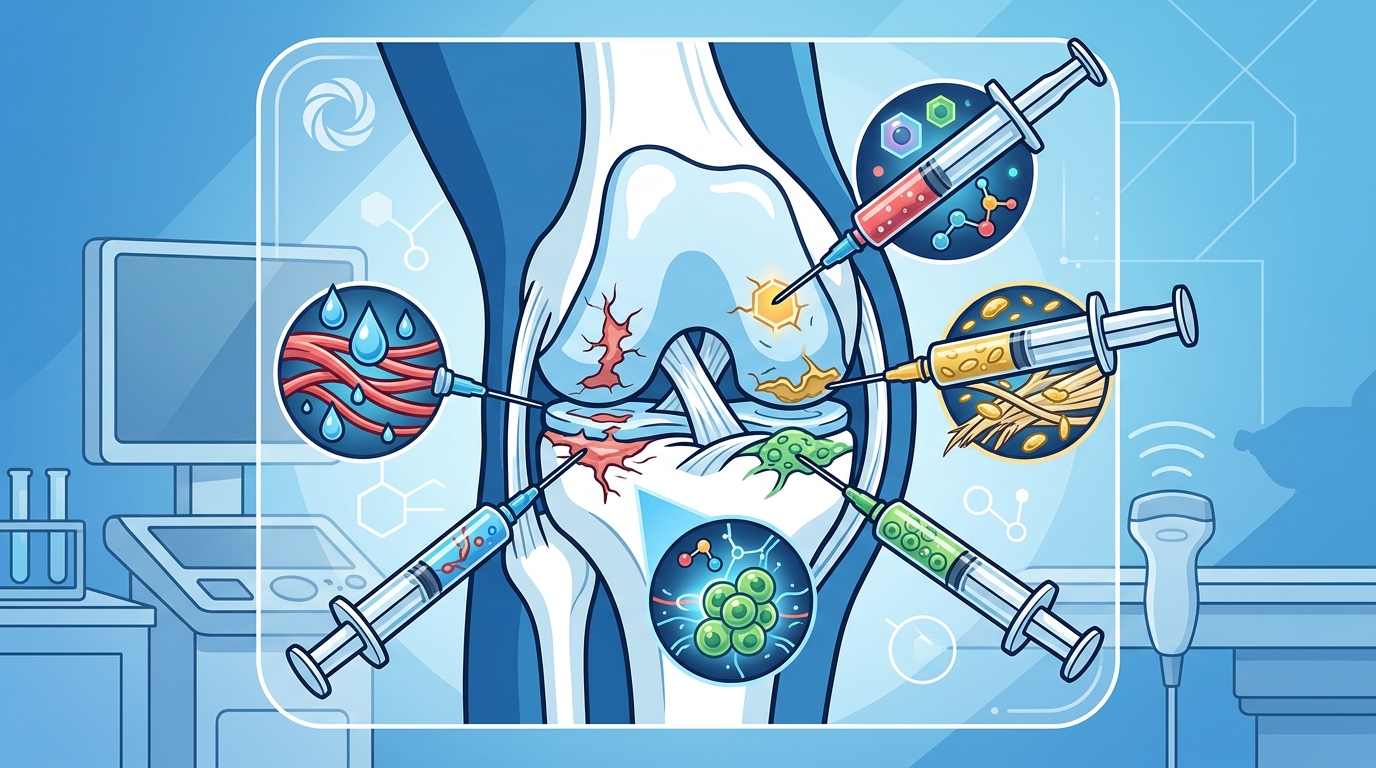
The injection creates a controlled micro-injury at the treatment site. This triggers your immune system to send platelets, white blood cells, and growth factors to the area. According to research published in the journal Burns & Trauma, PRP modulates inflammation and increases angiogenesis (new blood vessel formation), laying the groundwork for tissue regeneration.
Phase 2: Proliferation
Growth factors such as PDGF, TGF-beta, VEGF, and IGF-1 recruit fibroblasts and support the formation of new connective tissue. A 2020 review in the International Journal of Molecular Sciences confirmed that PRP concentrates can stimulate the supraphysiological release of growth factors to accelerate tissue repair.
Phase 3: Remodeling
Over weeks to months, the new tissue matures, strengthens, and integrates with existing structures. This is why regenerative injection recovery requires a gradual return to activity. The tissues regenerating in your body are still in a weakened state and need to be strengthened before they can withstand stressful physical movements.
Prolotherapy: The Foundation of Regenerative Injection Therapy
Prolotherapy is a non-surgical injection procedure for promoting repair of damaged connective tissue. Short for "proliferative therapy," it involves injecting a dextrose solution into injured ligaments, tendons, or joints to activate the body's self-healing response.
The dextrose acts as an osmotic agent that mimics a localized injury response without actually injuring the tissue, triggering natural repair processes. Unlike cortisone injections, which permanently weaken connective tissue, prolotherapy restores normal strength, elasticity, and function to ligaments, tendons, cartilage, and other connective tissues.
Prolotherapy is the predecessor of all modern regenerative injection therapy, including PRP and adipose tissue graft cell therapy. It remains highly effective for sacroiliac pain, rotator cuff injuries, neck and back arthritis, and a wide range of joint conditions.
Platelet Rich Plasma (PRP): Concentrated Growth Factors
Platelet Rich Plasma (PRP) is an autologous biologic therapy made by concentrating the platelets from a small sample of your own blood. Platelets contain alpha granules that release a rich assortment of growth factors and cytokines promoting cell proliferation, angiogenesis, and tissue healing.
At Oregon Regenerative Medicine, PRP is prepared in our in-house laboratory to ensure optimal platelet concentration and purity. The concentrated plasma is then injected precisely into the damaged joint or tissue under ultrasound or fluoroscopic guidance.
PRP therapy is commonly used for osteoarthritis, tendon injuries, ligament sprains, and neck and back pain. Research published in Medicina (2023) found that patients treated with PRP demonstrated considerably faster wound healing compared to control groups not receiving the therapy.
Adipose Stem Cell Therapy: Advanced Biocellular Repair
Adipose stem cell therapy is a regenerative treatment that uses stem cells harvested from your own fat tissue. Adipose tissue is the most abundant source of stem cells in the human body, containing over 200 times more stem cells than bone marrow extracts.
These stem cells have the potential to differentiate into different cell types, release growth factors, and modulate immune responses. When applied to an arthritic joint, stem cell therapies may produce new cartilage cells, suppress inflammation, and release cytokines that slow cartilage degeneration.
Stem cell therapy combined with PRP offers a powerful alternative to hip and knee joint replacement for patients with advanced osteoarthritis. At Oregon Regenerative Medicine, a small amount of fat tissue is extracted, processed to isolate the reparative cells, and injected into the affected joint during the same visit.
Comparing Regenerative Injection Therapies
| Feature | Prolotherapy | PRP | Adipose Stem Cell Therapy |
|---|---|---|---|
| Source material | Dextrose solution | Your own blood platelets | Your own fat tissue |
| Primary mechanism | Osmotic stimulus triggers repair cascade | Concentrated growth factors accelerate healing | Stem cell differentiation and immune modulation |
| Best suited for | Ligament laxity, mild-moderate joint pain | Tendon injuries, moderate osteoarthritis | Advanced osteoarthritis, cartilage loss |
| Typical sessions | 3-6 treatments | 1-3 treatments | 1-2 treatments |
| Recovery period | Days to weeks | 1-2 weeks | 2-6 weeks |
| Image guidance used | Ultrasound or fluoroscopy | Ultrasound or fluoroscopy | Ultrasound or fluoroscopy |
The best choice depends on the specifics of your injury, diagnostic findings, and your overall health. Our doctors are experienced in all three approaches and will recommend the most appropriate therapy for your condition.
Why Image-Guided Precision Matters
Accurate injection placement is essential for successful regenerative outcomes. At Oregon Regenerative Medicine, we use four Sonosite ultrasound systems and a state-of-the-art GE OEC One Flat Panel C-Arm fluoroscopy system to guide every procedure.
Getting positive results ultimately comes down to three essential skills: accurate diagnosis, accuracy of the injections, and the purity and potency of the biologic product injected. Ultrasound guidance allows our physicians to visually confirm needle placement in real time, ensuring the regenerative solution reaches the exact tissue that needs repair.
Dr. Noel Peterson lectures internationally on prolotherapy and regenerative injection therapy, and Dr. Kristian Flores has performed thousands of image-guided injections. This level of expertise, combined with advanced imaging technology, distinguishes evidence-based regenerative clinics from pop-up operations with limited injection experience.
What to Expect During Recovery
Some pain and swelling after treatment are normal and actually indicate the healing cascade is underway. Discomfort typically resolves within 48 hours but can last up to two weeks in some cases.
It is important to understand that regenerative injections mimic a mini-injury to create a wound-repair response. A lack of pain does not mean full recovery. The regenerating tissues need gradual strengthening before returning to intense physical activity.
Many patients receive a series of injections over several months. Metabolic support, cupping, and acupuncture can further enhance treatment outcomes by reducing systemic inflammation and improving soft tissue health. Patients can generally remain active during the treatment process, and recovery time is relatively swift compared to surgical alternatives.
Key Takeaways
- Regenerative medicine injections work by activating your body's natural wound repair cascade through three phases: inflammation, proliferation, and remodeling.
- Prolotherapy uses dextrose to trigger a controlled healing response in damaged ligaments, tendons, and joints.
- PRP concentrates your own platelets and their growth factors (PDGF, VEGF, TGF-beta, IGF-1) to accelerate tissue regeneration.
- Adipose stem cell therapy harvests reparative cells from your own fat tissue, offering advanced repair for severe osteoarthritis and cartilage loss.
- Image-guided injection placement using ultrasound and fluoroscopy is critical for accurate delivery and optimal outcomes.
- Recovery involves a gradual return to activity as new tissue matures and strengthens over weeks to months.
- Oregon Regenerative Medicine has performed over 40,000 regenerative injections since 1978, making it one of the most experienced practices in the Pacific Northwest.
Frequently Asked Questions
What conditions can regenerative injections treat?
Regenerative injections are effective for osteoarthritis of the hip, knee, shoulder, elbow, wrist, foot, and ankle. They also treat ligament sprains, tendon injuries, rotator cuff tears, meniscus tears, sacroiliac pain, and chronic neck and back pain.
How do regenerative injections differ from cortisone shots?
Cortisone shots suppress inflammation temporarily but can weaken tissue with repeated use. Regenerative injections stimulate the immune and inflammatory systems to promote actual tissue repair and long-term healing.
Is PRP therapy FDA approved?
PRP uses your own blood products and is considered a minimally invasive autologous procedure. While PRP devices are FDA-cleared for blood separation, PRP for orthopedic use is not specifically FDA-approved and is considered an investigational treatment in some contexts. However, it has a strong and growing body of clinical evidence supporting its effectiveness.
How many treatments will I need?
Treatment plans vary by condition and severity. Prolotherapy typically requires 3 to 6 sessions, PRP may require 1 to 3 sessions, and adipose stem cell therapy often requires just 1 to 2 treatments. Your physician will create a personalized plan after a thorough evaluation.
Are regenerative injections painful?
The treatment area is anesthetized before injection. Some soreness and swelling are expected afterward and usually resolve within 48 hours. These responses are a normal part of the healing cascade.
Can regenerative injections replace joint surgery?
For many patients, yes. Stem cell therapy combined with PRP offers the best non-surgical alternative for advanced hip and knee arthritis. The vast majority of patients at Oregon Regenerative Medicine achieve durable pain-free function without surgery or joint replacement.
How long until I see results?
Patients can typically start to see improvements within a few weeks to months after treatment. Full tissue remodeling can continue for up to six months. Each subsequent treatment session tends to produce progressively faster recovery.
What should I avoid after treatment?
Patients are advised to avoid anti-inflammatory medications (NSAIDs) before and after treatment, as these can interfere with the healing cascade. Your physician will provide specific recovery guidelines tailored to your procedure.
Schedule Your Consultation
If you are dealing with chronic joint pain, osteoarthritis, or a connective tissue injury, regenerative medicine may offer the non-surgical solution you have been looking for. Oregon Regenerative Medicine has been helping patients heal naturally in Lake Oswego since 1978. Contact our office at (503) 636-2734 to schedule your consultation and learn which regenerative injection therapy is right for you.